Long before there were lodges, people were being taken somewhere, shown something, and sent back changed. The forms have varied enormously. The idea underneath them has proved remarkably durable: some things cannot be taught to a person, only undergone by one.
The Secret Eleusis Kept
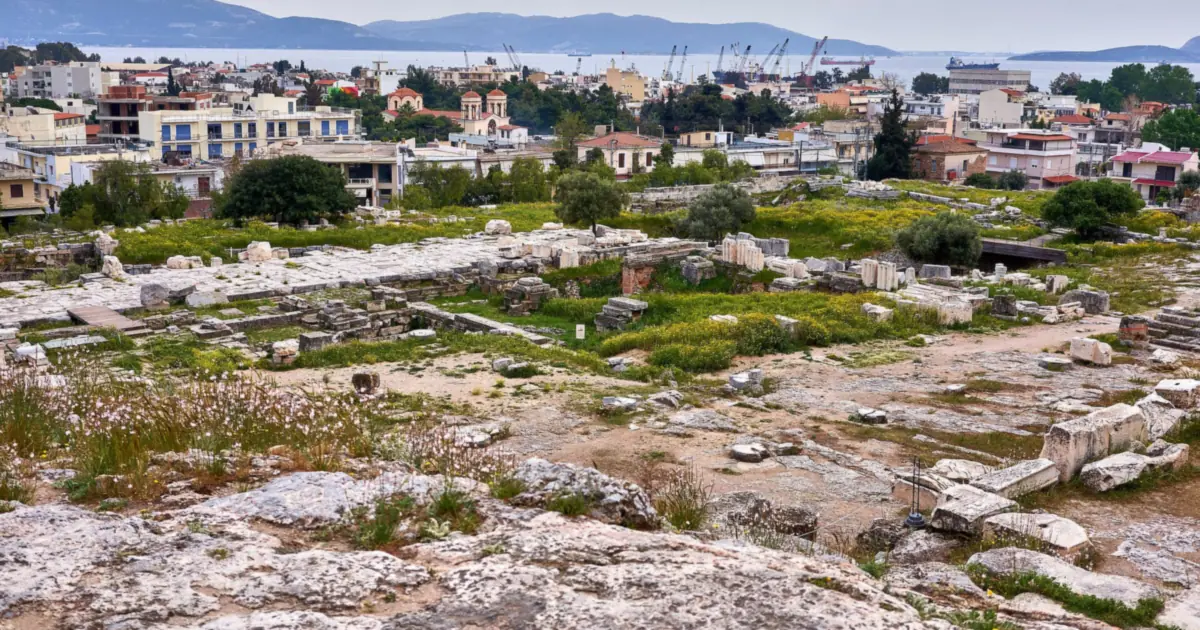
The most famous initiation of the ancient world took place at Eleusis, the sanctuary of Demeter and her daughter Persephone. Its founding story is told in the Homeric Hymn to Demeter, which closes with the goddess teaching the kings of Eleusis “the conduct of her rites,” mysteries “which no one may in any way transgress or pry into or utter, for deep awe of the gods checks the voice.”
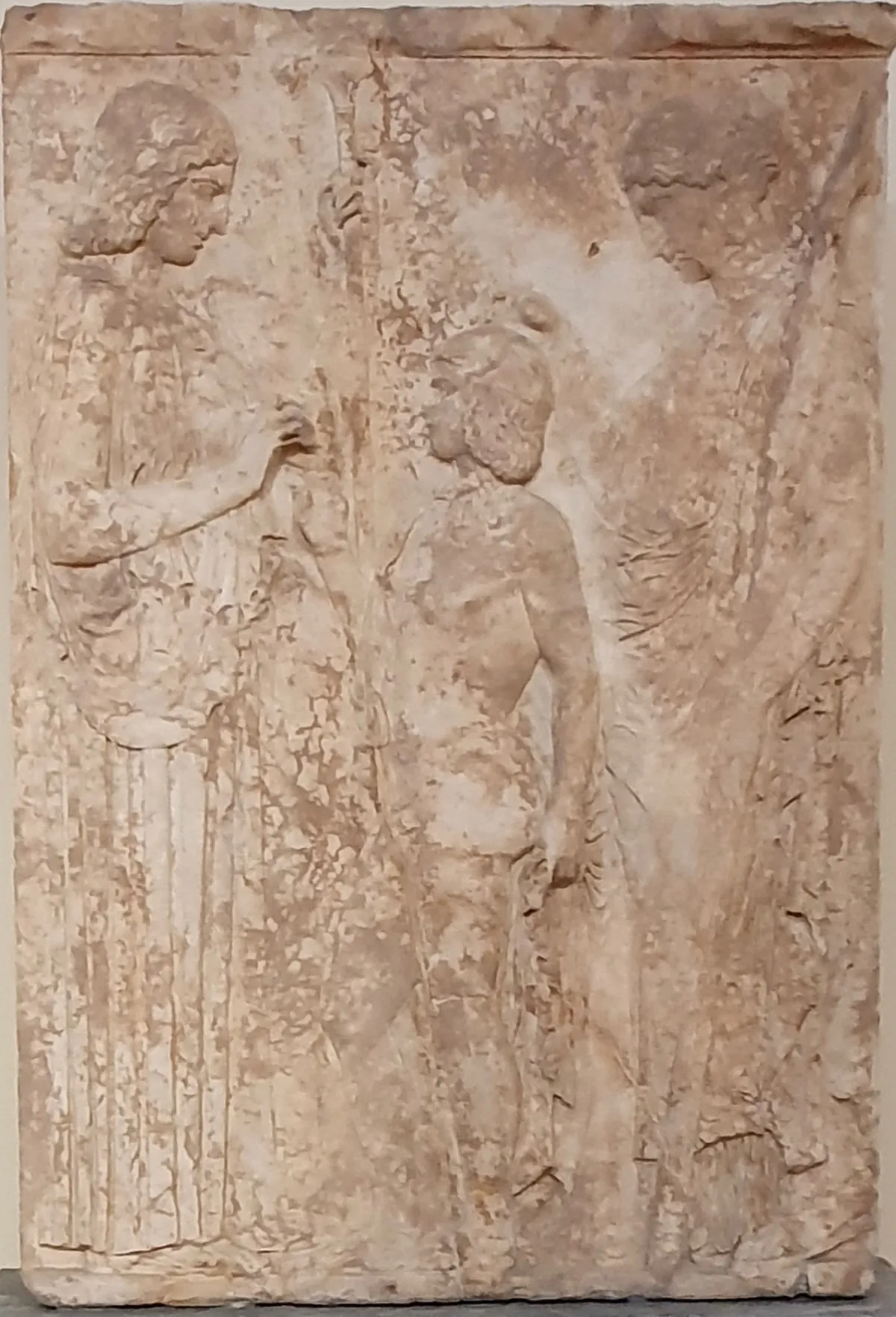

“Happy is he among men upon earth who has seen these mysteries.”
— Homeric Hymn to Demeter
Notice the verb. The initiate has seen. The hymn does not promise that he has learned a doctrine or memorized a creed. It promises that he has witnessed something, and that the witnessing changes his lot even beyond death.
That silence held astonishingly well. Princeton University Press describes George Mylonas’s Eleusis and the Eleusinian Mysteries, written by one of the archaeologists entrusted with the final excavations of the sanctuary, as a study of “the most famous conspiracy of silence in the history of antiquity,” tracing the site from its first habitation in the Middle Bronze Age, around 1900 B.C., to its decay in Imperial Roman times. Eleusis was not alone. Harvard University Press introduces Walter Burkert’s Ancient Mystery Cults by noting that secret mystery cults “flourished within the larger culture of the public religion of Greece and Rome for roughly a thousand years.”
What those rites actually contained remains largely unknown, and anyone who claims otherwise should be read with care. What survives is a sense of what they were for. A fragment of Aristotle, quoted by a later author, holds that people being initiated are not meant to learn anything but to experience something and be brought into a certain state of mind. The classicist Andrew Ford, in Catharsis, Music, and the Mysteries in Aristotle, sets out the Greek: ou mathein, not to learn, alla pathein, but to undergo. Two words, one letter apart, and the whole distinction between a lecture and an initiation sits between them.
What Egypt Records, and What Later Ages Imagined
Egypt is where initiation history most often slides into romance, so it helps to begin with what the evidence will bear.
The Greek historian Herodotus, an outsider writing in the fifth century B.C., described Egyptian priests in his History as men who shaved their whole bodies every other day, wore only linen and papyrus sandals, washed in cold water twice by day and twice by night, and inherited office: “whenever a priest dies his son is appointed to his place.” At Saïs he saw a lake on which the Egyptians performed by night a show of a god’s sufferings, “and this the Egyptians call Mysteries.” He adds, tantalizingly, that he knows more about how it takes place “but I shall leave this unspoken.”
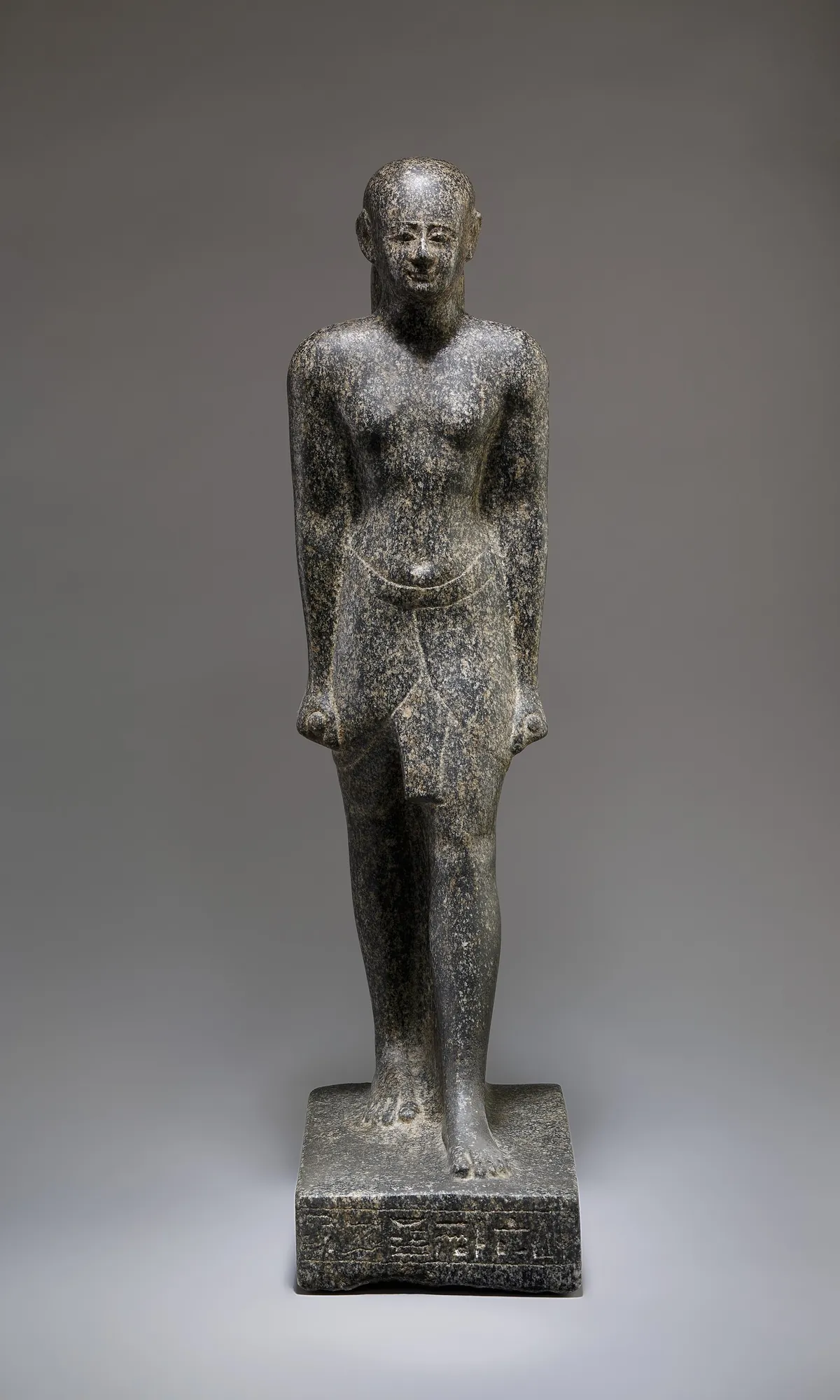

Egyptologists add a quieter, more practical picture. In the UCLA Encyclopedia of Egyptology entry Education and Apprenticeship, Nikolaos Lazaridis explains that Egyptian schooling trained scribes and was largely restricted to elite boys. No school text names the priesthood as its goal, which suggests priestly duties were taught afterward, “as part of an advanced apprenticeship in a temple.” The high priest Bakenkhons, on statues now in Cairo and Munich, recalls leaving “the room of writing” and then being “taught to be a wab-priest in the domain of Amun.” The Egyptian term most likely meaning apprenticeship meant “under the arm” of someone, and the teacher could be called “master” or “father.” The House of Life, the per-ankh, appears in the record as a temple-linked place of writing and learning, though Lazaridis notes there is very little evidence for where such teaching physically happened.
Egyptian texts do speak of initiation. In Notes on the Egyptian Motifs in Mozart’s Magic Flute, John Gee points to an Egyptian verb for “to initiate” used both for entry into the temple and for a priest’s elevation to higher office, and to late papyri describing initiation as the reading of sacred texts and a vision of the ordered cosmos. That is documented. It is also a long way from the Egypt of later imagination.
The imagined Egypt has a traceable history of its own. The Hermetic writings, attributed to the sage Hermes Trismegistus, were long revered as primeval Egyptian wisdom. Pieter van der Horst, reviewing Florian Ebeling’s The Secret History of Hermes Trismegistus, summarizes how the scholar Isaac Casaubon showed in 1614 that the Corpus Hermeticum was composed in the first centuries of the Christian era, and quotes Ebeling’s blunt verdict: “Hermes Trismegistus was a fiction, a fruitful fiction with lasting effects.” Around the same time, the Rosicrucian Fama Fraternitatis told of its founder studying with the wise men of “Damcar” in Arabia, passing through Egypt, and learning secrets at Fez. The text is reprinted in A. E. Waite’s The Real History of the Rosicrucians, and it is best read as an allegorical manifesto, not a travel record.
Freemasonry’s Egyptian tales draw heavily on a novel. In 1731 Jean Terrasson published Sethos, presented on its title page as translated from a Greek manuscript. Gee notes that Terrasson built its initiation scenes from classical writers such as Apuleius and Plutarch. He adds that the Vienna lodge to which both Mozart and his librettist Emanuel Schikaneder belonged based its ritual on that same novel, and that the trials by fire, water, air and earth in The Magic Flute are not found in Egyptian initiation at all. When a later book tells you that the degrees of Freemasonry were worked in the pyramids, this is the lineage it is usually drawing on. It is a lovely legend, and it is a legend.
Separation, Threshold, Return
Why do initiations from such different worlds feel related? The most useful answer came from the folklorist Arnold van Gennep in Les rites de passage, published in French in 1909. In David Kertzer’s introduction to the second English edition, van Gennep’s opening observation is rendered this way: “The life of an individual, regardless of the type of society, consists in passing successively from one age to another and from one occupation to another.”

Van Gennep saw a common shape in these passages: rites of separation from the old state, a stage of the margin, and rites of incorporation into the new one. He proposed calling them preliminary, liminal and postliminal rites, from the Latin limen, threshold. Kertzer stresses two cautions van Gennep himself gave. Not every birth, marriage or initiation rite is only a rite of passage. And not every sequence develops all three stages equally.
The anthropologist Victor Turner took the middle stage further. Routledge’s description of The Ritual Process: Structure and Anti-Structure explains that he worked from the rituals of the Ndembu of Zambia, extended van Gennep’s liminal phase to a far wider range of social life, and developed the concept of “communitas,” a bond between people that exists beyond ordinary rank and structure. It was Turner, Kertzer notes, who dubbed that middle period “betwixt and between”: no longer what one was, not yet what one will be.
Anyone who has knelt at an altar on his wedding day, or stood in a line of recruits, already knows the feeling. The old self has been set down. The new one has not yet been handed over. For a while, someone else has to lead.
Seven Years Under a Master
Initiation was never only religious. It was how trades kept their knowledge alive, and the medieval building crafts left a clear paper trail.
In 1356 the Mayor of London intervened in disputes between the mason hewers and the mason layers and setters, and twelve of “the most skilful men” of the trade helped draw up rules. The London Regulations for the Trade of Masons of 1356 forbid anyone to set an apprentice to work “except in presence of his master, before he has been perfectly instructed in his calling,” and forbid apprenticeships shorter than seven years, “according to the usage of the City.” Seven years was already ordinary London custom, not a peculiarity of the masons.
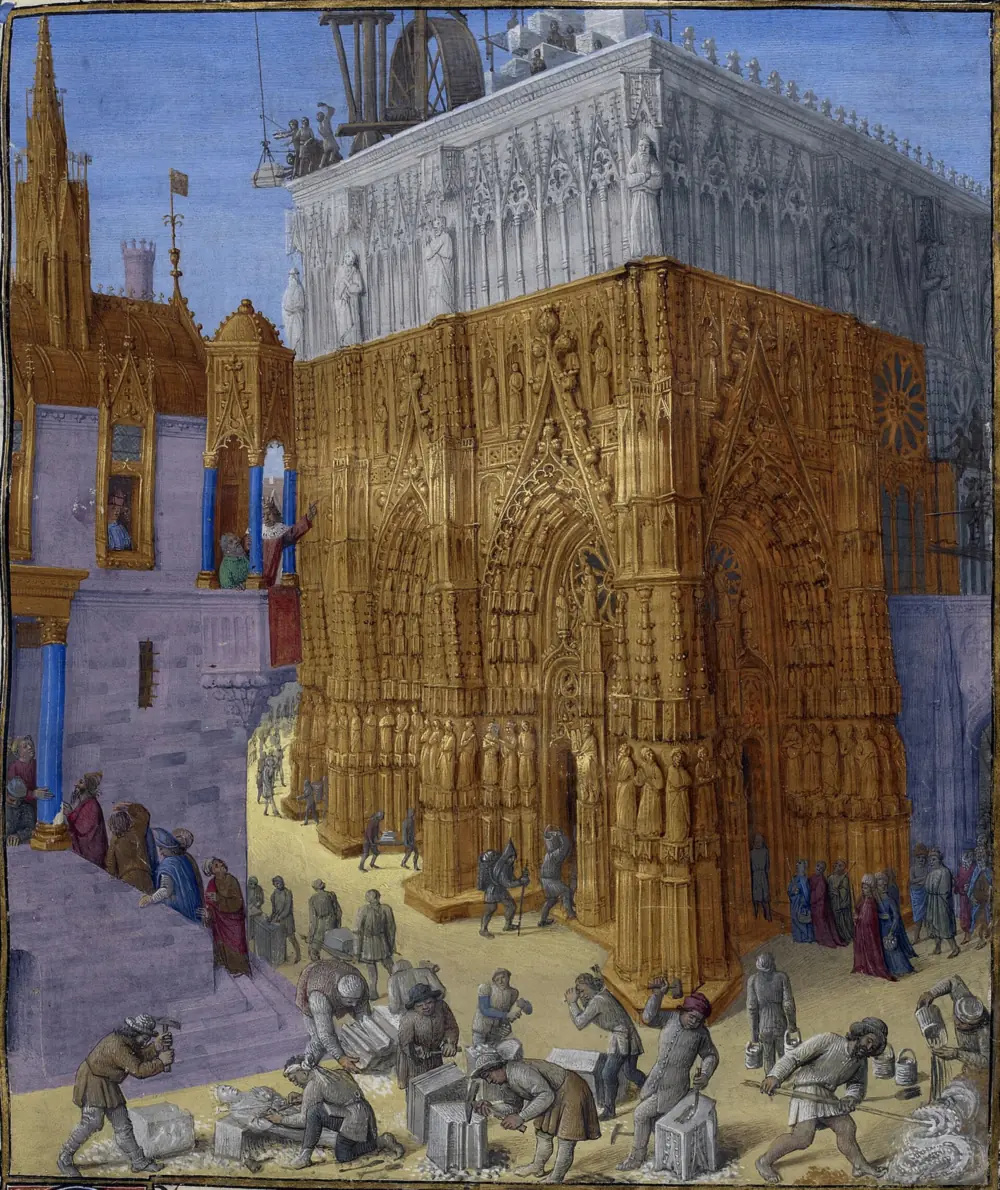

The masons’ own manuscripts say the same thing in their own voice. The Regius Poem, a small vellum book in the old Royal Library that its first editors dated to about 1390, opens as the “constitutions of the art of geometry according to Euclid.” The Cooke Manuscript, dated to around 1450, requires that no master take an apprentice for less than seven years, “for the reason that such as have been bound a shorter time can not adequately learn their art.”
These documents carry their own legend, and it bears directly on Egypt. The Cooke Manuscript tells how Abraham, during a famine, taught the Egyptians geometry, and how “this worthy clerk Euclid” was his pupil. The text says Euclid then taught the lords’ children the craft so they might earn a living after the Nile’s floods. Read as chronology it cannot stand. Read as a craft telling itself where its dignity came from, it is precious. Operative masons were already tracing their art to Egypt in story long before eighteenth-century novelists did it in print.
In Scotland the record becomes institutional. On 28 December 1598 William Schaw, Master of Work to King James VI and General Warden of the craft, set down statutes for all master masons. In the modern-English rendering published by the Masonic High Council, the Schaw Statutes require masons to be “true one to another and live charitably together as becomes sworn brothers and companions of the craft.” They bind apprentices for at least seven years, with seven more before one could be made a fellow of the craft. A new fellow was to be received only with six masters and two apprentices present, with “his name and mark” entered in the lodge book, and only after “an assay and sufficient trial of his skill and worthiness.” A second code followed in December 1599. The Lodge of Edinburgh’s minutes survive from 31 July 1599.
Here the shape van Gennep described is plain to see. A young man is separated from his family’s household, bound under a master, made to wait through years of margin, then received before witnesses who record his name and his mark. The trade was learned by the hands. The standing was conferred by the lodge.
When Gentlemen Asked to Be Made
The turn from operative to speculative masonry, from cutting stone to building character, did not happen in a single meeting. Cambridge University Press summarizes David Stevenson’s argument in The Origins of Freemasonry: Scotland’s Century, 1590–1710 this way: the real origins of modern Freemasonry lie in Scotland around 1600, when stonemasons created a system of lodges “with rituals and secrets blending medieval mythology with Renaissance and seventeenth-century history.”
A small carving at Rosslyn Chapel, near Edinburgh, shows a kneeling figure who appears blindfolded with a rope around his neck, and it is popularly read by Masons as a candidate being led to initiation; Robert Lomas, who argues for that reading, shows a photograph of it in his lecture The Origins of Freemasonry. The chapel, however, was founded in 1446 and was still unfinished when its founder, Sir William St Clair, died in 1484, according to Rosslyn Chapel’s history, long before organized speculative Freemasonry, and the reading is contested: John Hamill, then librarian of the United Grand Lodge of England, suggested the resemblance may be coincidence.
Men who were not stonemasons began to seek admission. Robert Lomas, writing in Elias Ashmole: Masonic Hero or Scheming Chancer?, points to Sir Robert Moray’s admission at Newcastle in 1641 as the first documented Masonic initiation on English soil. The antiquary Elias Ashmole’s diary entry for 16 October 1646, as transcribed by The Magpie Mason, is a single sentence that begins: “I was made a Free Mason at Warrington in Lancashire.” In 1682 he recorded a meeting at which several men “were admitted into the Fellowship of Free Masons,” noting that he was the senior fellow present.
“I was made a Free Mason at Warrington in Lancashire.”
— Elias Ashmole
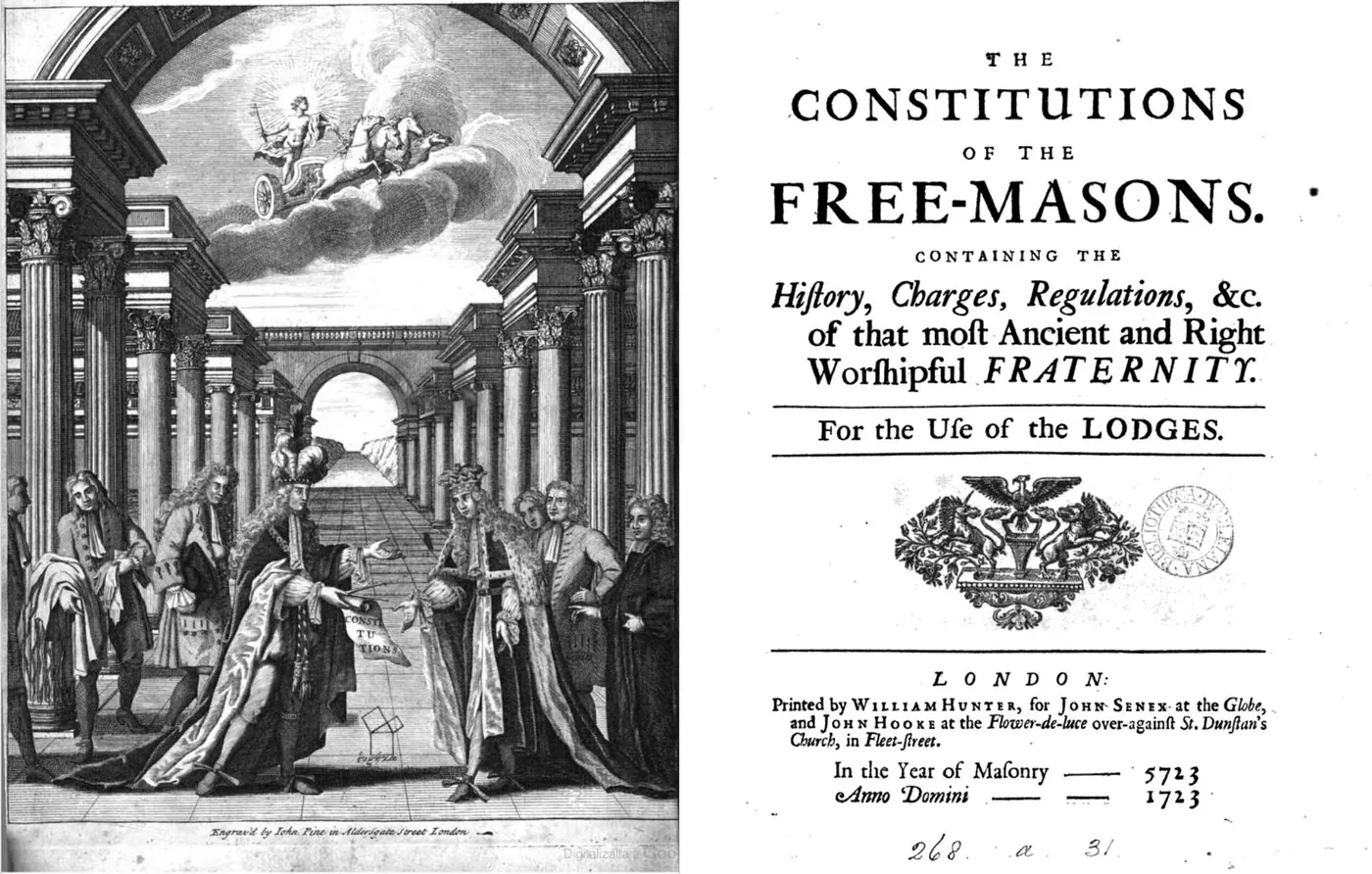
“Made.” The word is worth sitting with. Ashmole did not write that he joined, enrolled or subscribed. Something was done to him, in company, and he came out of it a different kind of man than he went in. On St John’s Day, 24 June 1717, four London lodges met at the Goose and Gridiron tavern and formed the first Grand Lodge. The United Grand Lodge of England dates its first rulebook, the Constitutions, to 1723. From there the speculative craft spread across the world. As it spread, it divided into many Grand Lodges, each with its own customs and its own way of working the degrees.

An Evening Built Around One Person
We live in a society that reads and watches. Most of what we learn arrives as text on a screen or video in a feed, built for millions and consumed alone. Most of what we own was made by machines for no one in particular. There is real good in that abundance. But it has made one kind of experience very rare: an event that exists because of you, that cannot happen without you, and in which you are not the audience but the point.
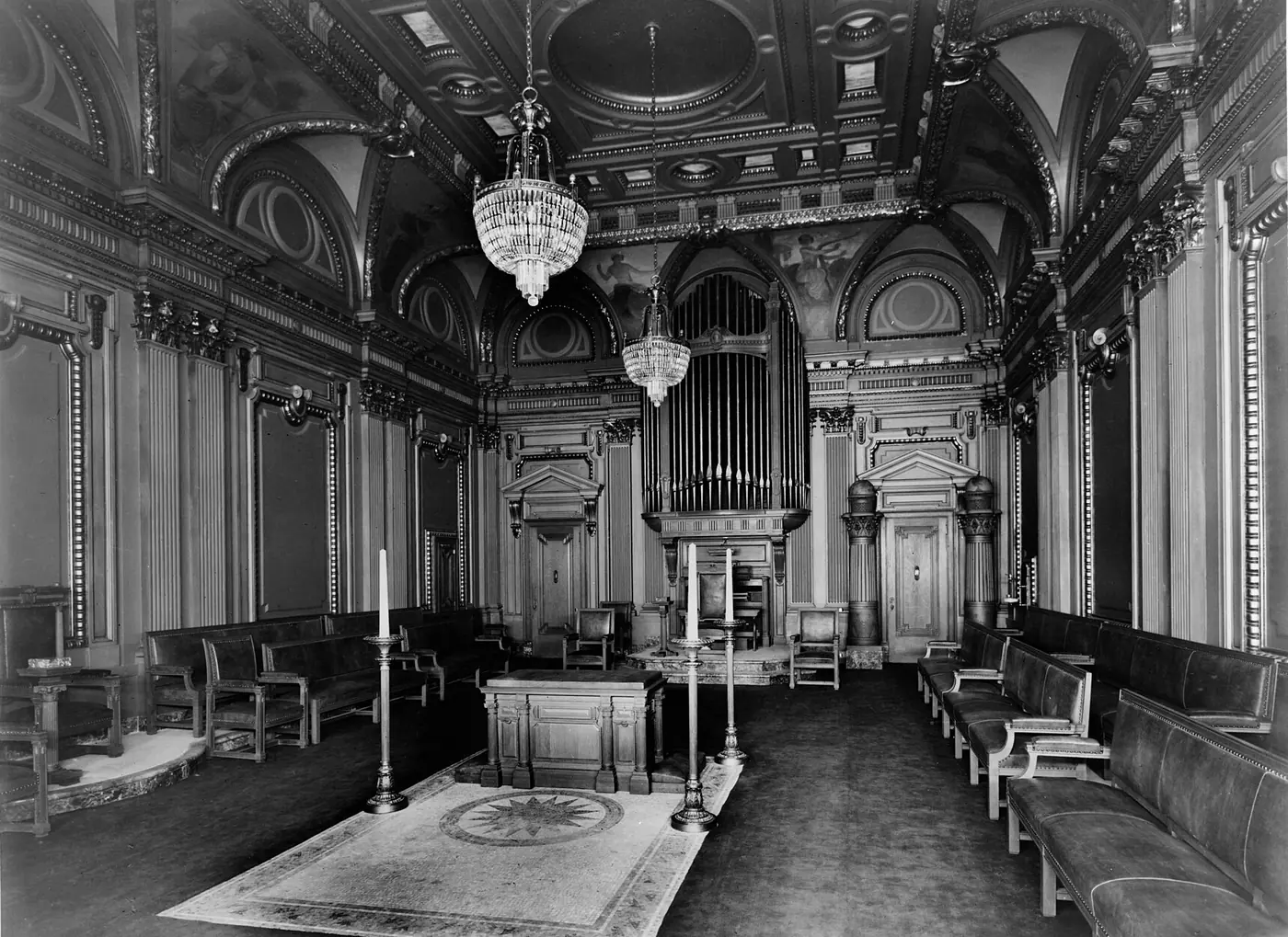

That is what Masonic initiation offers. Without disclosing anything that belongs inside a tiled lodge, its public outline can be described. A candidate is not handed a book and told to read it. He is received, prepared and guided, step by step, through an allegorical drama in which he is the central figure. Men who were once in his place give an evening of their own lives to the work, learning their parts so that he can undergo his. Explanation comes afterward; the undergoing comes first. The forms, words and customs vary from one Grand Lodge to another, and no one jurisdiction’s practice speaks for all. The underlying structure is old enough that van Gennep would have recognized it at once: separation, threshold, return.
This is why a recording, however faithful, could never substitute for the thing itself. A filmed wedding is not a marriage. A video of a degree, even if it could be made, would show a room full of men doing something for somebody else. The value lies precisely in its not being mass-produced. It is made once, for one person, by people who know his name.
The ancient sources agree on little, but they agree on this. The initiate of Eleusis was blessed because he had seen. The Egyptian priest learned “under the arm” of a master. The apprentice in Edinburgh was received before witnesses who wrote down his mark. Ashmole was not informed about Freemasonry; he was made a Free Mason. Those who wish to learn more of the intellectual side of the tradition may enjoy our piece on The Trivium, the Quadrivium and Freemasonry. But the oldest lesson of initiation is that some knowledge has to happen to you before it can mean anything at all.
Sources
- Hugh G. Evelyn-White, trans., “Hesiod, the Homeric Hymns and Homerica” (Loeb Classical Library, 1914), Hymn II, To Demeter.
- George E. Mylonas, “Eleusis and the Eleusinian Mysteries,” Princeton University Press.
- Walter Burkert, “Ancient Mystery Cults,” Harvard University Press.
- Andrew L. Ford, “Catharsis, Music, and the Mysteries in Aristotle,” Skenè: Journal of Theatre and Drama Studies 2:1 (2016).
- Herodotus, “The History of Herodotus,” vol. 1, trans. G. C. Macaulay (1890), Book II, chapters 37 and 171.
- Nikolaos Lazaridis, “Education and Apprenticeship,” UCLA Encyclopedia of Egyptology (2010).
- John Gee, “Notes on the Egyptian Motifs in Mozart’s Magic Flute,” BYU Studies 43:3.
- Pieter W. van der Horst, review of Florian Ebeling, “The Secret History of Hermes Trismegistus,” Bryn Mawr Classical Review 2007.11.04.
- Arthur Edward Waite, “The Real History of the Rosicrucians” (1887), containing the Fama Fraternitatis.
- Jean Terrasson, “Sethos, histoire ou vie tirée des monumens anecdotes de l’ancienne Égypte” (1731).
- David I. Kertzer, “Introduction to the Second Edition,” in Arnold van Gennep, The Rites of Passage, University of Chicago Press (2019).
- Victor Turner, “The Ritual Process: Structure and Anti-Structure,” Routledge.
- “The London Regulations for the Trade of Masons of 1356,” from Teresa G. Frisch, Gothic Art 1140–c. 1450: Sources and Documents, via Columbia University.
- Grand Lodge of British Columbia and Yukon, “Regius Poem with translation.”
- Grand Lodge of British Columbia and Yukon, “Matthew Cooke Manuscript in Contemporary English,” trans. George William Speth.
- Masonic High Council, “The Schaw Statutes (Scotland) 1598 & 1599.”
- David Stevenson, “The Origins of Freemasonry: Scotland’s Century, 1590–1710,” Cambridge University Press.
- Rosslyn Chapel Trust, “History,” The Official Rosslyn Chapel Website.
- Robert Lomas, “The Origins of Freemasonry,” lecture at the 5th International Conference of Great Priories, Stirling (25 August 2000).
- Robert Lomas, “Elias Ashmole: Masonic Hero or Scheming Chancer?,” The Square Magazine.
- The Magpie Mason, “Some background on Ashmole’s Free Mason Acception” (2024).
- United Grand Lodge of England, “History of Freemasonry.”
When was the last time something was made for you alone, and not for an audience of millions, and what did it ask you to become?
2 responses to “What It Means to Be Made: a History of Initiation”
[…] sits at the center. I explored what it means to be initiated, and why the experience matters, in What It Means to Be Made: A History of Initiation. It is also why I am against one-day classes, as I wrote in One Day […]
[…] initiatic experience rich in symbols, meaning and history. I wrote about where that comes from in What It Means to Be Made: A History of Initiation. Masonry encourages open-minded, free thinking and civil discourse. In my lodge, men of different […]