Freemasonry has been hated, hunted and lied about for most of its modern history. Dictators have closed lodges and seized their buildings, a French hoaxer sold the world stories of devil worship, and in the United States an entire political party was built on opposing Freemasonry. Anti-Masonry has taken many forms, and every one of them says something about what the people behind it feared.
Here is that history, told through the propaganda its authors left behind, and what I believe it says about who Freemasons really are.
When the Nazis Came for the Lodges
When Hitler took power in 1933, the Nazis did not wipe out the lodges overnight. According to the United States Holocaust Memorial Museum’s history of Freemasonry under the Nazi Regime, they squeezed them. In 1934, men who had not left their lodges before Hitler became chancellor were barred from the Nazi Party, Hermann Göring, as Prussian interior minister, called on the lodges to dissolve “voluntarily,” and local SS and SA units attacked lodges in cities across Germany. Masons in the civil service were forced or harassed into retirement, and the military banned lodge membership outright.
Then came the seizures. That summer, the Gestapo closed many lodges and confiscated their assets, down to their libraries and archives. In October 1934 the lodges were declared “hostile to the state,” and on August 17, 1935, every remaining lodge in Germany was ordered dissolved and its property confiscated. As German armies conquered Europe, they did the same in every occupied country, ransacking lodges for membership lists, books and furnishings.
Why? The Nazis believed, or claimed to believe, that Freemasons and Jews were partners in a worldwide conspiracy. They hated the lodges that taught tolerance and equality and kept ties with brothers abroad. Reinhard Heydrich, the head of the SS Security Service, counted Masons alongside Jews and the political clergy as the “most implacable enemies of the German race,” and he set up a special section of the SS to deal with them. His men believed the lodges controlled the press and could provoke war and revolution.
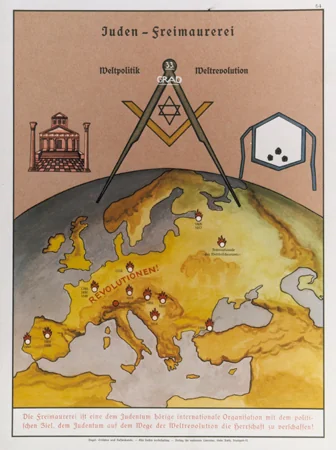

Propaganda carried that message to the public. In Munich in November 1937, the exhibition Der ewige Jude (The Eternal Jew) included an antisemitic and anti-Masonic display built to tie Jews and Freemasons together. Once the war began, anti-Masonic exhibitions in occupied Paris in 1940 and Brussels in 1941 put the furniture and regalia stolen from lodges on show to be mocked.
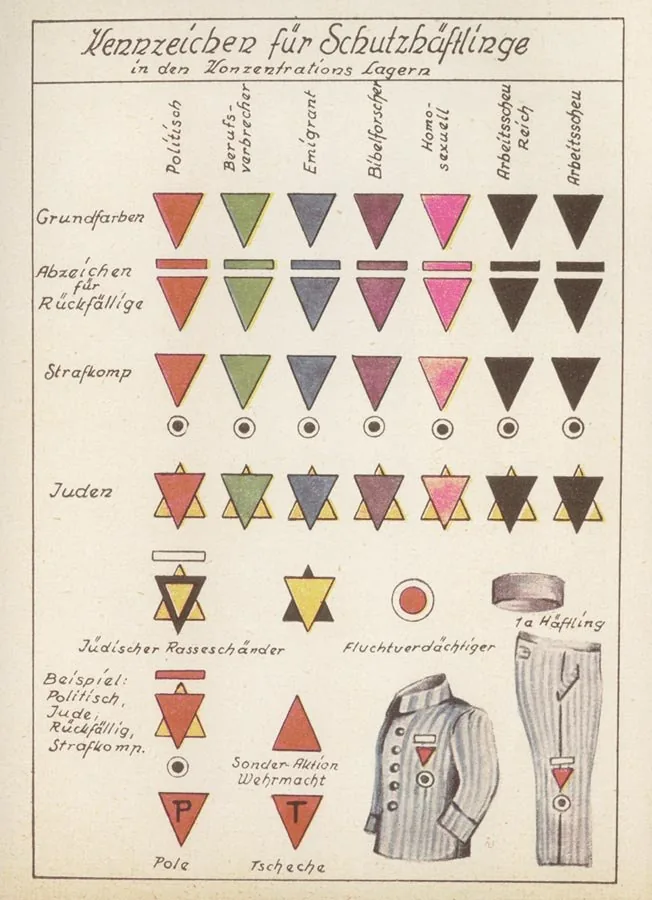
Masons were also arrested and sent to concentration camps. Nobody knows how many were imprisoned simply for being Masons, because many of those arrested were also Jewish or in the political opposition, and the regime persecuted them for that too. I also have to be honest about the other side of the story. Not every German lodge stood firm. A few conservative German lodges tried to accommodate themselves to the regime, and it bought them only a little more time.

You may have heard that German Masons secretly wore a small blue forget-me-not to recognize one another under the Nazis. It is a beloved story, and the flower is a treasured emblem among Masons today. As Masonic historians have traced it in The “Forget Me Not” Pin and Freemasonry, the truth is more modest. The pin was first handed out at a German grand lodge meeting in 1926, before the Nazis came to power. By coincidence, the Nazis’ own winter charity drive used the same flower as a badge in the late 1930s. Some brothers who remembered the 1926 pin may have been glad to wear it then, but there is no record of it being worn as a secret sign during the war. The forget-me-not became a Masonic emblem in honor of those years only after the war.
Mussolini’s Ban
Italy got there first. On February 13, 1923, only months after the March on Rome, the Grand Council of Fascism declared that Freemasonry was incompatible with membership in the Fascist Party. The Grand Orient of Italy, in its own history of the day the Grand Council declared war on Freemasonry, describes what followed. Blackshirt squads sacked lodges from north to south, starting in Pistoia and Prato, and eventually attacked Palazzo Giustiniani, the Grand Orient’s headquarters in Rome. In Florence on the night of October 3–4, 1925, they murdered Brother Giovanni Becciolini.
The Fascists said plainly why they wanted Freemasonry gone. An April 1925 party circular called Freemasonry “the only concrete organization” in Italy of the democratic mentality that was “nefarious and irreducibly hostile” to Fascism and its idea of the nation. In the debate over the new law, the historian Gioacchino Volpe accused the Craft of internationalism, pacifism, “old and empty anticlericalism” and survivals of eighteenth-century Enlightenment thinking. To a regime that demanded total loyalty, a free, international and liberal-minded brotherhood was a rival.
The law against secret associations, Law No. 2029 of November 26, 1925, put associations under police control and barred public employees from belonging to them. It was, as the Grand Orient puts it in 1925: the year Fascism banned Freemasonry by law, the first of the laws that turned Italy into a dictatorship. Days earlier, police and Fascist militia had occupied Palazzo Giustiniani, and on November 22, 1925, Grand Master Domizio Torrigiani dissolved every lodge of the Grand Orient to protect the brethren. It did not protect him. In April 1927 he was arrested and sent into five years of police confinement, first on Lipari and then on Ponza, as the Grand Orient recounts in its history of November 22, 1925.
Léo Taxil’s Great Hoax
Long before the dictators, a Frenchman showed how far a lie about Masons could travel. Léo Taxil, born Marie Joseph Gabriel Antoine Jogand-Pagès, was an anti-Catholic writer and a former Freemason. In 1885 he made a public show of converting to Catholicism and turned his pen on the lodges. His books, among them Les Mystères de la franc-maçonnerie dévoilés (The Mysteries of Freemasonry Unveiled), were full of engravings of sinister ceremonies.
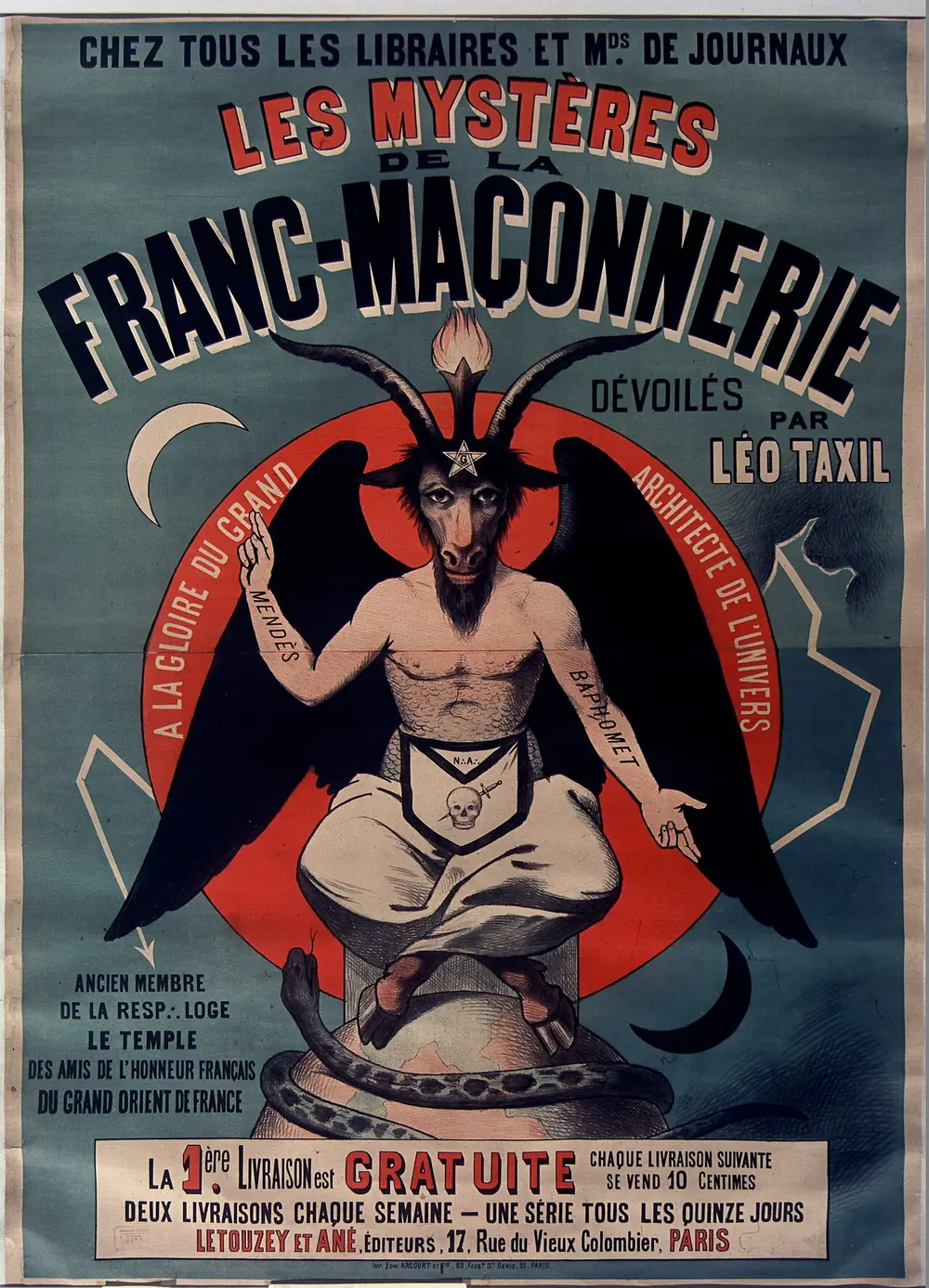

Over the next twelve years the stories grew wilder. Taxil and his collaborators invented “Palladism,” a supposed inner circle of Freemasonry that worshipped Lucifer, and they claimed Albert Pike in Charleston as its leader. Their star was Diana Vaughan, a former “Grand Mistress” of the Palladians who had supposedly seen the light, become a Catholic and written her memoirs. As the historian Simon Mayers shows in “Miss Diana Vaughan” and the myth of “Luciferian Freemasonry”, Catholic newspapers as far away as London took the tales at face value. By Taxil’s own account, Pope Leo XIII received him in a private audience.
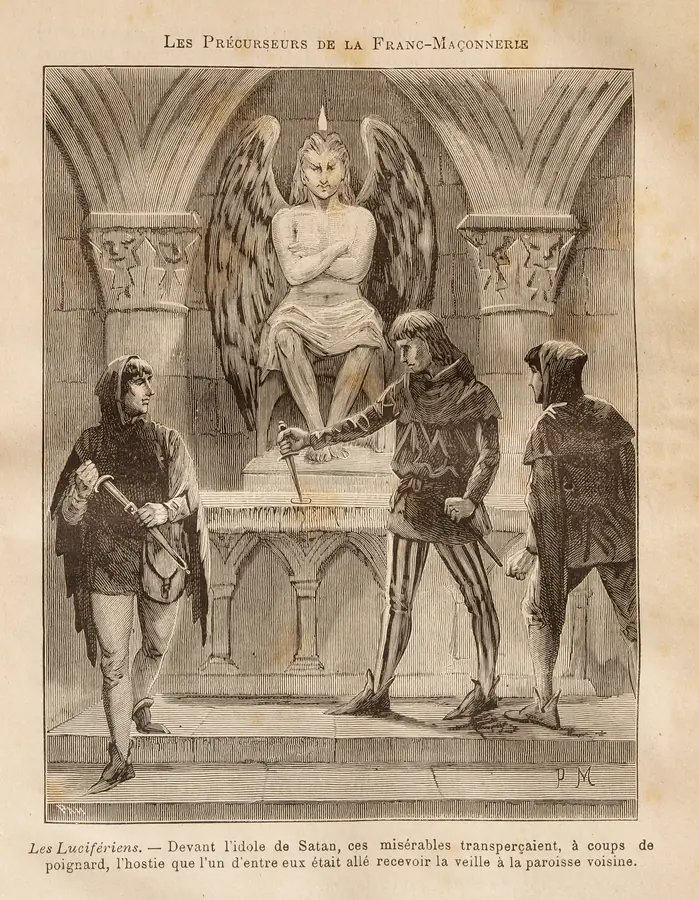

On April 19, 1897, Taxil promised to present Diana Vaughan to the public at the hall of the Geographical Society in Paris. Instead he walked onto the stage himself and confessed. There was no Diana Vaughan and no Palladism. He had made it all up. In his speech, printed in the Paris paper Le Frondeur on April 25, 1897, he called himself a freethinker who had spent twelve years strolling through the Catholic camp, and he gave his motive as the joy of playing a good trick on an adversary, “to laugh a little.” The hall erupted.
The confession did not kill the lie. The image of the devil-worshipping Mason outlived the man who invented it, and it still turns up today.
Captain William Morgan’s Exposé
For American Masons, the story closest to home happened in western New York. In the summer of 1826, William Morgan of Batavia, known as Captain Morgan, announced that he would publish a book exposing the secrets of the lodge, with a local printer, David C. Miller, as his publisher. Some local Masons lost their heads. According to History of Freemasonry in the State of New York, Ossian Lang’s 1922 history, there were attempts to seize the manuscript, and someone set fire to Miller’s print shop.
On September 11, 1826, Morgan was hauled to the jail in Canandaigua over a debt of $2.68. The next night a group of Masons paid the debt, and as Morgan left the jail he was forced into a carriage, shouting “Murder!” He was taken to Fort Niagara and held in its powder magazine. After that, he was never seen again. What happened to him has never been settled, but the people of New York drew their own conclusions. Miller pressed ahead with the book anyway, and Illustrations of Masonry reached the public.
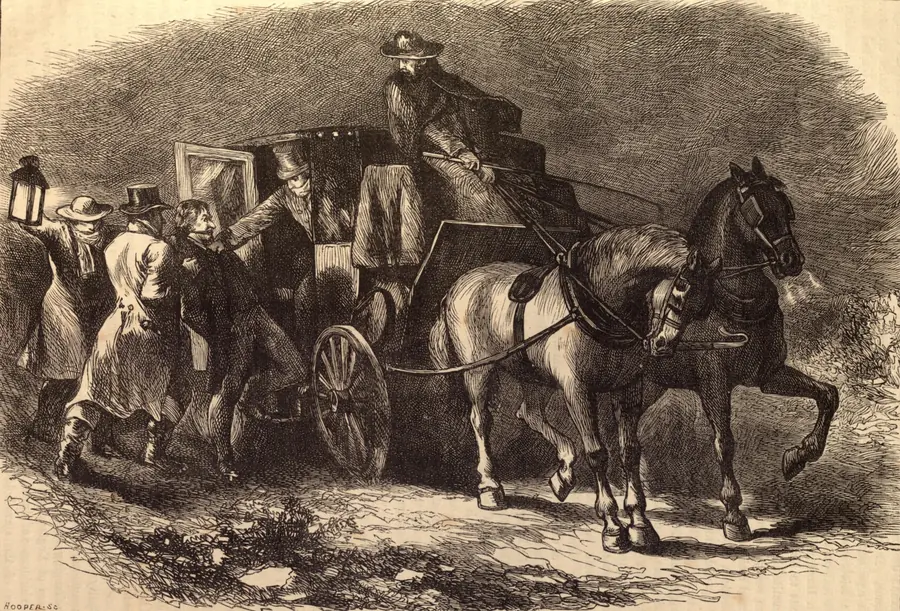

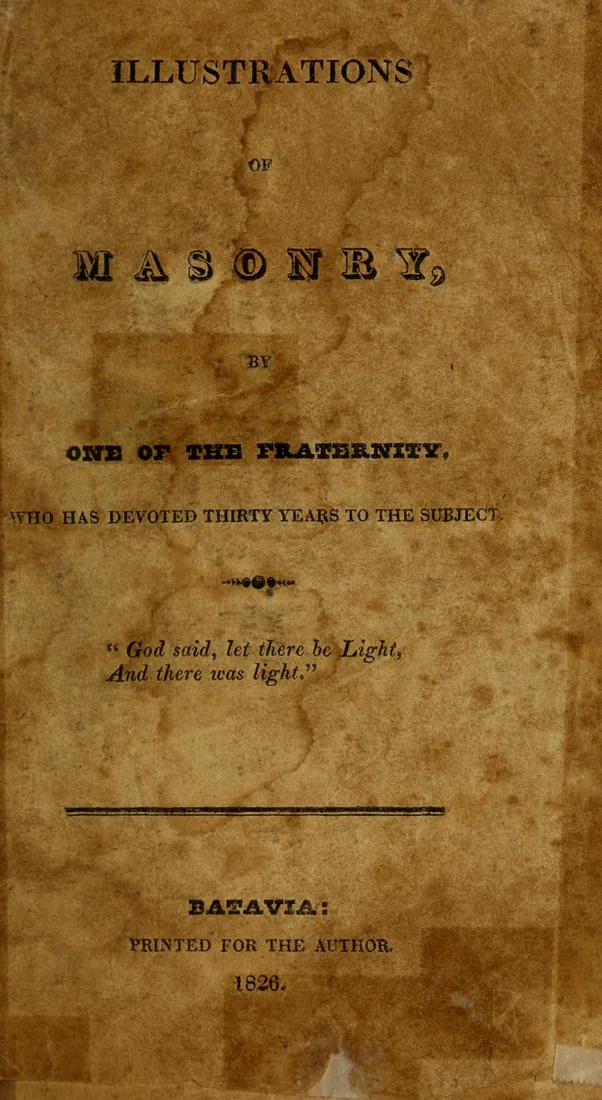
What turned a crime into a crusade was what came after. In The Power of Perception: The Failure of the Morgan Trials and the Formation of the Anti-Masonic Party, Breanna Boss counts twenty grand juries, eighteen trials and indictments against more than forty-four men, but only nine convictions. Kidnapping was only a misdemeanor in New York, so the sentences were light. To many people, it looked as if the Masons on juries and in public office were protecting their own.
The sword of justice has fallen pointless and blunted at the feet of Freemasonry.
— John C. Spencer
Spencer was New York’s special counsel for the Morgan prosecutions. He said that in 1831, and Anti-Masons across the state agreed with him.

Anti-Masonry at the Ballot Box
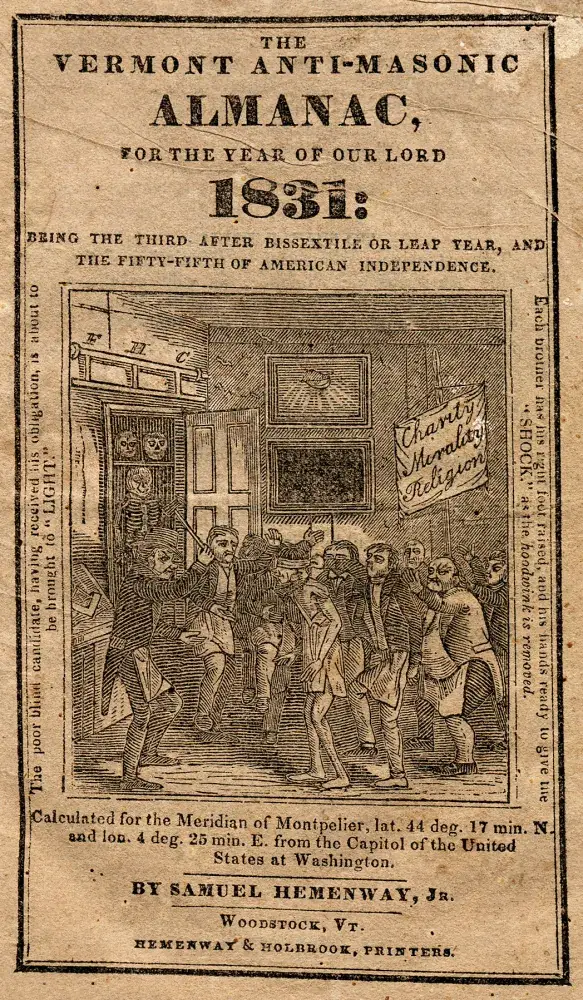
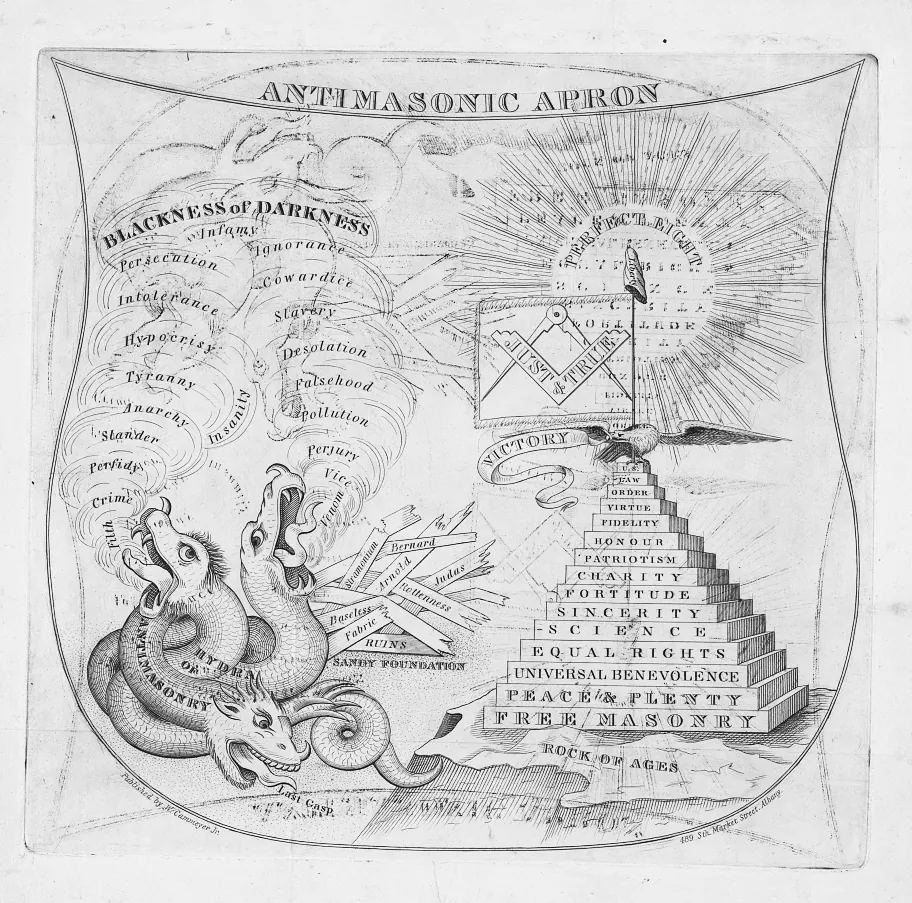
Out of that anger came the Anti-Masonic Party, organized in New York around 1828. It was not America’s first political party, but it is widely called the country’s first third party. Britannica’s history of the Anti-Masonic Movement also credits it as the first party to hold a national nominating convention and the first to offer voters a platform of party principles. That convention met in Baltimore in September 1831 and nominated William Wirt for president. Its platform condemned Masonry for its secrecy, exclusivity and undemocratic character. In 1832 Wirt carried only Vermont, with its seven electoral votes. By the late 1830s most of the party had joined the new Whig Party.
The Anti-Masons did not hunt Masons to their deaths. What worried them was the power of Masons as a group. To them, too many judges, sheriffs, jurors and officeholders were Masons, bound to one another by oaths the public could not see. Lang records how far the backlash went. Some churches barred Masons from Holy Communion, Masons’ names were thrown out of the jury box, and in some places no Mason could hold even the office of pound master. Thousands of men publicly renounced the Craft.
To understand that fear, picture the country as it was. The 1830 census counted about 12.9 million Americans. New York, the largest state, had 1,918,608 people, according to the Census Bureau’s 1830 state table. From the sources we do have, it is believed that New York alone had about 480 lodges with roughly 20,000 members in 1826. That works out to about one New Yorker in a hundred, counting women and children, so a far larger share of the grown men. And those men were often the merchants, lawyers and officeholders who ran their towns.

The collapse was just as striking. Lang reports that by 1830 New York had only 82 lodges, with no more than 3,000 members, and that by 1832 just 48 lodges were still in good standing. Counts differ a little between sources, but every one of them tells the same story: in six years, New York Masonry lost most of its lodges and roughly nine of every ten members. It took decades to rebuild.
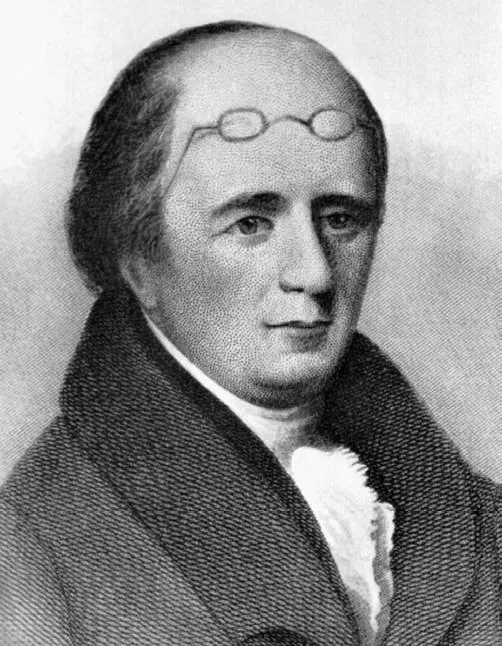
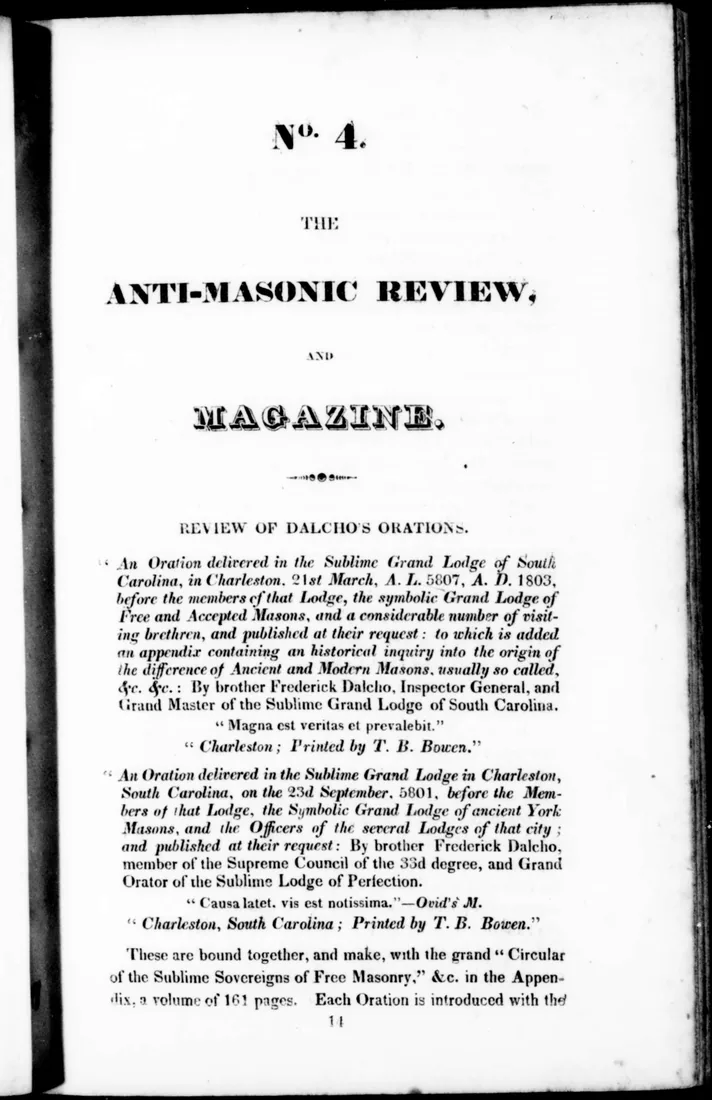
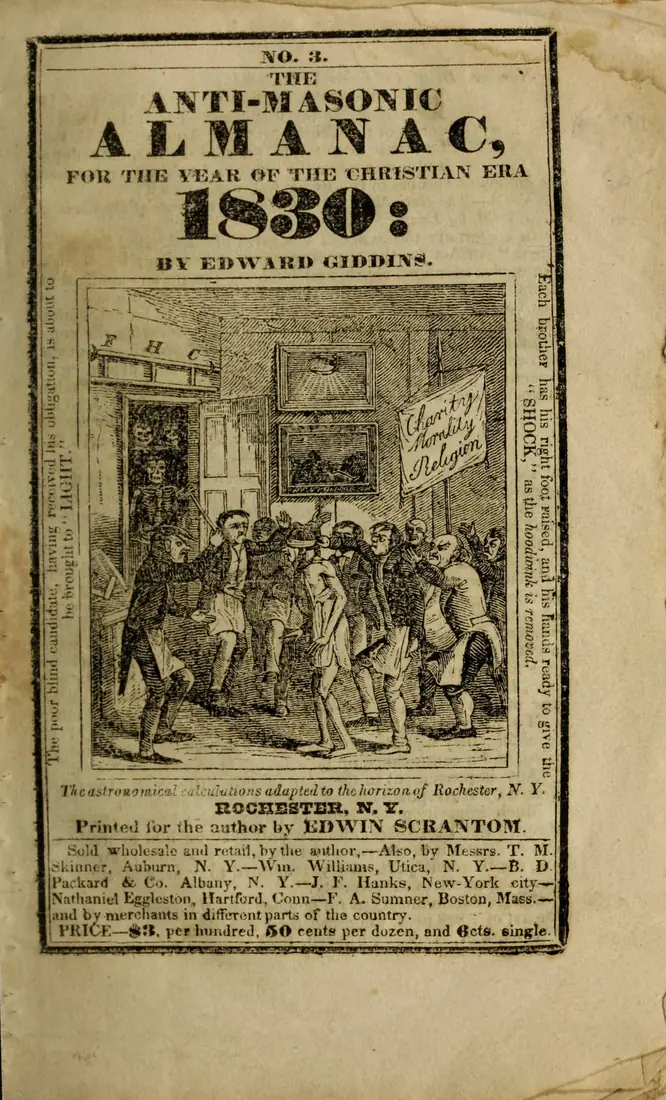
Here are a few more pictures from that history.

Why Tyrants Fear the Lodge
So what is it about Freemasonry that frightens these people? I believe it is the very thing that makes it good.
Freemasonry is about self-improvement. It teaches a man to know himself, govern himself and keep learning for the rest of his life, through an initiatic experience rich in symbols, meaning and history. I wrote about where that comes from in What It Means to Be Made: A History of Initiation. Masonry encourages open-minded, free thinking and civil discourse. In my lodge, men of different faiths and different politics sit in the same room as brothers. We can disagree, and we do it with respect.
An extreme regime cannot tolerate that. It needs every loyalty to run to the state or the party, and it needs people to stop thinking for themselves. A room full of men who think for themselves, talk freely across their differences and keep faith with brothers in other countries is exactly what a dictator fears. The Fascists said as much when they called Freemasonry the organized form of the democratic mentality they had sworn to destroy. The Nazis lumped Freemasons in with liberalism and the Jews and called them enemies of the race. Being hated by those men is a mark of honor.
Why Not Ask a Mason?
Part of open thinking is to consider the source. I have never understood why anyone would listen to people who have no knowledge or experience of a thing and let them explain it. Taxil invented a fake Grand Mistress and sold her story to a public that wanted to believe it. The Nazis built museum displays out of stolen lodge furniture. None of them asked a Mason what Masons believe, and none of them wanted the answer.
How do people go about defining what others believe? Think about how it would feel if someone did that to you. You say, “I believe these things,” and the other person answers, “No, you believe this.” It is frustrating, and it makes mutual understanding impossible.
So if you want to know what Freemasonry is, ask a Mason. Most of us are glad to talk about it, and if you are curious about joining, How Do I Become a Freemason? is a good place to start.
The next time someone tells you what Masons believe, will you take their word for it, or will you ask one of us?
One response to “Anti-Masonry Through the Ages”
[…] The poisoning talk started early, in a general way. In Mozartian Conspiracy Theories, the historian Robert Greenberg notes that a Berlin paper, less than a month after Mozart died, mentioned that some people believed he had been poisoned because his body had swollen. The specifically Masonic version of the story came much later. In 1861, G. F. Daumer claimed that the Masons had killed Mozart for revealing secrets in The Magic Flute. That claim was later taken up in antisemitic, anti-Masonic writing, including by Mathilde Ludendorff in the years around the rise of the Nazi movement, and used to paint Freemasonry as a secret enemy of German genius. It belongs with the other invented charges I have written about in Anti-Masonry Through the Ages. […]