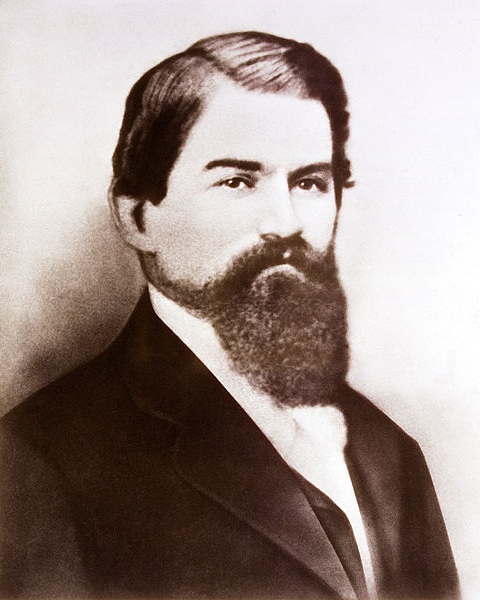
John Stith Pemberton
Born January 8, 1831, Knoxville, Crawford County, Georgia · Died August 16, 1888, Atlanta, Georgia · Columbian Lodge No. 7, Columbus, Georgia
John Stith Pemberton formulated Coca-Cola in Atlanta in 1886, creating a soda-fountain drink that later became one of the world’s best-known brands.
A Botanic Physician Who Built Georgia’s First Drug Laboratories
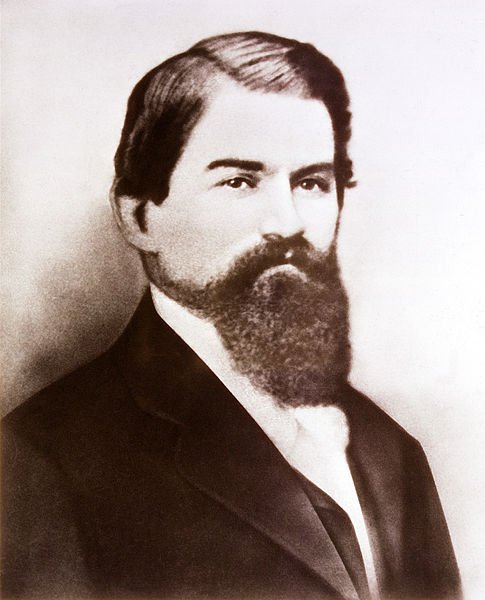
John Stith Pemberton was born on January 8, 1831, in Knoxville, in Crawford County, Georgia, and grew up in Rome, where his family lived for nearly thirty years. He studied medicine and pharmacy at the Reform Medical College of Georgia in Macon and in 1850, at nineteen, was licensed to practice on botanic principles, a system that relied heavily on herbal remedies and on purifying the body of toxins. Its practitioners were viewed with suspicion by many of their contemporaries. He practiced medicine and surgery first around Rome and then in Columbus, where in 1855 he opened a wholesale and retail drug business specializing in materia medica, the substances used in remedies. Some time before the Civil War he obtained a graduate degree in pharmacy; the exact date and place are not known.
The analytical and manufacturing laboratories of J. S. Pemberton and Company, opened in Columbus in 1860, were unusual in the South. “We are direct importers,” the firm claimed, “manufacturing all the pharmaceutical and chemical preparations used in the arts and sciences.” The plant was outfitted with about $35,000 worth of equipment, some of it designed and patented by the company. When the laboratories moved to Atlanta in 1869, a reporter for the Atlanta Constitution called them “one of the most splendid Chemical Laboratories that there is in the country.” Converted later into the state’s first testing labs and staffed with people Pemberton had chosen, they became part of the Georgia Department of Agriculture and were used to identify fraudulent agricultural chemicals and support prosecutions.
Perfume, Cough Syrup and a Soda Fountain in Columbus
From 1855 to 1860 Pemberton lived in a small cottage in Columbus with his wife, Ann Eliza Clifford Lewis, and their only child, Charles. Between 1857 and 1869 he was a partner in six drug firms in the city, and every one of his stores had a soda fountain serving sparkling drinks made from ten fruit extracts and soda water. With the chemist William J. Land he tested the purity of ingredients and developed products of his own: “Sweet Southern Bouquet” perfume, Globe Flower Cough Syrup, Indian Queen Hair Dye and Triplex Liver Pills among them. He was also the first Georgia chemist to analyze fertilizers for farmers. In 1972 Historic Columbus and the Coca-Cola Company saved and restored the cottage, moving it and an outbuilding to 11 Seventh Street; it served as a house museum until 2013 and is now privately owned.
A Cavalry Officer, a College Trustee, and a Licensing Board
Pemberton served as a lieutenant colonel in the Third Georgia Cavalry Battalion and was almost killed in the fighting at Columbus in April 1865. After the war he returned to chemistry and pharmacy. In November 1865 he announced that “the storm of war was over and commerce was bright” and opened his largest venture yet, the Eagle Drug & Chemical House, traveling to New York to choose some $20,000 worth of stock himself. In 1869 he became a principal partner in Pemberton, Wilson, Taylor and Company, based in Atlanta, and he moved there the following year. In 1872 he became a trustee of the Atlanta Medical College, later part of Emory University’s school of medicine, and established a manufacturing business in Philadelphia. From 1881 to 1887 he served on Georgia’s first examining board for the licensing of pharmacists. Atlanta newspapers would later call him “the most noted physician Atlanta ever had.”
French Wine Coca, Prohibition, and a Jug Carried Down the Street
A few years before Coca-Cola, Pemberton’s French Wine Coca was already popular in Atlanta and across the Southeast. In 1885 he told an Atlanta Journal reporter that it combined an extract from the Peruvian coca leaf, “the purest wine,” and the kola nut, and that it was “the most excellent of all tonics, assisting digestion, imparting energy to the organs of respiration, and strengthening the muscular and nervous systems.” He told the reporter that South American Indians regarded the coca plant as a sacred herb and, with its aid, had performed “astonishing” feats “without fatigue.” He acknowledged that the formula was based on Vin Mariani, a French coca wine sold since 1863, then the world’s standard European preparation of the coca leaf. When Atlanta introduced prohibition in 1886 and forbade the sale of wine, he made a nonalcoholic version, substituting sugar syrup for the wine and calling the new drink Coca-Cola, which he advertised as an ideal temperance beverage.
On May 8, 1886, he carried a jug of the syrup down the street to Jacobs’ Pharmacy in Atlanta, where it was served, mixed with carbonated water, for five cents a glass. His partner and bookkeeper, Frank M. Robinson, suggested the name, thinking “the two Cs would look well in advertising,” and wrote the trademark in the script still used today. The first newspaper advertisement appeared in the Atlanta Journal. In the first year, sales averaged about nine drinks a day. After prohibition ended in 1887, Pemberton also resumed making French Wine Coca. He put his son Charles in charge of Coca-Cola manufacturing, and arranged, with the businessmen who financed the new company, a royalty of five cents on each gallon sold. It was his practice to organize a business first as a copartnership and then convert it into a corporation; in March 1888, after eight months as a copartner, he petitioned the Fulton County Superior Court to incorporate the first Coca-Cola Company. He announced that he would retire from active practice, sell his Atlanta drugstores, and devote himself to promoting the drinks. He gradually sold portions of the Coca-Cola business to various partners, and just before his death he sold his remaining interest to Asa G. Candler, the Atlanta businessman who then gathered complete control.
The Funeral at Which Atlanta Sold No Coca-Cola
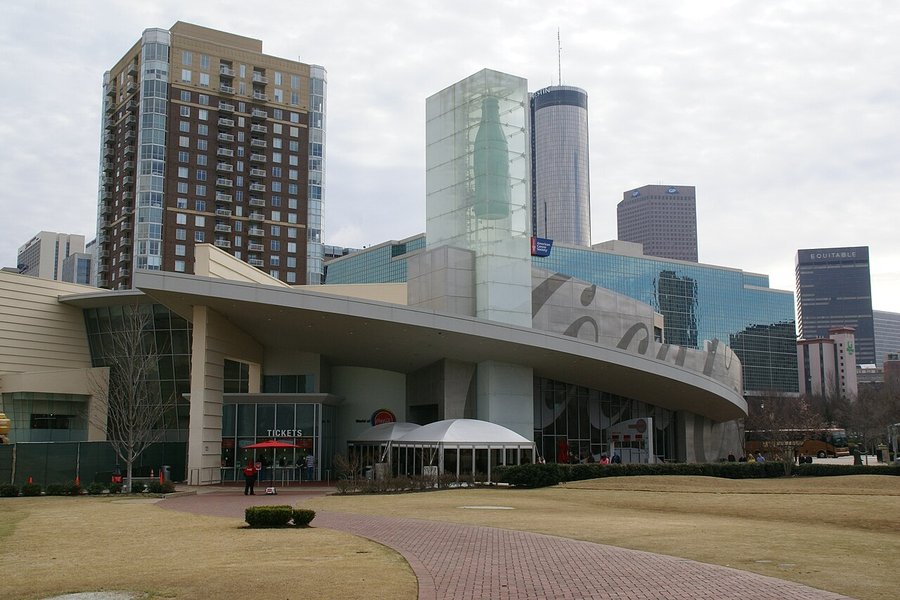
Pemberton died at his home in Atlanta on August 16, 1888, five months after that petition, and before the drink’s later worldwide expansion. On the day of his funeral, Atlanta druggists closed their stores and attended the services together. Not a drop of Coca-Cola was dispensed in the city that day. At sunup the next morning, a special train carried his body to Columbus, where friends and relatives laid him to rest. The Atlanta papers called him “the oldest druggist of Atlanta and one of her best known citizens.”
Columbian Lodge No. 7, Columbus
Pemberton was a member of Columbian Lodge No. 7 in Columbus, Georgia, the city where he had built his career and where he lies in Linwood Cemetery. The dates of his degrees are not known.
How does Pemberton’s work testing chemicals change your picture of the man behind Coca-Cola?
Sources
- New Georgia Encyclopedia — John Stith Pemberton
- The Coca-Cola Company — The Birth of a Refreshing Idea
- Grand Lodge of British Columbia and Yukon — John Stith Pemberton
- On this site — The Columbus Mason Who Gave the World Coca-Cola
- Historic Columbus — Soft Drink Heritage Trail
Life & Masonic Timeline
John Stith Pemberton, before 1888. Photographer unknown. via Wikimedia Commons, cropped · Public domain · Source