A thorny desert tree, a sacred chest overlaid with gold, a bush that burned and was not consumed, and a sprig of evergreen. The acacia links them all, though not always in the way legend says.
Which Acacia? A Question of Botany
“Acacia” is one of the most crowded names in botany. It once covered well over a thousand species worldwide, until molecular evidence showed the group was not one natural genus and botanists split it. At the International Botanical Congress in Vienna in 2005, ratified in Melbourne in 2011, the name Acacia was kept for the “almost 1,000 species” of the mainly Australian group (the wattles), as WorldWideWattle explains. The old subgenus Acacia of Africa and Asia, including the trees of the Bible lands, is now Vachellia.
So which ones grew in the region? Flora of Israel Online, built on the lifetime fieldwork of the Hebrew University botanist Avinoam Danin, describes three desert species:
- Vachellia tortilis subsp. raddiana (Twisted Acacia, Hebrew shittah selilanit). Flora of Israel calls it “the most common spontaneous species of Acacia in Israel,” very common in the Arava Valley and Southern Negev and common in the Judean Desert and the Dead Sea Valley. In Sinai, it notes, these trees “occupy wide wadis, whereas the slopes are almost plant-less.”
- Vachellia tortilis (Umbrella Thorn Acacia), “the most drought-tolerant of the three Acacia species found in Israel’s desert regions,” very common in the Arava and common in the Dead Sea Valley, with a flat-topped crown and coiled pods.
- Vachellia gerrardi var. najdensis (formerly Acacia gerrardii subsp. negevensis), which Kew’s Plants of the World Online lists as native from Sinai and Palestine to Iraq and Arabia.
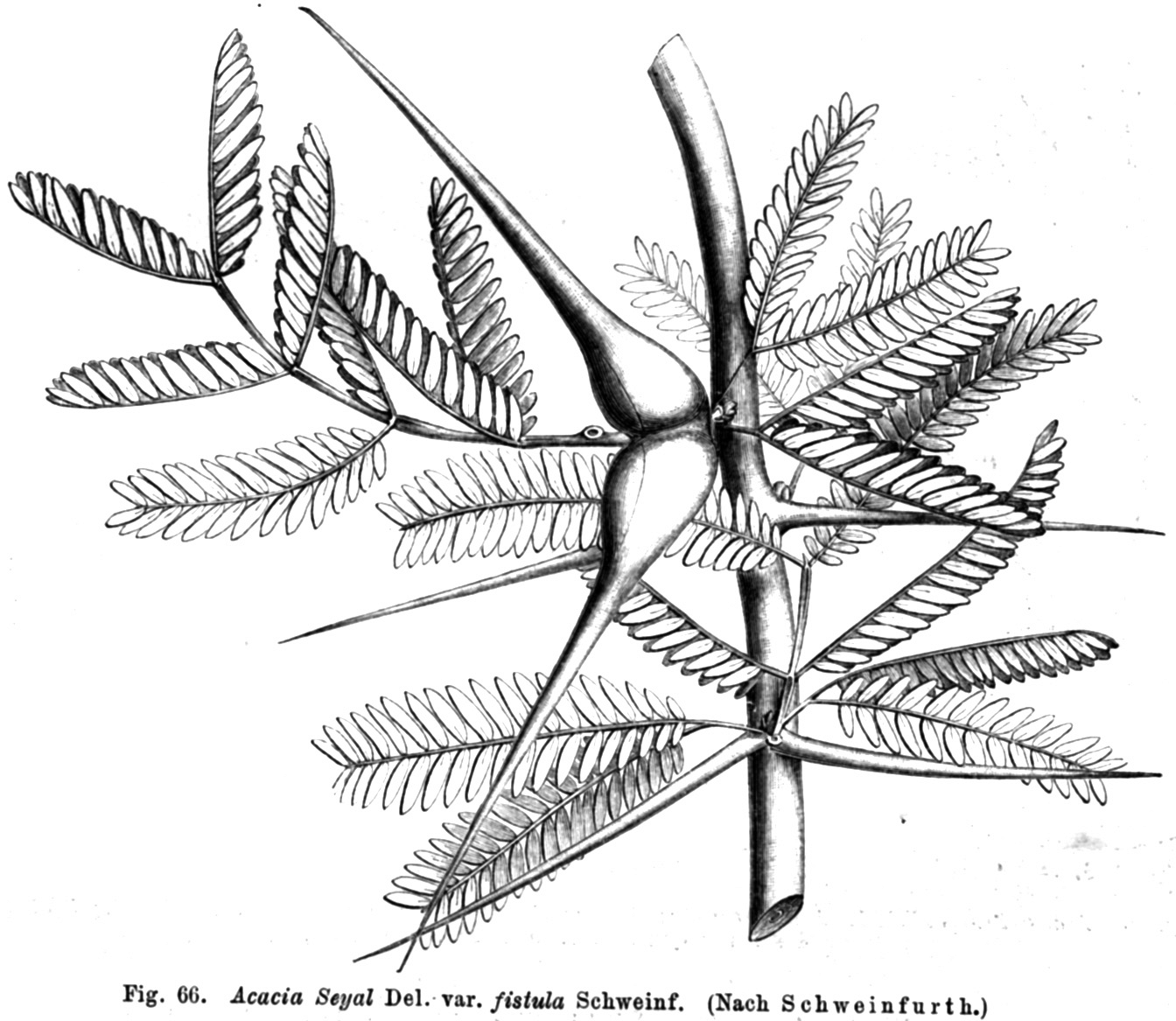
Older references add Acacia seyal. Mackey’s revised Encyclopedia of Freemasonry quotes Hastings’ Dictionary of the Bible that “the acacia seyal and the acacia tortilis are plentiful around the Dead Sea.” We could not confirm seyal in the modern Flora of Israel pages we consulted, so treat it as possible, not proven.
Notice where these trees grow. Flora of Israel lists them in the desert districts (the Arava, the Dead Sea Valley, the Judean Desert, the Negev and Edom), not in the Judean Mountains around Jerusalem itself. They are trees of the rift valley and the wilderness.
Shittim Wood: The Ark and the Tabernacle
The King James Bible never uses the word “acacia.” It keeps the Hebrew: shittah for the tree, and its plural shittim for the wood. Mackey notes that the singular form appears only once, in Isaiah 41:19.
In Exodus, shittim wood is the timber of the sanctuary. Moses is told: “And they shall make an ark of shittim wood: two cubits and a half shall be the length thereof, and a cubit and a half the breadth thereof, and a cubit and a half the height thereof” (Exodus 25:10). It is to be overlaid “with pure gold, within and without” (25:11), carried on “staves of shittim wood, and overlay them with gold” (25:13). The table of shewbread is made of the same wood (25:23). In Exodus 37 the command is carried out: “And Bezaleel made the ark of shittim wood” and “overlaid it with pure gold within and without” (37:1–2).
The choice makes practical sense: in the wadis of Sinai and the Arava, the acacia was the hardwood the wilderness offered.
Shittim is also a place. “And Israel abode in Shittim” (Numbers 25:1), the last camp on the plains of Moab before the crossing. From there “Joshua the son of Nun sent out of Shittim two men to spy secretly” toward Jericho (Joshua 2:1), and from there the people “removed from Shittim, and came to Jordan” (Joshua 3:1).
“I will plant in the wilderness the cedar, the shittah tree, and the myrtle, and the oil tree.”
Isaiah 41:19, King James Version
The Burning Bush: Tradition, Not Botany
Exodus 3:2 says that “the angel of the LORD appeared unto him in a flame of fire out of the midst of a bush: and he looked, and, behold, the bush burned with fire, and the bush was not consumed.” The Hebrew word for this bush is seneh. Was it an acacia? Nobody knows, and the honest answer is a list of theories.
- Bramble. The Encyclopaedia Judaica (Jehuda Feliks) argues that rabbinic literature uses seneh for the bramble (Rubus sanctus), whose berries were called “the berries of the seneh.” It calls this “the earliest and most authentic tradition.” St Catherine’s Monastery in Sinai shows a bramble as the Burning Bush.
- Acacia. Others, the same article notes, identify the seneh with “a variety of acacia widely found in Sinai or with a parasite plant that lives on it,” the mistletoe-like Loranthus acaciae, whose red flowers “from a distance” can create “the illusion of being on fire.”
- Senna and others. The botanist Michael Zohary, in Plants of the Bible (1982), links seneh to the Arabic name of senna (Cassia senna, now Senna alexandrina). He adds that “there are no plants in Sinai or anywhere else that are not consumed when burnt,” so the plant “may be identified linguistically only.” Wild jujube and the yellow-flowered Colutea istria have also been proposed.
The acacia is therefore one candidate among several, and not the leading one in Jewish tradition.
The Acacia in Freemasonry
For Freemasons, the acacia is an emblem of the Master Mason degree. What follows comes only from published sources.
The evergreen appears among the emblems of the Third Degree in Webb’s Freemason’s Monitor, the American handbook first published in 1797. Its meaning is stated plainly in the Masonic funeral service, a public ceremony that the monitor prints in full:
“This evergreen, which once marked the temporary resting place of the illustrious dead, is an emblem of our faith in the immortality of the soul. By this we are reminded that we have an immortal part within us, that shall survive the grave, and which shall never, never, no never die.”
Webb’s Freemason’s Monitor, Masonic burial service (1882 ed.)
Albert Mackey’s Encyclopedia of Freemasonry gives the acacia a long entry and explains why this plant was chosen. Because the tabernacle and the ark were built of it, “by the Jew, the tree from whose wood the sanctuary of the tabernacle and the holy ark had been constructed would ever be viewed as more sacred than ordinary trees,” and the early Freemasons “very naturally appropriated this hallowed plant.” Mackey reads it in three ways:
- Immortality. This is the chief meaning. As a flower fades and is “cut down,” the evergreen’s “perpetual renewal” points to the soul that survives the body. Mackey quotes the monitorial lecture’s phrase, “the evergreen and ever-living emblem of immortality, the acacia.”
- Innocence. Mackey notes that the Greek akakia also means innocence, or “purity of life,” so the sprig stands for a life of integrity and “fidelity to his trusts.”
- Initiation. Ancient mystery traditions each had a sacred plant (the lotus, the myrtle, the mistletoe), and Mackey sees the acacia as Freemasonry’s.
Mackey also records an older custom of mourners carrying evergreen, “generally the cedar or box, or the cypress,” to the grave.
Why It Matters Today
The acacias of the Arava live where almost nothing else can. Flora of Israel notes that the water stored around their deep roots lets them bloom even when no rain has fallen. Thorny, twisted and patient, they endure.
That is the lesson the Craft draws from them. The ark was built of the hard, plain wood the wilderness offered, and then covered in gold. Most of what we build starts the same way: ordinary material, honestly shaped, given worth by what it carries.
The sprig of acacia asks a quiet question: what in your life will stay green after you are gone? Not titles or possessions, but character, remembered kindness and work others carry on. The acacia teaches hope without denying loss. It grows in hard country, and it stays green there.
A Note on Popular Myths
- “Acacia grew abundantly around Jerusalem.” Mackey’s Encyclopedia says so, but Flora of Israel lists the native acacias in the desert districts (the Judean Desert, the Dead Sea Valley, the Arava and the Negev), not in the Judean Mountains where the city stands.
- “There is one ‘acacia’ of the Bible.” Several Vachellia species grow there. Mackey’s “acacia vera” and “mimosa nilotica” reflect older naming.
- “The Burning Bush was an acacia.” This is one theory among several. Jewish tradition favors the bramble, and Zohary argues that the plant can only be identified from its name.
- “The bush at St Catherine’s is the original.” Zohary notes that there is no native Rubus in Sinai and that the monastery’s bramble was planted by the monks.
- “The Masonic sprig must be acacia.” Webb’s monitor speaks simply of “evergreen,” and Mackey records cedar, box and cypress in older funeral custom. The symbol lies in the evergreen’s meaning, not the species.
What symbol or plant in your own life reminds you of someone you’ve lost, and why that one?
Sources
- Flora of Israel Online (A. Danin et al.), “Vachellia tortilis subsp. raddiana.” https://flora.org.il/en/plants/vacrad/
- Flora of Israel Online, “Vachellia tortilis.” https://flora.org.il/en/plants/vactor/
- Royal Botanic Gardens, Kew, Plants of the World Online, “Vachellia gerrardi var. najdensis.” https://powo.science.kew.org/taxon/urn:lsid:ipni.org:names:77138716-1
- WorldWideWattle (B. R. Maslin), “Acacia name issue.” https://worldwidewattle.com/infogallery/nomenclature/nameissue/
- The King James Version of the Bible, Project Gutenberg eBook #10: Exodus 3, 25, 37; Numbers 25; Joshua 2–3; Isaiah 41. https://www.gutenberg.org/ebooks/10
- Jehuda Feliks, “Burning Bush,” Encyclopaedia Judaica, via Encyclopedia.com. https://www.encyclopedia.com/plants-and-animals/plants/plants/burning-bush
- Elisabeth C. Miller Library, University of Washington, “On the ‘Burning Bush’ plant” (quoting M. Zohary, Plants of the Bible, Cambridge, 1982). https://depts.washington.edu/hortlib/pal/on-the-burning-bush-plant/
- Thomas Smith Webb, Webb’s Freemason’s Monitor, with the Michigan Burial Service (1882), Internet Archive. https://archive.org/details/webbsfreemasons00webb
- Thomas Smith Webb, Webb’s Freemason’s Monitor (1865 ed.), Internet Archive. https://archive.org/details/webbsfreemasonsm00webb
- Albert G. Mackey, Encyclopedia of Freemasonry (revised ed.), “Acacia,” via Encyclopedia Masonica. https://www.universalfreemasonry.org/en/encyclopedia/acacia