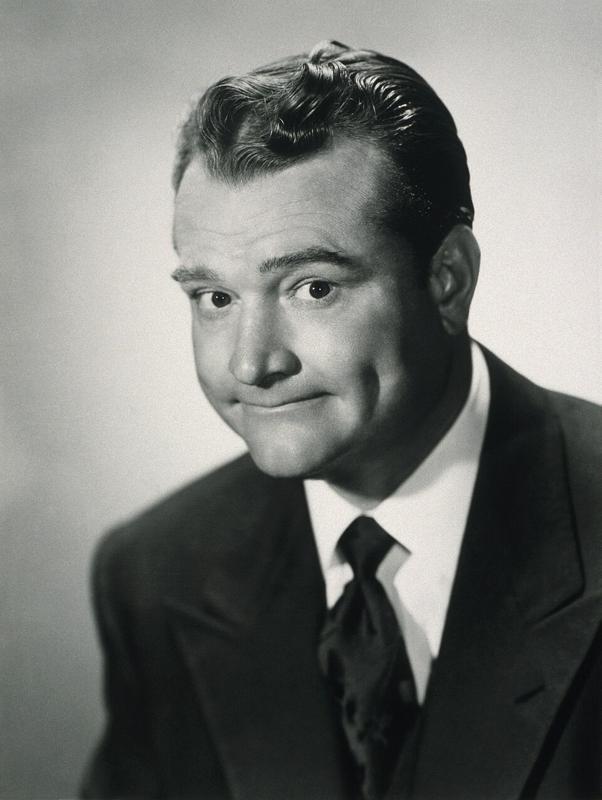
Red Skelton
Born July 18, 1913, Vincennes, Indiana · Died September 17, 1997, Rancho Mirage, California · Vincennes Lodge No. 1, Indiana
Red Skelton brought gentle clowning and characters like Freddy the Freeloader to millions of homes over two decades of television comedy.
A Vincennes Newsboy Who Found the Stage Behind the Pantheon
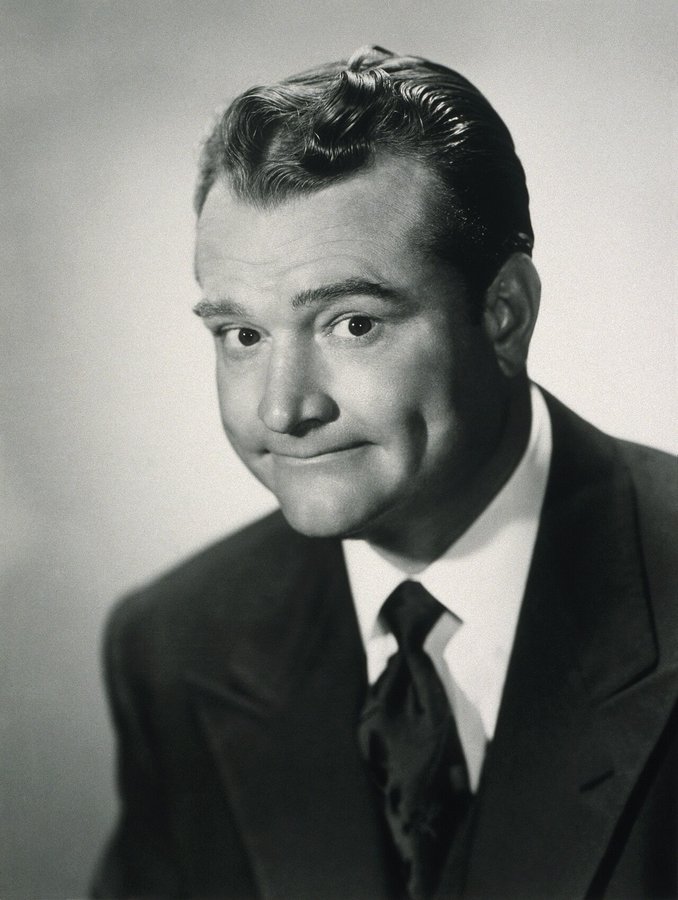
Richard Bernard “Red” Skelton was born in Vincennes, Indiana, on July 18, 1913, two months after the death of his father, Joe, a former circus clown. His mother, Ida Mae, raised him and three brothers. The family was poor; he sold newspapers and took odd jobs, and one evening in 1923, selling papers outside the Pantheon Theater, he met the comedian Ed Wynn, who invited him backstage. The view from the stage set his course. In his early teens he left home to travel with medicine shows, tent companies, showboats, circuses, burlesque and vaudeville. A summer with a patent-medicine show, when he was twelve, took him through Indiana, Arkansas, Illinois and Missouri. He later worked as a walk-around clown with the Hagenbeck and Wallace circus, the Indiana show his father had known, and honed the physical comedy that became his stock-in-trade. His mother used to say that he did not run away from home: “My destiny just caught up with me at an early age.”
Radio Characters, MGM Comedies, and a Breakdown in Uniform
An appearance on Rudy Vallee’s radio program in 1937 brought wider notice, and that same year he reached Broadway. His film debut came in 1938 with Having Wonderful Time, opposite Ginger Rogers, and he went on to appear in more than thirty Metro-Goldwyn-Mayer comedies, including Bathing Beauty (1944), The Fuller Brush Man (1948) and Excuse My Dust (1951). In 1941 he began hosting The Raleigh Cigarette Program on radio, where he developed characters that later moved to television: Clem Kadiddlehopper, the country bumpkin; the boxer Cauliflower McPugg; Junior, the “Mean Widdle Kid,” whose “I dood it!” became a national catchphrase; Sheriff Deadeye; and the con man San Fernando Red.
He was drafted in March 1944. The radio show went off the air, and he served in the field artillery at Camp Roberts, California, and as an entertainer, at times giving as many as a dozen shows a day for troops in the United States and in Europe. The pace led to a nervous breakdown and months in a military hospital. He was discharged in 1945, having married the actress Georgia Maureen Davis that March, and returned to radio. A first marriage, to Edna, who had also been his business partner, had ended in 1943.
Two Decades in America’s Living Rooms
The Red Skelton Show premiered on the National Broadcasting Company on September 30, 1951, finished fourth in the ratings in its first year, and won an Emmy Award for Skelton as best comedian. By 1954 the program had moved to the Columbia Broadcasting System, where, from 1962, it ran as an hour-long broadcast under the title The Red Skelton Hour. A last season returned to the original network in 1970–71. Freddy the Freeloader, the gentle tramp who became his most famous character, first appeared on television. He closed broadcasts with “Good night, and may God bless.” He won two Emmy Awards, including one in 1961 for comedy writing, and the Television Academy gave him its Governors Award for lifetime achievement in 1986 and inducted him into its Hall of Fame in 1988.
One of his most remembered television moments came on January 14, 1969. He told viewers about a teacher from his schooldays in Vincennes, Mr. Lasswell, who decided that his pupils were reciting the Pledge of Allegiance by rote. “I’ve been listening to you boys and girls recite the Pledge of Allegiance all semester,” Skelton had him say, “and it seems as though it’s becoming monotonous to you.” Against a background of strings, Skelton then went through the pledge word by word, as the teacher had: “I” meant “me, an individual, a committee of one,” and “for all” meant “it’s as much your country as it is mine.” He closed by noting that two words, “under God,” had been added since his boyhood, and wondered aloud whether someday someone might call the pledge a prayer and take it out of the schools as well. Viewers asked for it so insistently that it was printed and pressed onto records.
The family’s life was marked by loss. In 1957 his son Richard was diagnosed with leukemia; Skelton took the family abroad so the boy could see as much of the world as possible, and after they returned, father and son spent time encouraging other children in the hospital. Richard died in 1958. After the weekly series ended, Skelton and Georgia divorced, and in 1976 she died. He halted his professional work to mourn her, then returned to the stage.
Colleges, Casinos, and a Painter’s Second Career
Theaters, he said, were his “palaces.” After television he played colleges, nightclubs, casinos and halls including Carnegie Hall, sometimes as many as 125 appearances a year, and he kept at it into his eighties. He added a sign-language interpreter after learning that hearing-impaired audiences followed his pantomimes. Away from the stage he wrote short stories and thousands of musical compositions, some of them recorded by Van Cliburn, David Rose and Arthur Fiedler, and he painted clowns whose pictures later sold at auction for large sums. The Screen Actors Guild gave him a lifetime achievement award in 1988, and the following year he was inducted into the International Clown Hall of Fame. He died of pneumonia on September 17, 1997, at his home in Rancho Mirage, California, at eighty-four. Vincennes opened the Red Skelton Museum of American Comedy, on the Vincennes University campus, in 2013.
Vincennes Lodge No. 1, and Honors from the Scottish Rite
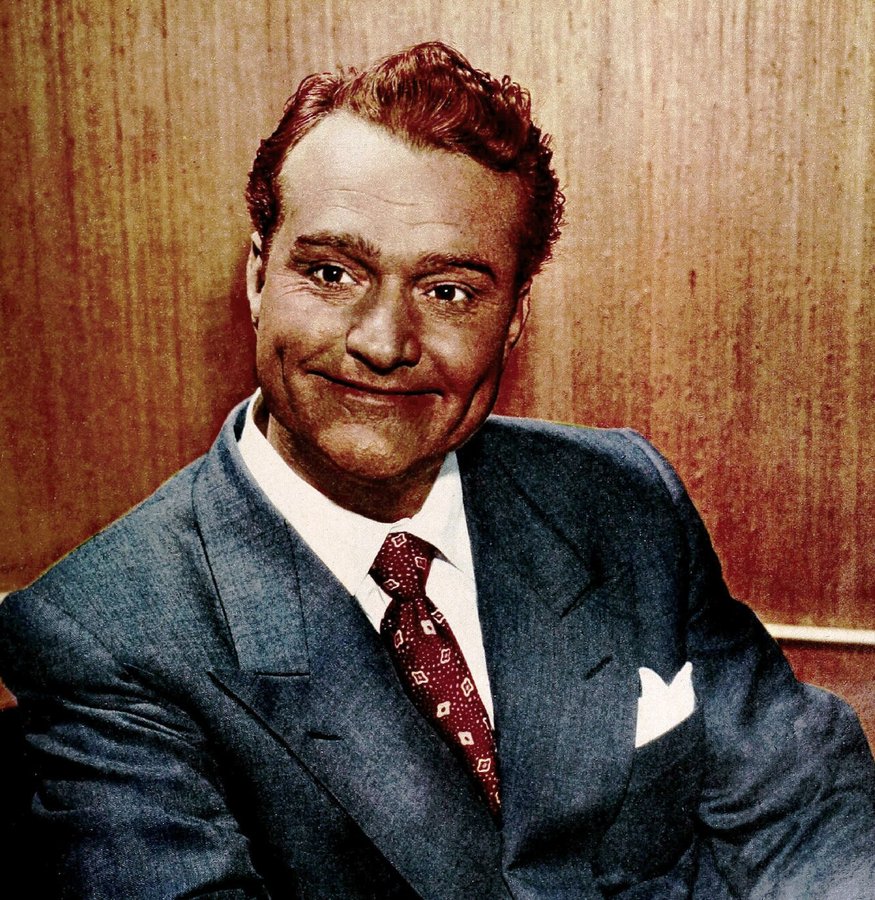
Skelton was raised a Master Mason on September 20, 1939, in Vincennes Lodge No. 1, in his Indiana hometown, well before television made him a weekly guest in American homes. In 1940 he completed the Scottish Rite degrees in the Valley of Evansville, Indiana, and he also joined the York Rite and the Shrine. He was a supporter of Shriners’ hospitals for children and of the Red Skelton Foundation in Vincennes, which provided clothing to children in need. The General Grand Chapter of Royal Arch Masons awarded him its Gold Medal for Distinguished Service in the Arts and Sciences. On September 24, 1969, the Northern Masonic Jurisdiction of the Scottish Rite coroneted him an Inspector General Honorary, thirty-third degree, and on July 14, 1995, it presented him the Gourgas Medal, its highest honor, in recognition of his work as a Mason, a philanthropist and a patriot.
Which Skelton character or routine do you remember most clearly?
Sources
- Red Skelton Museum of American Comedy — Red’s Legacy of Laughter
- Indiana Historical Society — Words, Images and Music Convey the Life of Richard “Red” Skelton
- Indiana Historical Society — Red Skelton, by Doug Wissing (PDF)
- Television Academy — Red Skelton
- Scottish Rite, Northern Masonic Jurisdiction — A Funny Remembrance: The Life of Illustrious Brother Red Skelton
- Grand Lodge of British Columbia and Yukon — Red Skelton
- Snopes — Red Skelton Pledge of Allegiance
Life & Masonic Timeline
Adam Cuerden, via Wikimedia Commons · Public domain · Source