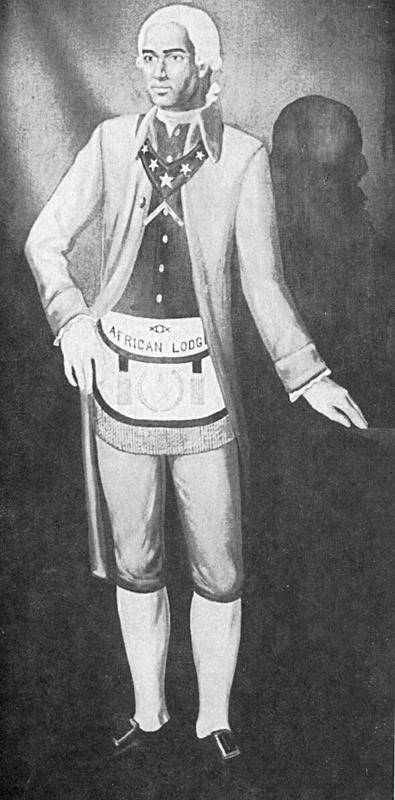
Prince Hall
Born c. 1735, Unknown · Died December 4, 1807, Boston, Massachusetts · Army Lodge No. 441 (Irish Constitution, 38th Regiment of Foot), Boston
Prince Hall was a Boston abolitionist and community leader who founded the first lodge of Black Freemasons, the root of Prince Hall Freemasonry.
The duty of a mason to a mason, and of charity and love to all mankind, as the work and image of the great God and the Father of the human race.
A Leather-Dresser at the Sign of the Golden Fleece
Prince Hall was a Boston leather-dresser, caterer, abolitionist and organizer whose early life remains uncertain. He was born about 1735; the story that he came from Barbados, popularized in a 1903 history by William H. Grimshaw, has never been confirmed by any record, and several Black men named Prince Hall lived in Boston at the time. A deposition he gave in 1807 described him as a leather-dresser, about seventy years old, and a member of a Congregational church since November 1762.
The earliest documents place him in the household of William Hall, a Boston leather-dresser, from whom he learned his trade. He married Sarah Ritchie in 1763; she died in 1769. A certificate of manumission dated April 9, 1770, a few weeks after the Boston Massacre, is generally taken to record his freedom, and that August he married Flora Gibbs of Gloucester. A son, Primus Hall, had been born in 1756 to a woman named Delia. As a free man Hall ran a leather shop at the sign of the Golden Fleece and appears in town records as a property owner, taxpayer and voter. In April 1777 he billed the Boston Regiment of Artillery for five leather drumheads. Six Black men named Prince Hall appear in the state’s Revolutionary military records, and whether he was one who served, perhaps at Bunker Hill, has never been settled.
Fifteen Men Initiated at Castle William
Early in 1775 Hall was turned away by Boston’s St. John’s Lodge. On March 6, 1775, he and fourteen other free Black men were initiated, passed and raised in Lodge No. 441 under the Irish Constitution, attached to the British Army’s 38th Regiment of Foot, then garrisoned at Castle William in Boston Harbor. Before the regiment left, Sergeant John Batt issued them a permit on March 17 to meet as a lodge, and on July 3, 1775, they organized African Lodge No. 1 with Hall as Master. The lodge had limited privileges but no permanent warrant.
After the war Hall wrote to London in March and again in June 1784 asking for a charter. The Premier Grand Lodge of England granted a warrant that September, but it did not reach Boston until April 29, 1787, and African Lodge No. 459 was organized on May 6. From that lodge the African Grand Lodge of North America formed on June 24, 1791, with Hall as Grand Master until his death. Under its authority Black lodges were organized in Providence and in Philadelphia, where Absalom Jones became Master in 1798. The original warrant survives and is kept in a vault in Boston.
Petitions Against Slavery and the Kidnappers of Free Men
On January 13, 1777, Hall and seven other Black Bostonians petitioned the Massachusetts legislature to end slavery, borrowing the language of the Revolution and noting that they had “Long and Patiently waited the Event of petition after petition.” The legislature referred it to Congress. Slavery in Massachusetts ended through court decisions in 1783.
When Shays’ Rebellion broke out in the western counties in 1786, Hall wrote to Governor James Bowdoin on November 26 offering seven hundred Black volunteers to help put it down. The offer was declined. On January 4, 1787, Hall led a committee of twelve from African Lodge in presenting a petition, signed by seventy-three men, asking the state to help them settle in Africa, where they “shall live among our equals.” The House accepted it, but it died in committee; it is one of the earliest Black-authored proposals for African resettlement.
In February 1788 three free Black men, Cato Newell, Wenham Carey and Luke Russell, the last believed to be a member of African Lodge, were hired to repair a vessel in Boston Harbor, locked below deck and carried to the Caribbean to be sold. Hall and other Black Masons petitioned on February 27: “What then are our lives and liberties worth, if they may be taken away in such a cruel and unjust manner as this?” Fear of the same fate, they wrote, kept many good seamen at home. Together with petitions from Quakers and Boston clergy, theirs led to the act of March 26, 1788, “to prevent the Slave Trade.” The governor of Saint Barthélemy stopped the men’s sale, and on July 29 they came home to what one Bostonian called a day of jubilee.
Schools for Black Children and a Charge at Menotomy
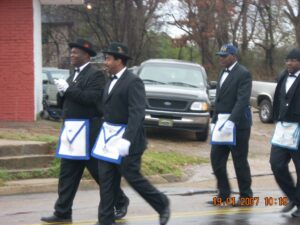
Boston did not formally bar Black children from its public schools in the 1780s, but pupils faced hostility from teachers and white classmates. Hall’s 1787 petition complained that Black families paid taxes while their children received no benefit from the town’s free schools. That petition and a further appeal in 1796 failed. The community established the African School in the home of Primus Hall in 1798; it later moved to the African Meeting House and eventually to the Abiel Smith School.
In his charge to African Lodge at Menotomy on June 24, 1797, Hall spoke of a Mason’s duty to other Masons and of charity toward all humanity. He described the insults and mob violence Black Bostonians met in the streets, saying they “may truly be said to carry our lives in our hands,” and counseled patience without surrender of dignity. Recalling the slave uprising in the French West Indies six years earlier, he told his brethren that “the darkest hour is just before the break of day.”
Hall died in Boston on December 4, 1807, and a week later funeral rites were held at his home according to Masonic custom. The following year the Grand Lodge took his name, and Prince Hall Freemasonry carries it still. The campaign for equal schooling continued after him: William Cooper Nell organized boycotts and petitions, and Benjamin Roberts unsuccessfully challenged school segregation on behalf of his daughter Sarah. Massachusetts outlawed segregated public schools in 1855.
How did Hall’s work for Black education extend the institution-building he had begun with African Lodge?
Sources
- National Park Service — The Black Struggle for Equal Education in Boston, 1787 to 1976
- Massachusetts Historical Society — The Lives of Individual African Americans in Massachusetts after the End of Slavery
- Massachusetts Historical Society — “What then are our Lives and Lebeties worth”: The 18th Century Kidnapping Case that Shook Boston
- PBS, Africans in America — Prince Hall
- PBS, Africans in America — Petition 1/13/1777
- PBS, Africans in America — The Boston Plan
- Most Worshipful Prince Hall Grand Lodge of Indiana — Prince Hall
- Grand Lodge of British Columbia and Yukon — Prince Hall
- Library of Congress — Prince Hall, A Charge Delivered to the African Lodge, 24 June 1797
Life & Masonic Timeline
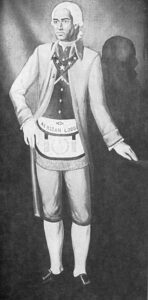
According to the site Grand Logde of British Culumbia and Yucon[2], the portrait is unattributed.[3], via Wikimedia Commons · Public domain · Source