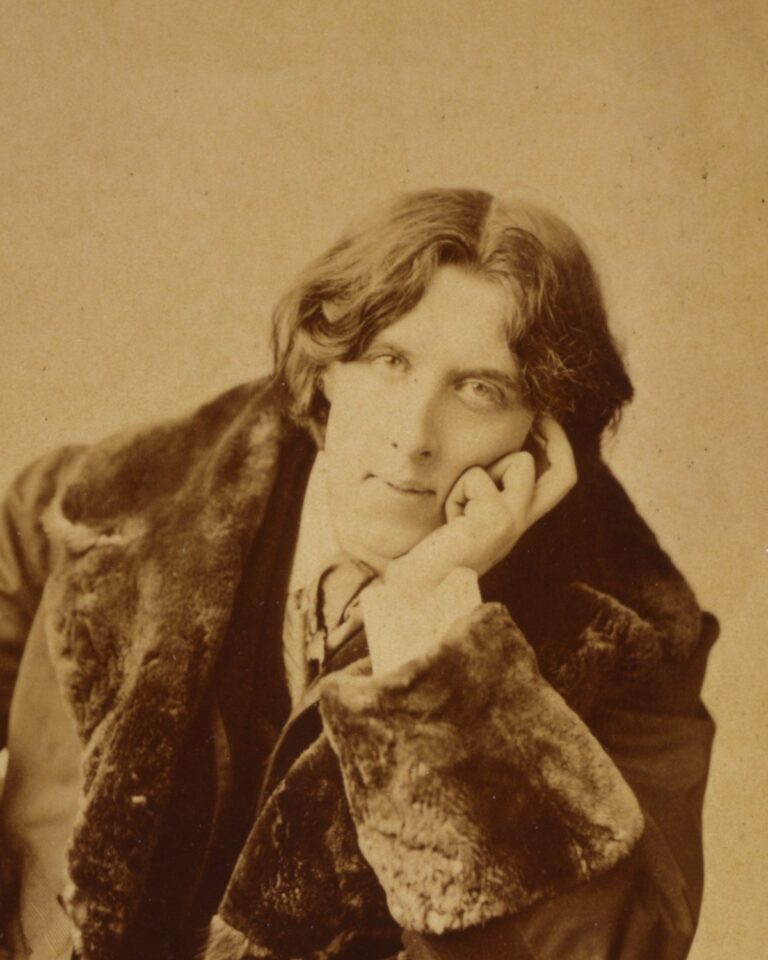
Oscar Wilde
Born October 16, 1854, Dublin, Ireland · Died November 30, 1900, Paris, France · Apollo University Lodge No. 357, Oxford
Oscar Wilde wrote The Picture of Dorian Gray and celebrated stage comedies, bringing an enduring wit to English literature and theater.
A Surgeon’s Son with a Gift for the Classics
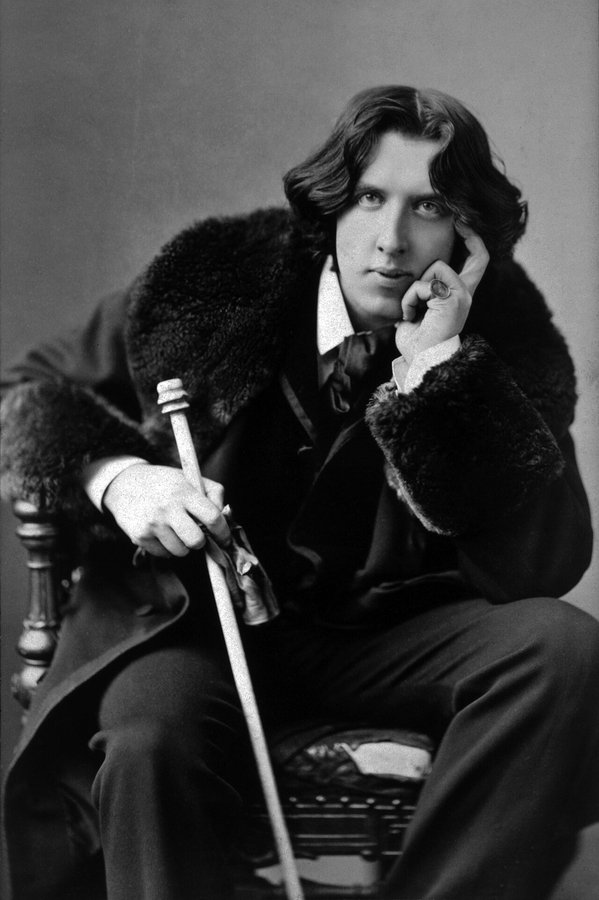
Oscar Wilde was born in Dublin on October 16, 1854, into a household of unusual learning. His father, William Wilde, was Ireland’s leading ear and eye surgeon and also published books on archaeology, folklore and Jonathan Swift. His mother, Jane Francesca Wilde, was a nationalist poet who wrote under the name Speranza and was an authority on Celtic myth.
After Portora Royal School in Enniskillen, Wilde went on successive scholarships to Trinity College Dublin from 1871 to 1874 and to Magdalen College, Oxford, from 1874 to 1878. At Oxford he took a rare double first, won the Newdigate Prize in 1878 for his long poem Ravenna, and absorbed the teaching of John Ruskin and Walter Pater on the central place of beauty in life. He filled his rooms with fine objects, and one remark about them became his first famous line: “Oh, would that I could live up to my blue china!”
Knee Breeches and Silk Stockings at the Apollo Lodge
When Wilde arrived at Oxford, Apollo University Lodge No. 357 was the leading fraternal society of the university, initiating dozens of undergraduates every year. Prince Leopold, Queen Victoria’s son and a student at Christ Church, was raised in the lodge in April 1875 and installed as its Master in February 1876. Wilde knew the prince, and his own father had been an active Mason in Ireland.
Wilde was proposed on February 16, 1875. Two days before his initiation, his friend J. E. C. Bodley, soon to serve as the lodge’s Secretary, took him to call on a brother named Williamson for what Bodley’s diary calls “a long talk on Masonry.” When Williamson brought out his regalia, Bodley wrote, Wilde “was much struck by their gorgeousness.” Still only twenty, he was initiated on February 23, 1875, under the dispensation the university lodge regularly obtained for undergraduates who had not yet reached twenty-one. He was raised a Master Mason on May 25, 1875.
He took to the Craft with real enthusiasm. In 1876 he joined a second Oxford lodge, Churchill Lodge No. 478, and served there as Junior Deacon in 1877. He also took the Mark Master Mason degree, and on November 27, 1876, he received the Rose Croix degree in the Oxford University Chapter of the Ancient and Accepted Scottish Rite.
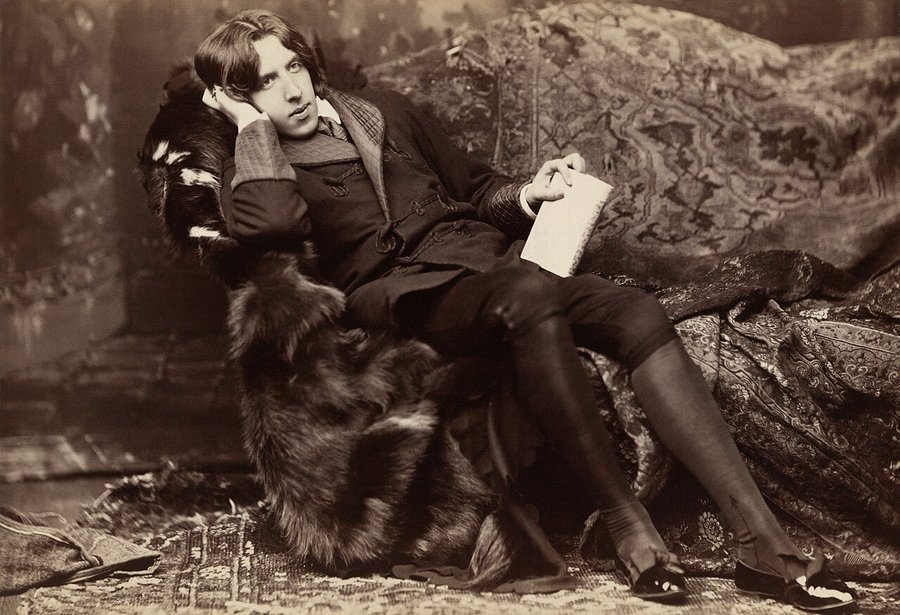
The lodge left a visible mark on his public life. A week after he reached New York in 1882 for his American lecture tour, Wilde walked onto the stage of Chickering Hall before a sold-out house wearing knee breeches, silk stockings and buckled shoes. Many in the audience took it for English court dress. The Masonic historian Yasha Beresiner pointed out that the last time Wilde had worn that outfit was at a meeting of the Apollo Lodge in Oxford.
His active Masonry did not outlast Oxford. Like many brothers who had gone down from the university, he stopped paying his subscriptions. In 1880 the lodge was owed more than £1,000 in arrears by former members, and in the years that followed it excluded scores of them. Wilde was excluded for nonpayment of dues on January 22, 1883, and his membership in Churchill Lodge ended the same year, more than a decade before the trials that transformed his life.
The Aesthete Who Had Nothing to Declare
In London Wilde set out to make himself famous, and he succeeded quickly. Punch mocked him as the leading aesthete, and Gilbert and Sullivan based part of the poet Bunthorne in their comic opera Patience on him. He published Poems at his own expense in 1881, then spent twelve months lecturing across the United States and Canada, telling customs officers in New York that he had “nothing to declare but my genius.”
In 1884 he married Constance Lloyd, daughter of a prominent Irish barrister. Their sons Cyril and Vyvyan were born in 1885 and 1886. Wilde reviewed books for the Pall Mall Gazette, edited the magazine Woman’s World from 1887 to 1889, and in 1888 published The Happy Prince and Other Tales, which showed his gift for romantic allegory in the form of the fairy tale.
Dorian Gray and the Comedies That Conquered London
Nearly all of Wilde’s major work came in a single crowded decade. The Picture of Dorian Gray appeared in Lippincott’s Magazine in 1890 and, revised and expanded by six chapters, as a book in 1891. It tells of a beautiful young man whose portrait grows hideous with every sin while he himself stays unchanged.
The theater brought his greatest popular success. Lady Windermere’s Fan opened in 1892, and after A Woman of No Importance in 1893 the critic William Archer wrote that Wilde’s plays “must be taken on the very highest plane of modern English drama.” Early in 1895 An Ideal Husband and The Importance of Being Earnest were both running in London, the second turning the machinery of farce into a merciless picture of Victorian hypocrisy.
From the Old Bailey to Reading Gaol
In 1891 Wilde met Lord Alfred Douglas, sixteen years his junior, and the two became close. Douglas’s father, the Marquess of Queensberry, publicly accused Wilde of homosexuality, and Wilde, urged on by Douglas, sued him for criminal libel. The case went to trial in April 1895 and collapsed within three days. Friends begged Wilde to escape to France; he refused, was arrested, and was tried for gross indecency. The first jury could not agree. At the retrial in May 1895 he was convicted and sentenced to two years’ hard labor.
He served most of the sentence at Reading Gaol, where he wrote a long letter to Douglas that was published in heavily cut form in 1905 as De Profundis. Constance took the boys to the Continent and changed the family name to Holland; she died in Genoa in 1898. His play Salomé, banned from the London stage, was performed in Paris in 1896 while he was still imprisoned.
An Unconquerable Gaiety in Exile
Wilde left prison in May 1897 a bankrupt and went straight to France, hoping to write again. His only remaining work was The Ballad of Reading Gaol, published in 1898, which drew on what he had seen of prison life and its cruelty. George Bernard Shaw spoke of the “unconquerable gaiety of soul” that carried him through those years. Max Beerbohm and Robert Ross, later his literary executor, stayed loyal.
He died in Paris on November 30, 1900, at the age of forty-six, of meningitis that followed an ear infection, and was received into the Roman Catholic Church in his last hours. He is buried in Père Lachaise Cemetery. In January 2017 he was among some 50,000 men posthumously pardoned under the British law named for Alan Turing, which cleared those convicted under laws against homosexuality that no longer exist.
Wilde wore his lodge dress onto an American stage and let the audience think it was court dress. What else from his Oxford lodge years do you think stayed with him after his membership lapsed?
Sources
- Encyclopaedia Britannica — Oscar Wilde
- British Broadcasting Corporation — Oscar Wilde
- Grand Lodge of Ohio, “Freemason and Author: Oscar Wilde”
- Apollo University Lodge No. 357, “History of Apollo University Lodge”
- Grand Lodge of British Columbia and Yukon, “Oscar Fingal O’Flaherty Wills Wilde”
Life & Masonic Timeline
Oscar Wilde, 1882. Napoleon Sarony. via Wikimedia Commons, cropped · Public domain · Source