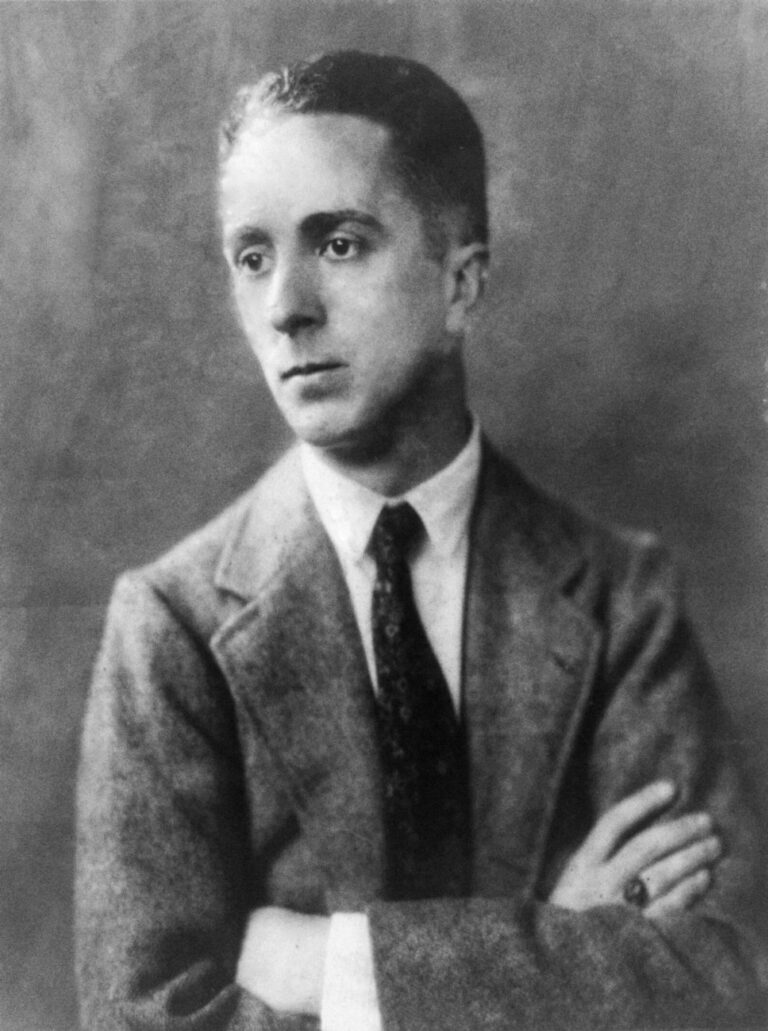
Norman Rockwell
Born February 3, 1894, New York City · Died November 8, 1978, Stockbridge, Massachusetts
Norman Rockwell painted 322 Saturday Evening Post covers and the Four Freedoms, using his Vermont neighbors to picture American life for generations.
Without thinking too much about it in specific terms, I was showing the America I knew and observed to others who might not have noticed.
A Boy Who Traded School for the Drawing Board
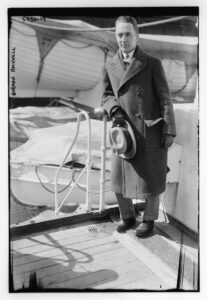
Norman Rockwell was born in New York City on February 3, 1894. He always wanted to be an artist. At fourteen he enrolled in art classes at The New York School of Art, formerly the Chase School of Art. In 1910 he left high school to study at the National Academy of Design, then moved to the Art Students League, where Thomas Fogarty prepared him for commercial illustration and George Bridgman taught the technical skills he used for the rest of his life.
Success came early. He painted his first commission of four Christmas cards before his sixteenth birthday. While still in his teens he became art director of Boys’ Life, the official magazine of the Boy Scouts of America, and began a freelance career illustrating young people’s publications. At twenty-one his family moved to New Rochelle, New York, a community of illustrators that included J. C. and Frank Leyendecker. There Rockwell set up a studio with the cartoonist Clyde Forsythe and produced work for Life, the Literary Digest, and Country Gentleman. In 1916, at twenty-two, he painted his first cover for The Saturday Evening Post, which he called the “greatest show window in America.” Over the next forty-seven years, 321 more Rockwell covers would appear there — 322 in all. That same year he married Irene O’Connor; they divorced in 1930.
In 1930 he married Mary Barstow, a schoolteacher. They had three sons, Jarvis, Thomas and Peter, and moved to Arlington, Vermont, in 1939, after which his work began to reflect small-town American life. “Without thinking too much about it in specific terms,” he later said, “I was showing the America I knew and observed to others who might not have noticed.”
Four Freedoms, and a Studio Fire
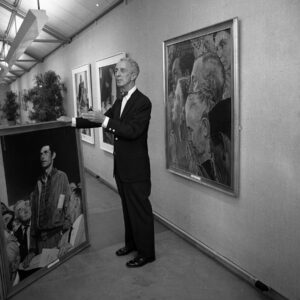
In 1943, inspired by President Franklin Roosevelt’s January 1941 address to Congress, Rockwell painted the Four Freedoms: Freedom of Speech, Freedom to Worship, Freedom from Want and Freedom from Fear. The Saturday Evening Post reproduced them in four consecutive issues, beginning on February 20, 1943, each with an essay by a contemporary writer. The paintings toured the United States in an exhibition jointly sponsored by the Post and the U.S. Treasury Department, and through the sale of war bonds raised more than $130 million for the war effort. The same year brought a heavy personal loss: a fire destroyed his Arlington studio, along with numerous paintings and his collection of historical costumes and props.
The first of the four had grown out of his own town. On November 9, 1940, Arlington’s school burned, and at the town meeting called to decide whether to spend money on a new one, his neighbor Jim Edgerton rose to speak against it. Edgerton was a dairy farmer who supported the schools, but only months earlier he had lost his herd to a brucellosis outbreak, and with no milk check coming in he feared the tax increase. The room disagreed with him and listened to him anyway. Rockwell had been struggling to find a way to picture Roosevelt’s freedoms, and that moment gave him Freedom of Speech.
He did not paint Edgerton. He wanted a Lincoln-like everyman, and he posed Carl Hess, who ran a gas station in town; it took him four attempts before he was satisfied. Arlington neighbors filled all four canvases, thirty-one models in all, among them the two Squiers children tucked into bed in Freedom from Fear. Edgerton himself had a happier ending than the meeting suggested. Out of work, he took a job on the crew building the new school, was soon made leader of its staging crew, and helped build the school he had voted against. His name and the year 1943 are still written on a truss above the old gymnasium.
Stockbridge, Look, and Harder Public Subjects
The family moved to Stockbridge, Massachusetts, in 1953. Mary died unexpectedly in 1959. In 1960, with his son Thomas, Rockwell published his autobiography, My Adventures as an Illustrator; the Post ran excerpts in eight consecutive issues, with his Triple Self-Portrait on the first cover. In 1961 he married Molly Punderson, a retired teacher. Two years later he ended his forty-seven-year association with the Post and began a ten-year association with Look magazine, painting subjects that included civil rights, the war on poverty, and the exploration of space.
His first illustration for Look, The Problem We All Live With, appeared as a two-page spread in January 1964. It shows six-year-old Ruby Bridges, in a white dress, walking to school under the escort of four federal marshals — the morning of November 14, 1960, when she became the first African American child to attend the all-white William Frantz Elementary School in New Orleans, under court-ordered desegregation. Other paintings from those years include Murder in Mississippi, depicting the killing of civil-rights workers, and the more hopeful New Kids in the Neighborhood.
In 1973 Rockwell established a trust to preserve his work, placing it with the Old Corner House Stockbridge Historical Society, later the Norman Rockwell Museum, whose permanent collection the trust now forms the core of. In 1976, in failing health, he arranged to have his studio and its contents added to the trust. He received the Presidential Medal of Freedom, the nation’s highest civilian honor, in 1977, and died peacefully at his Stockbridge home on November 8, 1978, at the age of 84. In 2008 he was named the official state artist of Massachusetts.
Red Mountain Lodge, in the Town That Posed for Him
From the sources we do have, it is believed that Rockwell belonged to Red Mountain Lodge No. 63 in Arlington, Vermont, the town where he lived from 1939 to 1953 and where he found the models for the Four Freedoms. The lodge received its charter on January 15, 1863, and still meets in Arlington under the Grand Lodge of Vermont.
How did Rockwell’s later civil-rights paintings differ from the work that first made him famous?
Sources
- Norman Rockwell Museum — Norman Rockwell: A Brief Biography
- Smithsonian Magazine — Deborah Solomon, “Inside America’s Great Romance With Norman Rockwell”
- Grand Lodge of Vermont — Craft/Blue Lodges (Red Mountain No. 63)
- Norman Rockwell Museum Audio Tour — Freedom of Speech
- Manchester Journal — Arlington and Rockwell: An enduring relationship
- National Archives — President Franklin Roosevelt’s Annual Message (Four Freedoms) to Congress (1941)
Life & Masonic Timeline
Underwood & Underwood, published 1921. Public domain, via Library of Congress / Wikimedia Commons. · Public domain · Source