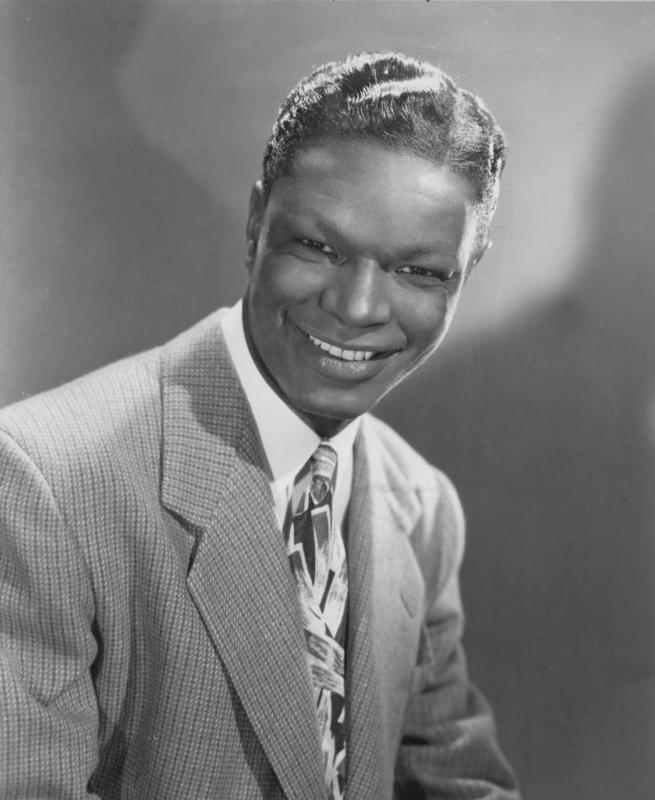
Nat King Cole
Born March 17, 1919, Montgomery, Alabama · Died February 15, 1965, Santa Monica, California · Thomas Waller Lodge No. 49 (Prince Hall), Los Angeles
Nat King Cole was a jazz pianist and one of the most beloved singers of his era, and a pioneer as host of his own network radio and television shows.
A Preacher’s Son Who Found Jazz on Chicago’s South Side
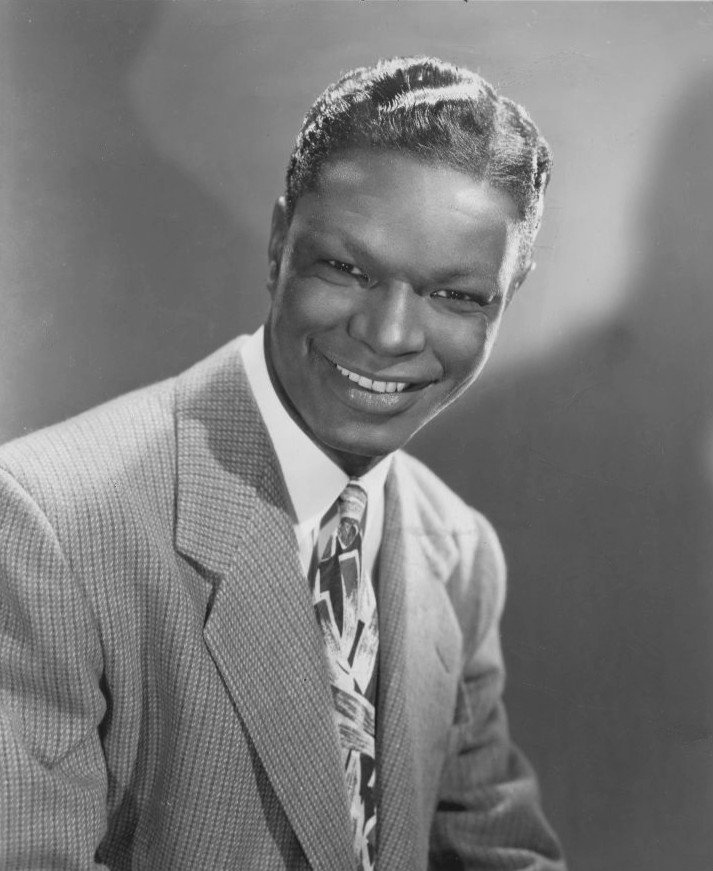
Nathaniel Adams Coles was born in Montgomery, Alabama, on March 17, 1919, to Edward James Coles, a minister at Beulah Baptist Church, and Perlina Adams Coles, who sang in the choir. He had four musical siblings; three brothers, Edward, Ike and Freddy, later became professional musicians. In 1923, hoping for better work and an escape from the Deep South’s racial order, the family moved to Chicago as part of the Great Migration. The city was a center of jazz: Louis Armstrong was a neighbor, and the young Nat heard Earl “Fatha” Hines, Art Tatum and Teddy Wilson in nearby clubs. His mother taught him piano. He was playing the church organ by twelve. He left high school during the Depression, and by his late teens he was writing songs and playing in his older brother’s group, Eddie Cole’s Solid Swingsters, making his first recordings for Decca.
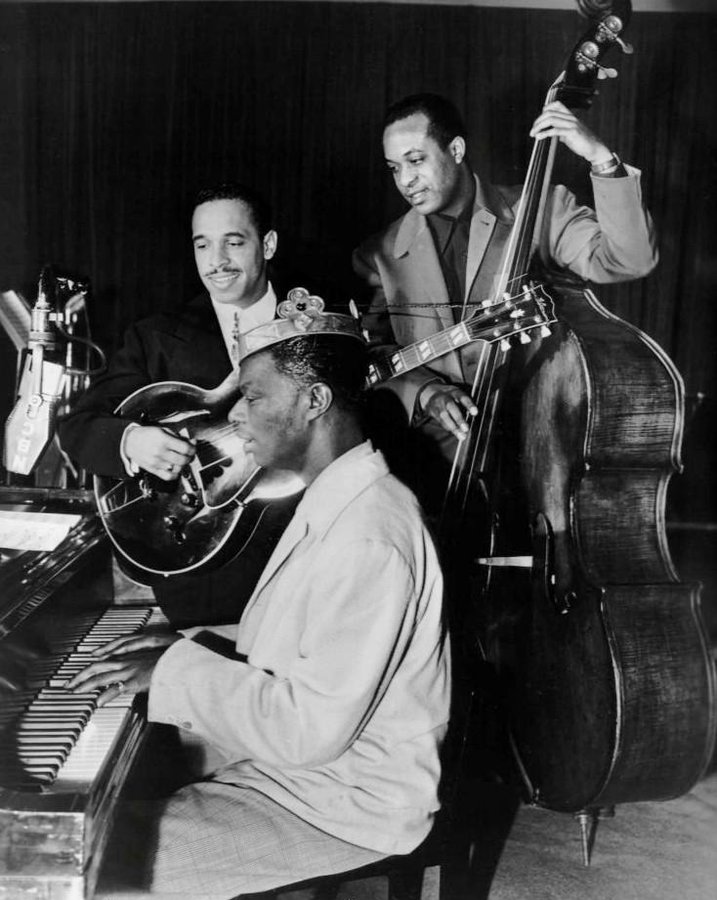
When that group joined the touring show Shuffle Along in 1937, he dropped the “s” from his surname, met and married the dancer Nadine Robinson, and settled with her in Los Angeles. There he formed a trio with the guitarist Oscar Moore and the bassist Wesley Prince. The original group had no drummer, a choice that left room for tightly coordinated arrangements around the piano and guitar and for Cole’s elegant, syncopated playing, which influenced other pianists, including Oscar Peterson. The affectionate nickname “King” dates from this period. The trio played steadily in Hollywood and, in 1939, appeared in New York on a bill with Billie Holiday. In June 1942 it became the house band at the 331 Club in Los Angeles and recorded with musicians including the saxophonist Lester Young. As the personnel changed, the guitarist Irving Ashby and the bassist Johnny Miller became important members as well.
A Fable from His Father’s Pulpit, and a Voice That Crossed Over
The turning point came in 1943 with “Straighten Up and Fly Right.” The lyric, about a monkey on a treacherous buzzard’s back, came from a fable Cole said he had heard from his preacher father, and the record became a hit on the popular charts, not only in the narrower jazz market. A new manager, Carlos Gastel, and a contract with Capitol Records followed. Cole had begun to sing as well as play, and Capitol marketed him as a singer of love ballads. By 1946 he had emerged as a soloist, with Mel Tormé’s “The Christmas Song” and “I Love You for Sentimental Reasons” high on the charts. “Route 66,” also from 1946, helped establish the group nationally. In the 1950s he worked with arrangers including Nelson Riddle and Billy May on recordings such as “Mona Lisa,” “Too Young” and “Unforgettable,” which reached the Billboard charts in 1952. The shift toward singing did not end his work as a jazz pianist: the 1956 album After Midnight reunited his piano with a small instrumental group. The King Cole Trio itself disbanded in 1955.
A Network Show, a House in Hancock Park, and an Attack in Birmingham
Cole faced criticism, including from some civil rights leaders, for performing before segregated audiences. He answered that he might be “helping to bring harmony between people through my music,” and he later joined other entertainers in refusing those bookings. He contributed to the Montgomery bus boycott and filed lawsuits against hotels that refused him service. In 1948, after a divorce from Nadine, he married the singer Maria Ellington. The couple bought a house in the all-white Hancock Park neighborhood of Los Angeles, prompting protests from white neighbors; in 1950 the Ku Klux Klan burned a cross on the lawn. They stayed, adopted Maria’s niece Carol, and later had a daughter, Natalie, a son, Nat Kelly Cole, and twin girls, Timolin and Casey.
In 1946 the National Broadcasting Company’s radio network had made him the first African American headliner to star in and host his own long-running weekly radio series, King Cole Trio Time. Ten years later the network gave him a television variety program, The Nat King Cole Show; the pianist Hazel Scott had hosted her own show on the DuMont network in 1950. Cole’s guests, among them Tony Bennett, Sammy Davis Jr., Peggy Lee and Harry Belafonte, worked for union scale, and the ratings were strong, but no major national sponsor would buy time. The show ended in 1957 after some thirty broadcasts, and Cole, who could earn far more on tour, went back to the road, becoming the highest-paid entertainer in Las Vegas. “Madison Avenue,” he said, “is afraid of the dark.” In 1956, in Birmingham, Alabama, at what was to be a racially mixed performance, several white men stormed the stage and knocked him down. He also appeared in films, including a portrayal of the composer W. C. Handy in St. Louis Blues in 1958 and a part in Cat Ballou, released in 1965. After years of heavy smoking he fell ill with lung cancer in 1964. He died on February 15, 1965, in Santa Monica, at forty-five, and was buried at Forest Lawn Memorial Park in Los Angeles. Jack Benny, on whose program he had appeared only a year earlier, was the chief speaker at his funeral.
Thomas Waller Lodge No. 49, a Daylight Lodge
Cole joined Thomas Waller Lodge No. 49, a Prince Hall lodge in Los Angeles, in 1944, together with members of his band. The lodge took its name from the pianist Thomas “Fats” Waller and had been organized for men whose night work kept them from ordinary evening meetings. In 1943, Lillian D. Dandridge, grand secretary of the Prince Hall Grand Lodge in California, recognized that need; Paul L. Howard organized what the lodge counts as the first daylight lodge in the nation. A dispensation was granted on January 31, 1944, and the charter on July 18. Meetings were held at noon on the first and third Wednesdays of each month. Cole later received the Scottish Rite degrees and remained a Prince Hall Mason for the rest of his life. He was also a lifelong member of the National Association for the Advancement of Colored People. As late as 1960 he was barred from performing at San Francisco’s Masonic Temple, whose manager claimed he drew the wrong “class of people,” though Cole was himself a Mason.
What can Cole’s daytime lodge teach us about making fellowship possible for musicians and other night workers?
Sources
- Encyclopedia of Alabama — Nat “King” Cole
- BlackPast — Nat “King” Cole (1919–1965)
- Thomas Waller Lodge No. 49 — About
- Grand Lodge of Ohio — Freemasons of Jazz
- Scottish Rite, Northern Masonic Jurisdiction — Masonic mavens of jazz
- Masons of California — The Masons of Jazz
- Television Academy — Unforgettable, by Will Friedwald
- Library of Congress, In the Muse — Hazel Scott, now playing!
Life & Masonic Timeline
General Artists Corporation (management), via Wikimedia Commons · Public domain · Source