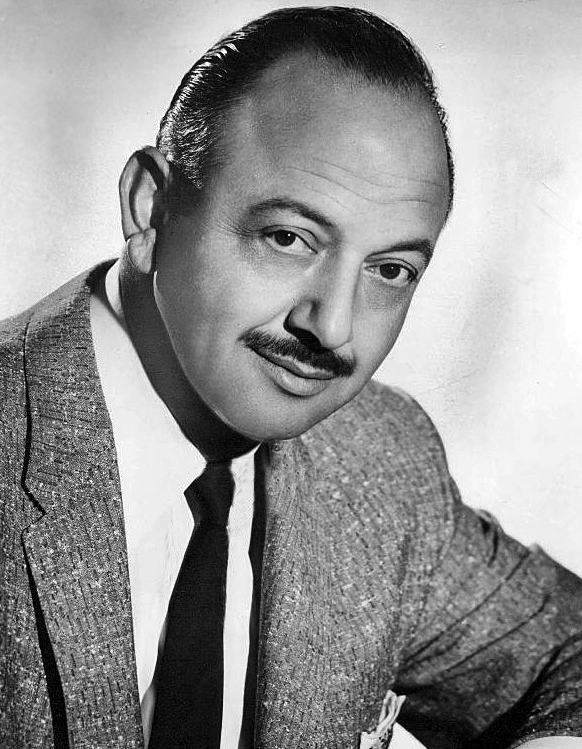
Mel Blanc
Born May 30, 1908 · Died July 10, 1989 · Mid-Day Lodge No. 188, Oregon
Mel Blanc, the Man of a Thousand Voices, gave voice to Bugs Bunny, Daffy Duck, Porky Pig and dozens of other classic cartoon characters.
I may have been on the verge of death, but they were very much alive inside me.
A Portland Boy Who Changed the Spelling of His Name
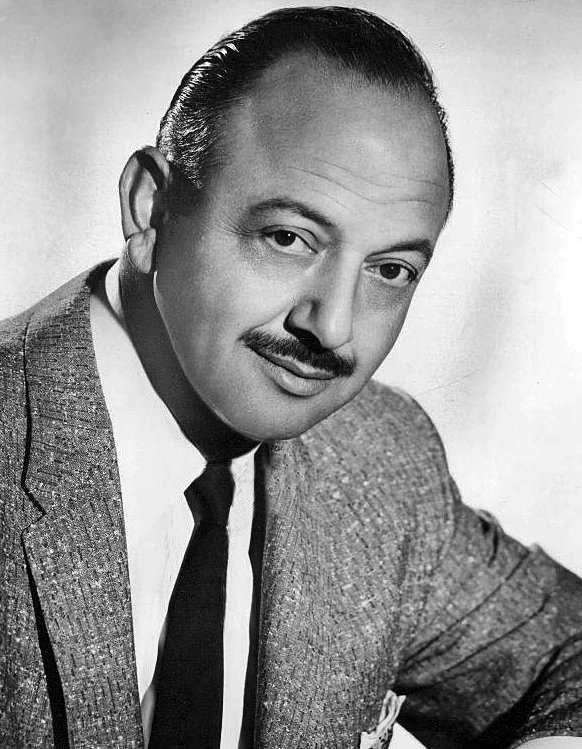
Melvin Jerome Blank was born on May 30, 1908, in San Francisco, to Frederick Harvey Blank and Eva H. Katz Blank, and grew up in southwest Portland, Oregon, after the family moved there when he was six. He attended Shattuck and Commerce grammar schools and Lincoln High School, practiced voices and dialects from the age of ten, and played bass, violin and sousaphone. In June 1923, at fifteen, he got his first radio work, singing on KGW’s weekday children’s program Stories by Aunt Nell. When he was sixteen, a teacher at Lincoln High told him he would amount to nothing—that he was a blank, like his name. He began spelling it Blanc, and later made the change legal.
In 1925, at seventeen, he joined the Sunnyside Chapter of DeMolay in Portland, a Masonic youth organization he remained in for the rest of his life. In 1927 KGW hired him for its late-night variety program The Hoot Owls, where he wrote and performed humorous sketches, sometimes in dialect, and occasionally picked up a horn, ukulele or violin. He spent a period in San Francisco working at radio station KFWI for his older brother, Henry, the program director, and came back to the Hoot Owls when the station closed after the 1929 crash.
An Orpheum Bandleader, a Late-Night Show, and the Road to Warner Bros.
On March 26, 1931, Blanc was named musical director of the RKO Orpheum Theater on Southwest Broadway in Portland, leading an eleven-piece band that played for films and vaudeville and also served as the Hoot Owls orchestra. The National Broadcasting Company then hired him as master of ceremonies for The Road Show on its San Francisco station, but the program was soon canceled and he returned to Portland. He left again for Los Angeles in March 1932, found work scarce, and on May 14, 1933, married Estelle Zelda Rosenbaum. The couple went back to Portland, where he wrote and cohosted Cobwebs and Nuts, a late-night program on KEX. The production could not afford a supporting cast, so he supplied most of the voices himself. The show ended in June 1935, and the Blancs moved to Los Angeles for good. Their only child, Noel, was born in 1938.
By 1936 he was appearing on KNX’s Hollywood Barn Dance and on The Jell-O Program Starring Jack Benny. He also became a regular on programs starring George Burns and Gracie Allen and Abbott and Costello. On Benny’s show he played an assortment of characters and, when a recording of Benny’s Maxwell automobile failed to play on cue, improvised the car’s sputtering himself, a sound that became one of his signatures. After repeated rejections, he was hired by Leon Schlesinger’s animation unit at Warner Bros., which made the Looney Tunes and Merrie Melodies shorts. Porky’s Road Race was released on February 7, 1937. Daffy Duck’s voice was first heard on April 17, 1937, in Porky’s Duck Hunt, and Bugs Bunny’s on July 27, 1940, in A Wild Hare. Three months later he originated Woody Woodpecker’s laugh in Walter Lantz’s Knock Knock.
Hollywood’s Busiest Actor, and a Thousand Voices
The characters multiplied. Tweety appeared in 1942; in early 1945 he introduced Pepé Le Pew, Sylvester and Yosemite Sam; Foghorn Leghorn followed in August 1946. He later added Barney Rubble of The Flintstones. Over more than fifty years he supplied voices for roughly three thousand cartoons and created more than four hundred distinctive character voices. In 1942 the Portland Oregonian columnist William Moyes called him “Hollywood’s busiest actor,” noting that he had appeared on seven top radio shows in seven days. On September 3, 1946, The Mel Blanc Show, also known as Blanc’s Fixit Shop, debuted on the Columbia Broadcasting System. He signed with Capitol Records in 1947, and his first children’s album reached number two on the Billboard children’s chart the following June. On-screen roles were rare; they included Pancho in the 1949 musical Neptune’s Daughter and later work in Champagne for Caesar and Kiss Me, Stupid.
A Crash on Sunset Boulevard, and the Voices That Answered
On January 24, 1961, a head-on collision on Sunset Boulevard left Blanc with many broken bones and a severe concussion. He was in a coma for three weeks and, by his own later account, first answered when a physician, seeing a Warner Bros. cartoon on the television, asked how Bugs Bunny was feeling. Blanc replied in the rabbit’s voice: “Eh, just fine Doc, how’re you?” As soon as he could get around after a long recovery, he wrote, he “stepped up” his visits to Shrine hospitals for children. Sitting with a little girl and talking in Sylvester’s voice, he “thanked God for not revoking this undeserved gift.”
His autobiography, That’s Not All, Folks!, appeared in 1988, the same year he voiced characters in Who Framed Roger Rabbit. On May 19, 1989, after a bad cough while shooting a commercial, he was admitted to Cedars-Sinai Medical Center in Los Angeles. He was at first expected to recover, but his condition deteriorated from advanced coronary artery disease, and he died there on July 10, at eighty-one. His last film work, Jetsons: The Movie, was released the following year. He is buried at Hollywood Forever Cemetery, under a stone that reads “THAT’S ALL FOLKS.”
Mid Day Lodge No. 188 and the Children at the Shrine Hospital
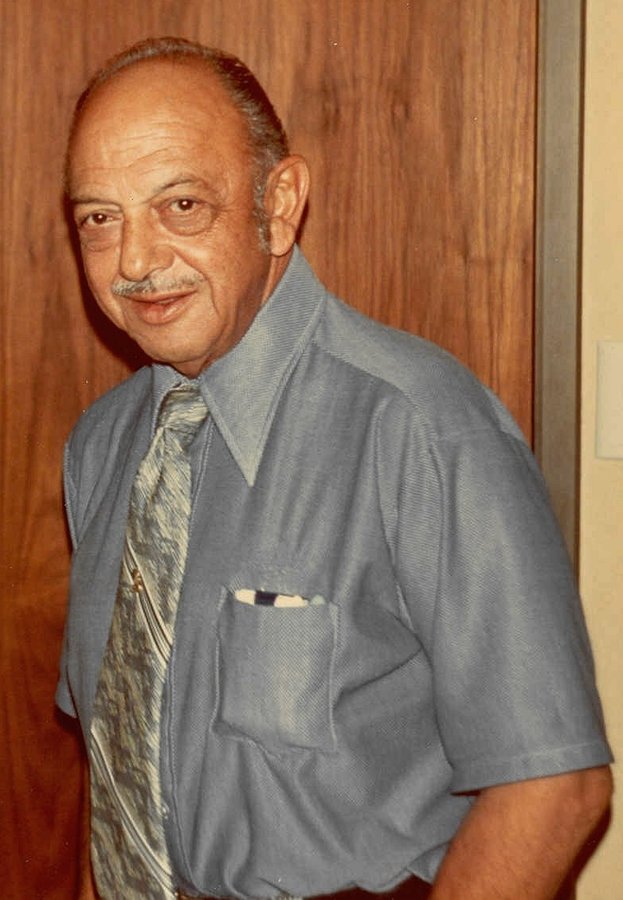
Blanc received the Entered Apprentice degree in 1930 and became a Master Mason in Mid Day Lodge No. 188, in Portland, in 1931. He kept that membership for the rest of his life, even after he had settled in California. In June 1951, at forty-three, he took the Scottish Rite degrees in the Valley of Los Angeles, from June 14 through June 16, and two weeks later joined Al Malaikah Shrine Temple. In his autobiography he wrote that, as a teenager, he used to pass the Portland Shrine Hospital not far from his parents’ home, and that “hearing about the work they did with crippled children was what initially piqued my interest in the fellowship and prompted me to seek admission.” He spent many hours with children at the Los Angeles Shrine hospital and once said, “I don’t know who appreciates whom more, me or them.”
DeMolay honored him with its Legion of Honor in 1966 and inducted him into its Hall of Fame on April 27, 1987. “I have been a member of DeMolay for 63 years,” he said then. “I thank God and DeMolay for helping me become kind and thoughtful to my parents and all my friends. I had many opportunities to do the wrong things, and I might have done them if it were not for DeMolay.” He also received recognition from the United Jewish Welfare Fund and the Show Business Shrine Club’s first Life Achievement Award.
Which of Blanc’s characters best shows how much personality a voice alone can create?
Sources
- Oregon Encyclopedia — Mel Blanc
- Grand Lodge of Ohio — The Mason of 1,000 Voices: Mel Blanc
- Grand Lodge of British Columbia and Yukon — Mel Blanc
- Scottish Rite, Northern Masonic Jurisdiction — Mel Blanc: Voice Actor and Freemason
Life & Masonic Timeline
Mel Blanc, 1959. Photo by Gene Hester. Via Wikimedia Commons. · Public domain · Source