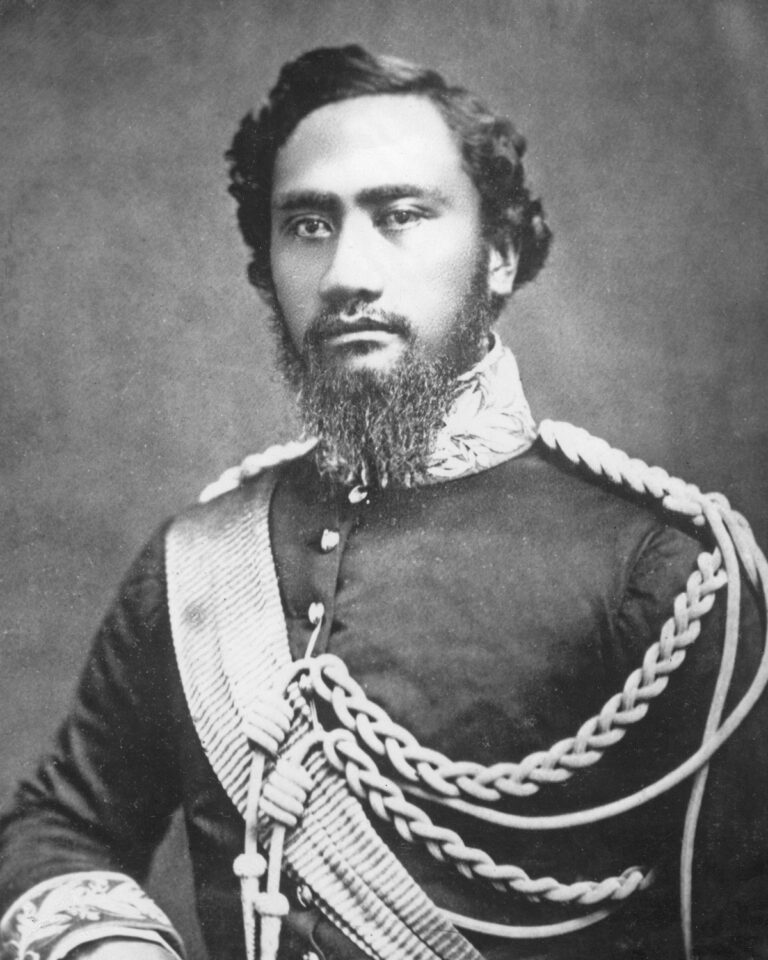
Kamehameha IV
Born February 9, 1834, Honolulu · Died November 30, 1863, Honolulu · Lodge Le Progrès de l'Océanie, Honolulu
Kamehameha IV ruled the Hawaiian Kingdom and, with Queen Emma, founded the Queen’s Hospital to improve medical care for Hawaii’s people.
Alexander Liholiho, Adopted Heir of Kamehameha III
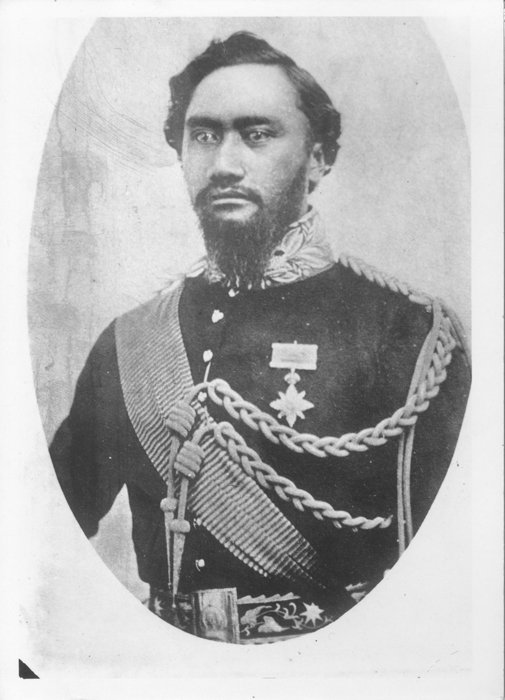
Alexander Liholiho was born on February 9, 1834, on Oahu, the son of Mataio Kekūanaoʻa, governor of Oahu, and Kīnaʻu, who had served as kuhina nui, the kingdom’s premier or co-regent. His maternal grandfather was Kamehameha I, known as Kamehameha the Great. In the Hawaiian practice of hānai, adoptive child-rearing, he was given to his uncle, King Kamehameha III, who named him heir.
He was educated, with his brother Lot and with Emma Rooke, his future wife, at the Chiefs’ Children’s School by Amos and Juliette Cooke, American Protestant missionaries. At fifteen he and Lot accompanied Gerrit P. Judd, the minister of finance and a missionary physician in their uncle’s cabinet, on a diplomatic mission to negotiate a treaty with France. The journey took them through France, England and the United States. As young men, both princes later supported hula and lūʻau and took up Western pastimes, stepping away from the missionaries’ stricter rules.
Declared his uncle’s heir apparent in 1853, Alexander opposed a movement, supported by some American missionaries, for annexation by the United States. Kamehameha III died in December 1854, and Alexander was proclaimed king. He acceded as Kamehameha IV on January 11, 1855. On June 19, 1856, he married Emma Rooke at Kawaiahaʻo Church, in a Church of England ceremony conducted, in the absence of an Anglican priest, by the Rev. Mr. Armstrong.
A King Who Looked to Britain as Well as America
Fearing annexation, Kamehameha IV sought a stronger relationship with Great Britain as a counterweight to American influence. He gradually removed American members from his cabinet, encouraged Hawaiian commerce with other nations, supported an agricultural program intended to foster native farming, established the first Hawaiian chamber of commerce and improved the kingdom’s harbors. He also challenged the political influence of American Protestant missionaries, while inviting another Western church, on his own terms, to take root in the islands.
Queen Emma and a Hospital for Sick and Destitute Hawaiians
Introduced diseases had already devastated Native Hawaiian communities. Their numbers fell from some 300,000 people in the time of Kamehameha I to about 70,000 in 1855. The smallpox epidemic of 1853–1854 helped convince the king and queen that a hospital was needed. The legislature at first appropriated $5,000 for a modern hospital to serve Native Hawaiians, then declined to release the funds. In 1859, at Queen Emma’s urging, the king signed an act establishing a hospital “for the relief of sick and destitute Hawaiians” and for other patients “fit subjects for hospital treatment.” The two of them personally solicited subscriptions from individuals, businesses and government representatives, and raised more than $13,000. When the king and his cabinet met, they named the institution The Queen’s Hospital in recognition of Emma’s work.
The hospital was organized as a corporation, with governance shared between elected trustees and government appointees. In its early years, most of its operating income came from tax revenues and legislative grants of the Hawaiian Kingdom. Free treatment depended on a patient’s need, the availability of beds, and whether the hospital could treat the condition. In July 1860 the cornerstone was laid, in a Masonic ceremony attended by thousands and presided over by the king. The hospital survives today as The Queen’s Medical Center.
Master of Lodge Le Progrès De L’Océanie
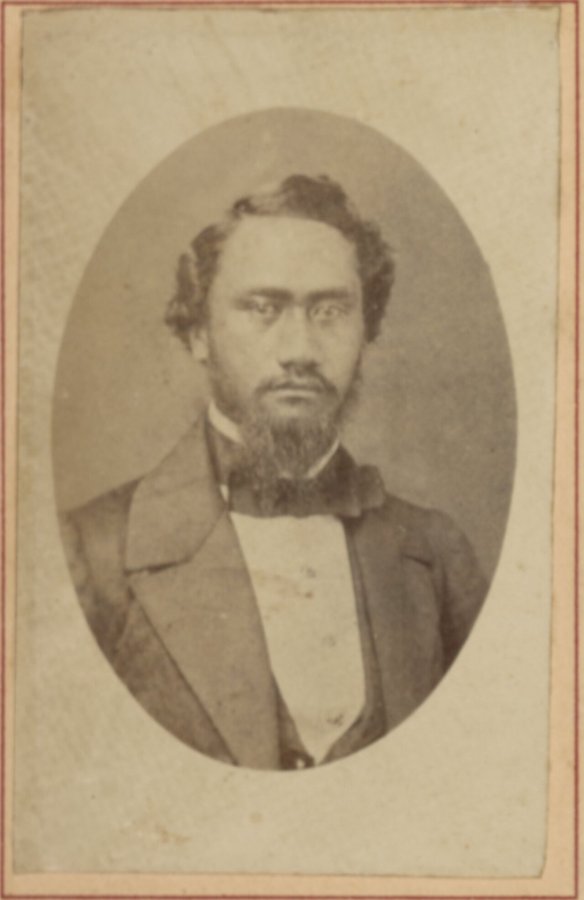
In 1857 Kamehameha IV became the first reigning Hawaiian monarch to join Freemasonry. Lot, the future Kamehameha V, had joined four years earlier, while still a prince. Honolulu’s lodges in those years included physicians, lawyers, mariners, farmers and ranchers from Europe, the United States and South America. Most members of the king’s cabinet were also Masons.
He served as Worshipful Master of Lodge Le Progrès de l’Océanie in 1859 and again in 1861–1862, years that included the founding and dedication of Queen’s Hospital. The lodge, which still meets in Honolulu, counts him among its past Masters and Queen’s Hospital among the public buildings whose cornerstones were laid with its support.
His lodge was the oldest in the islands. Joseph Marie Le Tellier, captain of the French whaling barque Ajax, warranted Lodge Le Progrès de l’Océanie on April 8, 1843, under the Supreme Council of France, during the reign of Kamehameha III. The royal connection followed a decade later. In June 1853 the foreign minister, Robert Crichton Wyllie, sent the lodge a request from Kamehameha III that the reigning monarch be initiated “into our ancient and benevolent order,” but the lodge did not take up the request. That same year Prince Lot was raised in Hawaiian Lodge, becoming the first Native Hawaiian Freemason. Native Hawaiians made up no more than 5 to 10 percent of the islands’ Masons in those first decades, but as royalty and senior officials they were highly conspicuous.
The Prince of Hawaiʻi, and St. Andrew’s Day
From early in their marriage the king and queen had wanted the Church of England to send a mission to the islands. With the help of Robert Crichton Wyllie, the minister of foreign affairs, they obtained the consent of Queen Victoria and the Archbishop of Canterbury. Thomas Nettleship Staley was consecrated the first Anglican bishop for Hawaiʻi on December 15, 1861. Kamehameha IV, fluent in Hawaiian and English, translated much of the Book of Common Prayer into Hawaiian and wrote a preface explaining the new church to his people. He and Emma provided a site for a cathedral and raised funds for the work.
Their only child, Albert Edward Kauikeaouli, was born on May 20, 1858, and named Prince of Hawaiʻi by the Privy Council. Queen Victoria consented to be his godmother. In August 1862, at the age of four, he fell ill and was hastily baptized, with Victoria’s proxy present, before he died. He was the last child born to a reigning Hawaiian monarch. The first Anglican services in the islands were held on October 12, 1862, shortly after the bishop arrived, in a time of mourning. On November 28 the bishop confirmed the king and queen.
The death of his son led the king to withdraw from public life. He had long suffered from asthma. He died in Honolulu on November 30, 1863, St. Andrew’s Day, at the age of twenty-nine. The cathedral that bears that saint’s name was later so called in his honor. Emma lived until April 25, 1885. She traveled to England to raise funds and commission stone for the cathedral, helped found schools for Hawaiian girls, and left much of her land to support the hospital they had built together.
What does the founding of Queen’s Hospital show about how Kamehameha IV and Queen Emma understood a monarch’s duty to the Hawaiian people?
Sources
- Hawaiʻi State Archives — King Kamehameha IV
- The Queen’s Health Systems — Queen Emma Cares: History of Care for Native Hawaiians
- The Cathedral of St. Andrew — Our Aliʻi Heritage
- HISTORY — Kamehameha IV
- King Kamehameha V Judiciary History Center — Ka Imi Pono: Threats to the Native Populace
- National Library of Medicine, Native Voices — 1859: Queen’s Hospital established to protect the Hawaiian race
- JSTOR Daily — Hawaii’s Freemason Kings
- Lodge Le Progrès de l’Océanie — Past Masters
- Lodge Le Progrès de l’Océanie — History
- Images of Old Hawaiʻi — Freemasonry in Hawaiʻi
Life & Masonic Timeline
Kamehameha IV, 1855–1863. Unknown photographer. via Wikimedia Commons, cropped · Public domain · Source