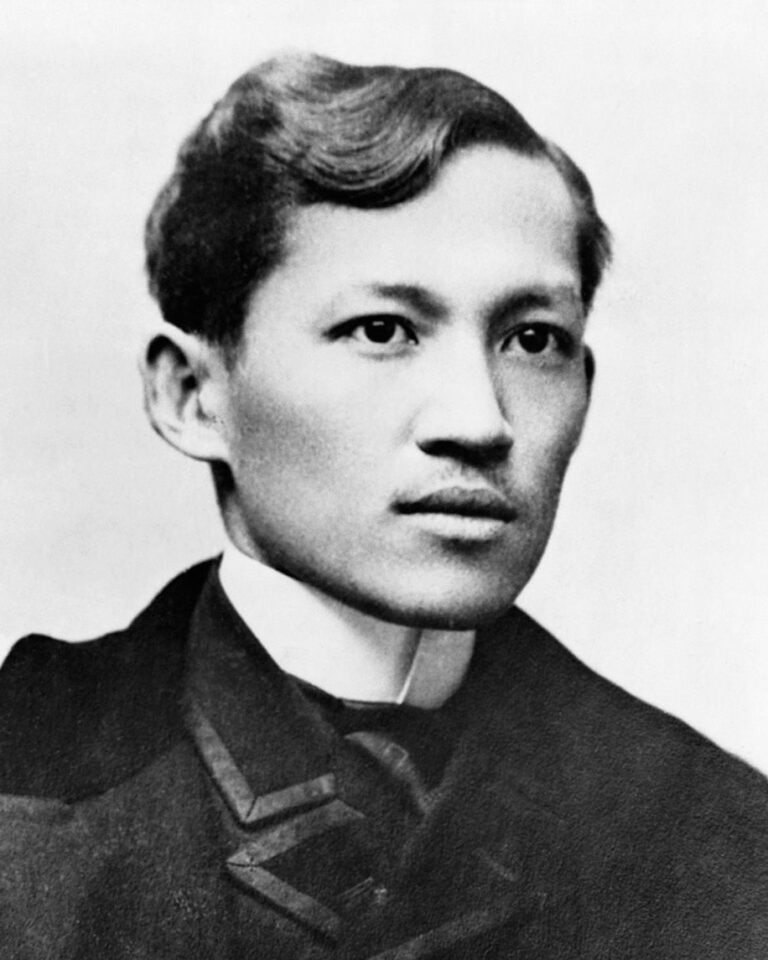
José Rizal
Born June 19, 1861, Calamba, Laguna, Philippines · Died December 30, 1896, Manila, Philippines · Solidaridad Lodge No. 53
José Rizal challenged Spanish colonial abuses through novels and civic reform, becoming a national hero of the Philippines after his execution.
Novelist, Physician, Philippine Reformer
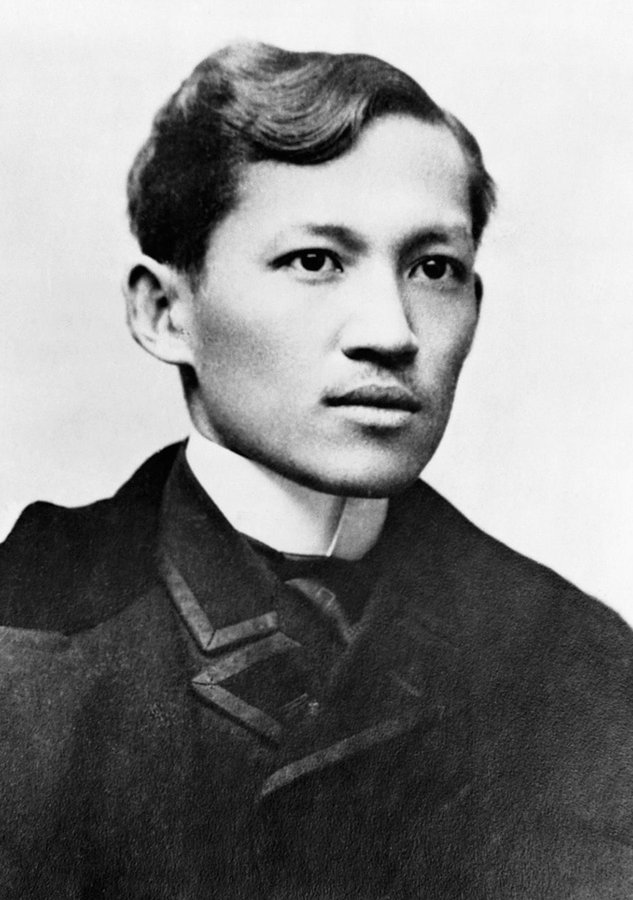
José Rizal was born on June 19, 1861, in Calamba, in the province of Laguna, the son of a prosperous landowning family. He trained in medicine and became an eye surgeon, and he also worked in poetry, painting, sculpture and woodcarving. Over a life of thirty-five years he added the novel, the essay, natural history and the study of languages to that list, and he challenged the land policies of the Dominican friars who held the farms around his hometown.
A Madrid Student Who Indicted a Colony
Rizal studied in Manila and at the University of Madrid, and between 1882 and 1892 he lived mainly in Europe. The Spain he found had been shaped by the liberal revolution of 1868, led by men such as Juan Prim, a Freemason, whose government wrote individual liberty, freedom of speech and religious tolerance into its laws.
In 1884, at a Madrid banquet honoring the painters Juan Luna and Félix Resurrección Hidalgo, who had just taken gold and silver medals at Spain’s national fine arts exhibition, Rizal spoke warmly of Spain while condemning the friars who held power in the Philippines. When copies of the speech reached Manila, officials began calling him a filibustero, a subversive. That same year he began writing Noli Me Tángere.
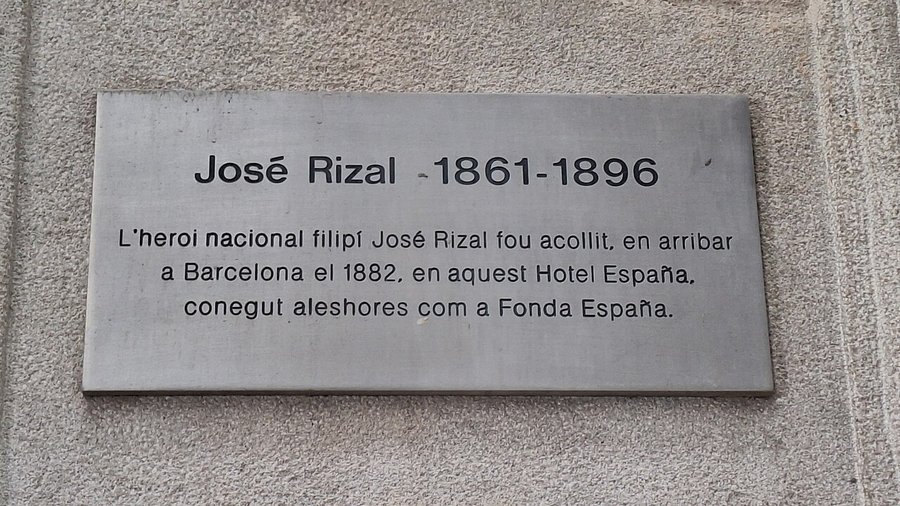
Noli Me Tángere appeared in 1887, followed in 1891 by El filibusterismo, which was printed in Ghent, Belgium. Between them he published an annotated edition of Antonio Morga’s seventeenth-century history of the Philippines, using his notes to show that the islands’ peoples had a long history before the Spaniards arrived. He wrote regularly for La Solidaridad, the Barcelona newspaper of the Propaganda Movement, and became that movement’s leading voice.
His political program sought change within the Spanish system rather than a war for independence. He called for the Philippines to become a province of Spain with representation in the Cortes, Spain’s parliament, for legal equality between Filipinos and Spaniards, for freedom of expression and assembly, and for Filipino priests to replace Spanish friars.
La Liga Filipina and Four Years at Dapitan
Rizal returned to Manila in 1892. On July 3 he founded La Liga Filipina, a nonviolent league meant to unite the archipelago in the work of reform, at the Tondo house of Doroteo Ongjunco, a member of Logia Lusong No. 185. The colonial government treated the league as a threat. Rizal was arrested shortly afterward, and on July 17, 1892, he arrived in exile at Dapitan, in northwestern Mindanao.
He made the exile productive. He cultivated a farm of about thirty-four hectares, opened a clinic where he treated patients and performed eye surgery, and built a dam and waterworks at Talisay and street lighting for the Dapitan town plaza. In January 1894 he opened a free school for boys aged twelve to sixteen, most of them from Mindanao, who boarded on his estate and helped with the farm as part of their lessons. He excavated precolonial artifacts, sent animal and plant specimens to scientists in Europe, a few of which were named after him, studied the Visayan and Malay languages and worked on a Tagalog grammar.
At Dapitan he met Josephine Bracken, the adopted daughter of George Taufer, who had come from Hong Kong in 1895 seeking Rizal’s treatment for his failing eyes. The two lived as husband and wife, though as a Mason Rizal could not marry her in the church. Their only child, a son, was stillborn and buried on the estate. On July 31, 1896, Rizal sailed from Dapitan, having received permission to serve as an army physician in Cuba. The town band played as he left, and six of his students went with him.
Fort Santiago and the “Last Farewell”
The Katipunan, a nationalist secret society, rose against Spain in 1896. Rizal had no connection with the uprising, but he was arrested, tried by a military court for rebellion, sedition and conspiracy, and found guilty. Imprisoned in Fort Santiago, he wrote the poem known as “Último adiós,” or “Last Farewell,” on the eve of his execution. A firing squad shot him in Manila on December 30, 1896.
His death convinced many Filipinos that independence, not reform under Spain, was the only path left. On December 20, 1898, Emilio Aguinaldo, the first president of the Philippine republic and himself a Mason, decreed December 30 a national day of mourning; it is still observed as Rizal Day. His remains lay in Paco cemetery until August 1898, when his sister Narcisa had them exhumed as the American occupation of Manila began; for fourteen years she kept his bones in an ivory urn in her house in Binondo. On September 28, 1901, the United States Philippine Commission passed Act No. 243, setting aside public land on the Luneta, the field where he had died, for a statue paid for by public subscription. An international design competition ran from 1905 to 1907. An Italian sculptor took first prize, but in a disputed decision the contract went to the runner-up, the Swiss sculptor Richard Kissling, for his entry “Motto Stella,” or Guiding Star. Work began in 1908, Rizal’s remains were placed at its base on December 30, 1912, and the monument was unveiled the next year.
Dimasalang Among the Lodges of Madrid and Paris
Rizal entered Freemasonry in Madrid in Acacia Lodge No. 9 of the Gran Oriente de España, taking the Masonic name Dimasalang. He was still a student at the Universidad Central. Tomás G. del Rosario, later president of the Rizal Monument commission, used to tell how Rizal had been his companion in Acacia Lodge at an earlier age than was customary, at a time when few Filipinos had been admitted. From the sources we do have, it is believed that the history professor Miguel Morayta, head of the Gran Oriente Español, drew him toward the Craft. Rizal held that a person could be good and moral without organized religion. Many of the men around him in the Propaganda Movement and La Liga Filipina were Masons too, among them Marcelo H. del Pilar, Graciano López Jaena, Apolinario Mabini, Juan Luna and Andrés Bonifacio, and as Masons they fell under the Catholic Church’s excommunication of members of the Craft, a ban dating to 1738.
In 1889 Rizal joined Solidaridad Lodge, revived in Madrid by Filipino students and exiles with Julio Llorente as its Master and Marcelo H. del Pilar as Senior Warden. It was the first lodge in Spain made up mainly of Filipinos, and its lectures mixed Masonic teaching with the cause of reform. Antonio Luna and Teodoro Sandico were among its members. Chartered as No. 53 by the Gran Oriente Español on May 15, 1890, it raised Rizal a Master Mason on November 15, 1890. While El filibusterismo was at the printer in 1891, he applied to the Paris lodge Le Temple de l’Honneur et de l’Union, whose members included Trinidad Pardo de Tavera, Valentín Ventura and Ariston Bautista, and on February 15, 1892, the Grand Orient of France issued him a Master Mason’s patent. Back in Manila he was made honorary Worshipful Master of Nilad Lodge No. 144, and from the sources we do have, it is believed that he also helped establish Filipina Lodge and served as Venerable Master of Lakandola Lodge of Perfection in the Scottish Rite. In 1903 Logia Modestia No. 199 raised a monument to Rizal and the Liga on the Tondo corner where Ongjunco’s house had stood.
Whether he left Freemasonry at the end is still argued. Two Jesuit priests, Fathers Balaguer and Viza, and an army officer, Captain Rafael Domínguez, who kept an hour-by-hour record of Rizal’s last hours, said he signed a retraction before he died, and that morning he was married to Josephine Bracken in Catholic rites; others have argued that the retraction document was forged. His family made their own choice in 1912. They declined the Jesuits’ request to rebury him, and Masons led by Timoteo Páez, in full regalia, carried his remains in procession to the Masonic Temple in Tondo for funeral rites before the interment at the Luneta.
What gave Rizal’s novels a political reach that survived his execution?
Sources
- Encyclopaedia Britannica — José Rizal
- National Historical Commission of the Philippines — Museo ni Jose Rizal, Dapitan
- National Historical Commission of the Philippines — Los Chicos de Rizal: Jose Rizal’s Students and Dapitan Community School
- National Historical Commission of the Philippines — A Glimpse into the Life of Josephine Bracken
- Philippine Center for Masonic Studies — Jose Rizal
- Filipinas Heritage Library — Rizal the Mason
- Grand Lodge of British Columbia and Yukon — José Rizal
Life & Masonic Timeline
José Rizal, c. 1890s. Photographer unknown. via Wikimedia Commons, cropped · Public domain · Source