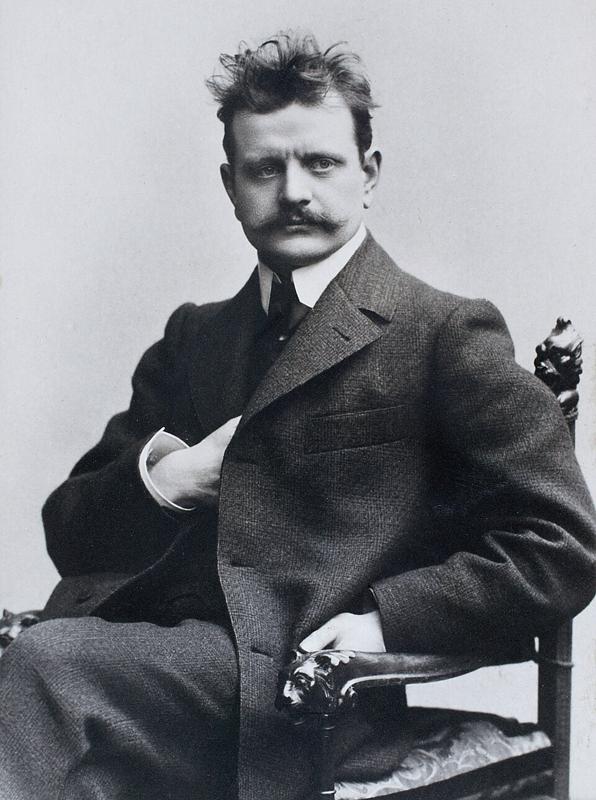
Jean Sibelius
Born December 8, 1865, Hämeenlinna, Finland · Died September 20, 1957, Järvenpää, Finland · Suomi Lodge No. 1, Helsinki
Jean Sibelius shaped Finland’s musical identity through Finlandia, seven symphonies and a violin concerto that entered the international repertory.
A Doctor’s Son in Hämeenlinna Who Left the Law for Music
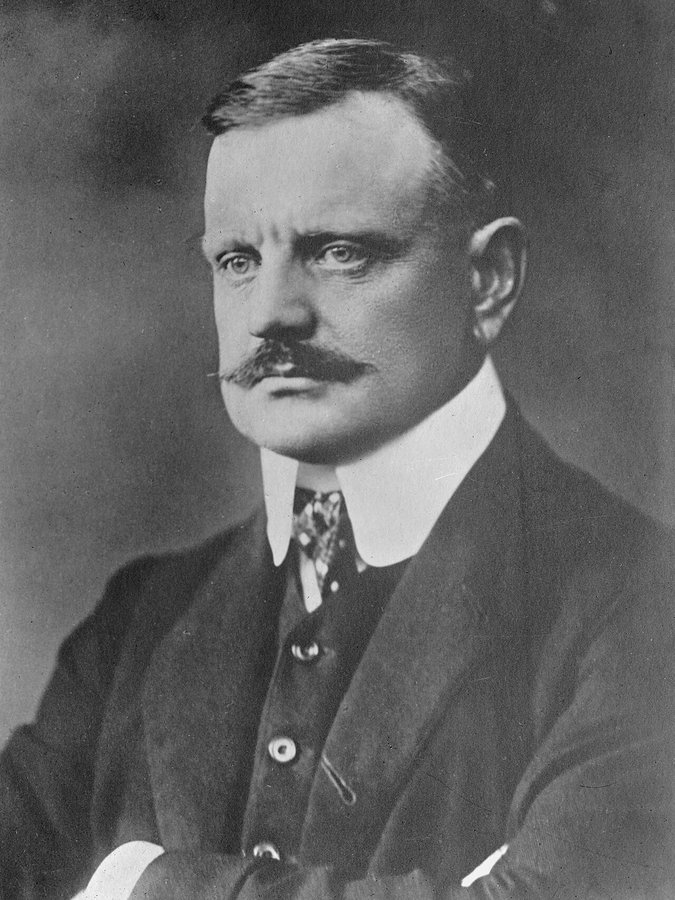
Jean Sibelius was born on December 8, 1865, in Hämeenlinna, in southern Finland, the middle of three children of Christian Gustaf Sibelius, the town physician, and Maria Charlotta Borg. He was baptized Johan; Jean became the name he used as a composer. The family spoke Swedish at home, but he went to the Finnish-speaking grammar school in Hämeenlinna. His father died of typhoid when Jean was two and a half. He made his first attempts at composition, including a piece called “Water Drops,” around 1875, and after graduating in 1885 he began law studies, only to drop them a year later for the Helsinki Music Institute. Study in Berlin followed in 1889, and in Vienna in 1890, the year of his engagement to Aino Järnefelt. They married in 1892.
Kullervo, Finlandia, and a House by the Lake
His breakthrough came that same year with Kullervo, a large work drawn from the Kalevala, Finland’s national epic. En Saga followed, then the four Lemminkäinen legends, of which The Swan of Tuonela became the best known. The First Symphony was heard in 1899, along with music for a series of patriotic tableaus at a Press Celebration. Sibelius’s friend and patron Axel Carpelan suggested that the finale be called Finlandia, the name by which it has been known since 1900. In Heidelberg, Richard Strauss wrote in his diary that “Sibelius is the only Nordic composer with depth.”
The Second Symphony was first performed in 1902. A violin concerto followed in a first version in 1903 and in the revised form, now in the standard repertory, in 1905. The couple’s children were Eva, Ruth, Kirsti, who died in February 1900, Katarina, Margareta and Heidi. In 1904 the family moved to Ainola, a house in Järvenpää, by Lake Tuusula. “In Helsinki all the song died within me,” Sibelius said of the city he was leaving. The Third Symphony was first heard in 1907, the year Gustav Mahler visited Helsinki; the Fourth in 1911; the tone poem Luonnotar in 1913. In 1914 he traveled to the United States, received an honorary doctorate from Yale University and wrote The Oceanides. A first version of the Fifth Symphony was performed at a concert for his fiftieth birthday in 1915; the final version came in 1919, after Finland’s independence in 1917 and a civil war in 1918 during which Red forces held Järvenpää and the family moved temporarily to Helsinki.
The Last Symphonies, and the Work He Did Not Publish
The Sixth Symphony was first performed in 1923. In 1924 Sibelius conducted the première of the Seventh in Stockholm. Around the same years he wrote music for Shakespeare’s The Tempest and the tone poem Tapiola, after which he published no further large orchestral works. He worked on an Eighth Symphony in the early 1930s; it was never brought out. The long public silence did not mean he had stopped writing altogether. In 1925 he wrote his first piece expressly for the organ, the Intrada, Opus 111a, for the visit of the King and Queen of Sweden; its grand, orchestral tone makes it a little sister to the Seventh Symphony. In 1931, with only a couple of days to write it, he composed Surusoitto (Funeral Music), Opus 111b, for the funeral of his dear friend the painter Akseli Gallen-Kallela. It was his last instrumental work, built on unprepared, unresolved dissonances and open fifths, unlike anything else he wrote, and it may be the nearest clue to what the Eighth Symphony would have sounded like.
In September 1957, out walking, he saw a wedge of cranes flying south and said, “There they come, the birds of my youth!” On the evening of September 20 he had a cerebral hemorrhage and died, at ninety-one. That same evening Malcolm Sargent was conducting the Fifth Symphony in the Great Hall of the University of Helsinki. The funeral was held at Helsinki Cathedral on September 30, and he was buried in the garden at Ainola.
Suomi Lodge No. 1 and the Last Music He Published
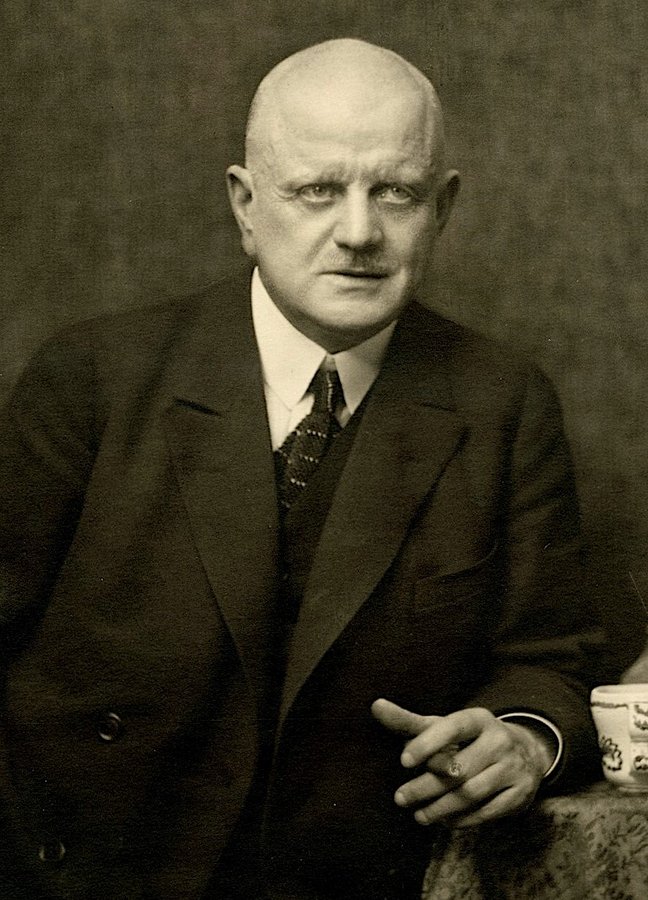
Freemasonry had existed in Finland from 1756, then ceased after Sweden lost the country to Russia in 1809. At the dawn of independence, Finns who had emigrated to America and come to know Freemasonry there began to consider bringing it home. The most active were the lawyer Toivo H. Nekton and the engineer J. E. Tuokkola, who had returned to Finland in 1918. Both drew up long lists of prospective members, and the “world-famous composer” Professor Jean Sibelius appears on the preliminary lists. Early versions also named General C. G. Mannerheim, Archbishop Gustaf Johansson, the architect Lars Sonck, the painter Pekka Halonen and the composer Robert Kajanus, though none of them appeared on the final list of candidates. At a meeting on August 14, 1922, to discuss founding Suomi Lodge No. 1, it was agreed that he would compose “original, genuinely Finnish music for the lodge” and that he would be excused from the first year’s fees. Nekton, who had been an active choral singer, had already discussed the matter with his old friend, and the organizers hoped Sibelius would serve as lodge organist. He was initiated in August 1922. On August 22, at the Assembly House of the Estates in Helsinki, Arthur S. Tompkins, Grand Master of New York, conducted an induction; one newcomer served as the candidate while Sibelius and about thirty other men looked on from the side.
In the lodge’s first year he attended six meetings, usually seated at a Mannborg harmonium, since the lodge did not yet have an organ. The programs included Mozart, Beethoven, Handel and Bach as well as well-known chorales, and when Sibelius was at the keyboard the brethren also heard fine improvisations. Because he spent much of those years abroad, his visits grew less frequent afterward. He declined a regular appointment as organist for lack of time, but he sometimes substituted, including on January 17, 1923, when the architect Eliel Saarinen was received. His improvisations were so absorbing that the Master of the Lodge sometimes had to interrupt him so that the meeting could go on. A funeral march drawn from those improvisations was nearly finished by April 1923.
The ritual music itself was slow to arrive. In the autumn of 1926 the singer Wäinö Sola, at a lodge dinner, proposed that Sibelius be asked formally to write it; the motion was carried with great enthusiasm, and the very next day Sibelius gave his assent. A brother, the pharmacist Berndt Forsblom, gave 10,000 marks to support the work. Early on the morning of January 7, 1927, Sibelius called Sola and asked him to come that evening, with Brother Ernst Linko, to the lodge meeting at which the music would first be performed. They received the score only then, so the performance was essentially sight-read. That morning Sibelius had already heard the regular organist, Arvi Karvonen, play it, and when the harmonium could not produce the forte he wanted, the furious composer addressed harsh words to the instrument. At least three pieces were heard that night, at the installation of Samuli Sario as Master of the Lodge; Sario had helped translate and write the texts. The complete score was performed on January 12, with Sibelius present. The Vice Grand Master of Finland, V. M. J. Viljanen, thanked him and said the music would make his worldwide reputation “shine forth and be immortalised” even more than before. He gave the music to Suomi Lodge, allowed Finland’s other two lodges, Tammer and Phoenix, to use it, and accepted honorary membership in the Grand Lodge of Finland, a distinction granted to only two other brethren after him. Every Finnish lodge has used his music in its meetings ever since. That evening was his last recorded visit to Suomi Lodge.
The work, Musique religieuse, Opus 113, first comprised eight pieces; as late as 1946 he added a Praising Hymn and an Ode to Fraternity, among the last compositions he published. Sola described the finished work in a letter to Forsblom: “Sibelius’s music is now completed and it is truly wonderful. … Sib has sought words all the way from Confucius and he has discovered lovely poetic pearls by Rydberg, Schiller and Goethe.” Sibelius had forbidden publication, and because of breaks in communication and conflicting copyright rules, the Grand Lodge of New York printed the score in 1937; that edition did not reach Finland until 1948. Later editions were prepared jointly by the two Grand Lodges.
In 1937 he also approved a male-choir setting of the hymn from Finlandia, to words by Sola, first sung at the tenth anniversary of St John’s Lodge No. 4 with the composer in the room. That evening the lodge founded a music fund bearing his name, and Sola’s first cheque for it was the one Sibelius had been promised for the honor he had conferred on the lodge and had refused to accept.
What does Sibelius’s return to Masonic music reveal about the creative life he kept after his last symphonies?
Sources
- Ainola — The life history of Jean Sibelius
- Ainola — Chronological Overview: Jean Sibelius 1865–1957
- Sibelius.klubi — Music for Freemasonry
- Sibelius.klubi — Organ works
- Grand Lodge of British Columbia and Yukon — Jean Sibelius
Life & Masonic Timeline
Photographerː Daniel Nyblin, via Wikimedia Commons · Public domain · Source