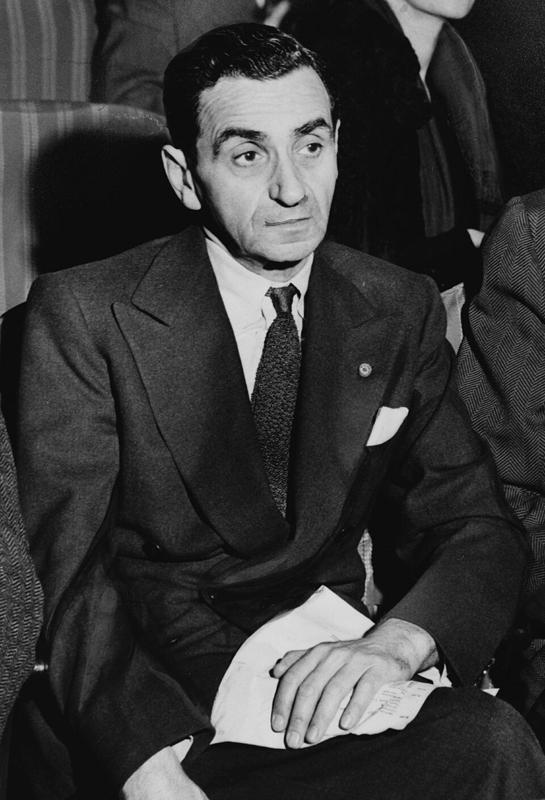
Irving Berlin
Born May 11, 1888, Russian Empire · Died September 22, 1989, New York City, New York · Munn Lodge No. 190, New York City
Irving Berlin helped define American popular song through Broadway and film, writing White Christmas, God Bless America and many other standards.
From Singing Waiter to the King of Tin Pan Alley
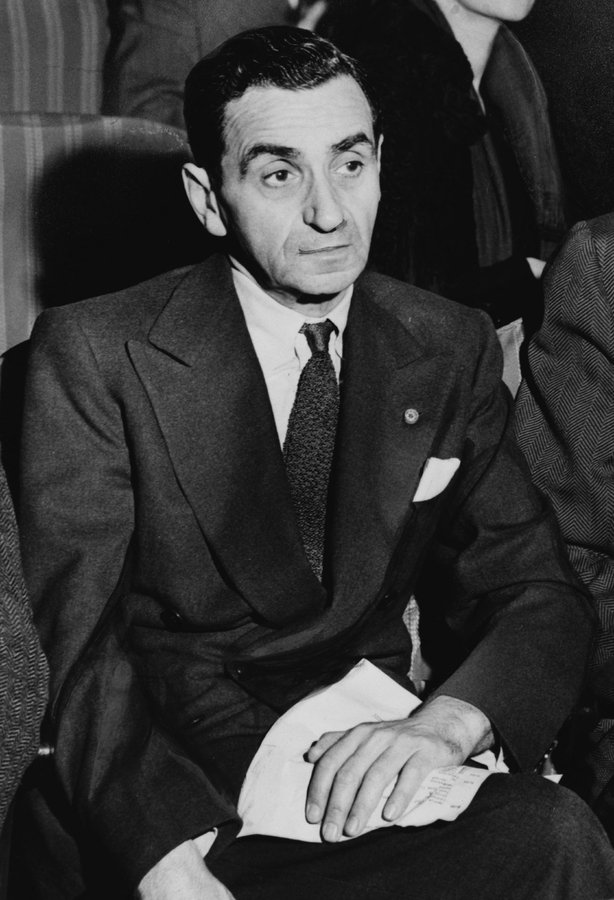
Born Israel Beilin in 1888, Berlin was five when his Jewish family fled persecution in the Russian Empire and settled on New York’s Lower East Side in 1893. His exact birthplace is uncertain, although the family had been living in Tolochin before they emigrated. After his father died in 1901, the thirteen-year-old left school and took to the streets, singing for the coins passers-by would toss him.
By 1905 he had steady work as a singing waiter at Mike Salter’s Pelham Café in Chinatown. When a bartender at a rival saloon scored a hit with a song of his own, the young waiter set out to write one for the Pelham. “Marie from Sunny Italy” was published in 1907, and the printed cover credited “I. Berlin.” He liked how the misprint sounded and kept the name.
In 1909 he joined the Tin Pan Alley publishing firm of Waterson & Snyder as a staff lyricist. “Alexander’s Ragtime Band” followed in 1911, became an international hit and earned him the title “King of Tin Pan Alley.” Between 1912 and 1916 he wrote more than 180 songs. His first marriage, to the singer Dorothy Goetz in February 1913, ended in grief that July: she contracted typhoid fever on their honeymoon in Cuba and died five months after the wedding. Out of that loss came one of his early hits, “When I Lost You.”
A Songwriter Who Could Play in Only One Key
Berlin never learned to read music, and he could play the piano comfortably in only one key. He worked on a transposing piano, which shifted the key with a lever while his fingers stayed on the same notes, and he sang and played each finished song for a musical secretary who wrote it down and played it back until it was right. His habit was to sit at the piano after dinner and write until dawn. In a 1920 magazine interview he set out rules for writing popular songs, including the instruction that a songwriter “must work and work, and then WORK.”
He treated songwriting as a business. In 1914 he opened his own publishing firm and wrote his first complete Broadway score, Watch Your Step. He helped found the American Society of Composers, Authors and Publishers, which collects royalties for songwriters, and with producer Sam Harris he built the Music Box Theatre on Broadway. Over his career he wrote seventeen complete Broadway scores, among them The Cocoanuts, As Thousands Cheer, Louisiana Purchase, Miss Liberty and Call Me Madam, and contributed to six more.
Sergeant Berlin of Camp Upton
Berlin took the oath of United States citizenship on February 6, 1918, and was drafted into the Army a few months later. At Camp Upton in Yaphank, Long Island, the hardest adjustment for a confirmed night owl was rising for reveille, and he turned the complaint into “Oh! How I Hate to Get Up in the Morning.” Asked to write a show to raise money for the Army, he produced Yip! Yip! Yaphank!, performed by a cast of three hundred soldiers. It ran on Broadway for a month and raised $83,000 before the company shipped out for France. One song he wrote for it, “God Bless America,” he set aside.
In the 1920s he fell in love with Ellin Mackay, a Catholic heiress whose father disapproved of a songwriter from the tenements and sent her to Europe to forget him. During their separation Berlin wrote “What’ll I Do,” “All Alone” and “Remember.” The couple eloped in January 1926 and remained married for sixty-two years. The 1929 crash cost him a fortune, but sound film opened new work: Top Hat with Fred Astaire and Ginger Rogers, Follow the Fleet, On the Avenue, Carefree and Holiday Inn, whose “White Christmas” won the Academy Award for best song.
A Peace Song That Became a Second Anthem
As war approached in Europe, Berlin wanted to write a song for peace. He took out the number he had shelved in 1918, revised it, and gave it to the radio singer Kate Smith, who introduced “God Bless America” on Armistice Day, November 11, 1938. It became so beloved that many people wanted it to replace “The Star-Spangled Banner.” Berlin refused to hear of it, saying, “There’s only one national anthem, which can never be replaced.”
Uneasy about profiting from patriotic feeling, he placed the song’s royalties in the God Bless America Fund for the Boy Scouts and Girl Scouts. During the Second World War he wrote and staged This Is the Army, which toured the United States and then played for troops overseas; with its film version it earned some ten million dollars for Army Emergency Relief. President Harry Truman presented him with the Army’s Medal of Merit in 1945, and in 1944 the National Conference of Christians and Jews honored him for advancing its aims “to eliminate religious and racial conflict.”
Annie Get Your Gun and a Long, Quiet Retirement
Annie Get Your Gun in 1946 became the most successful show of his career, and Hollywood kept returning to his catalog with Easter Parade, Call Me Madam and White Christmas. After his last Broadway show, Mr. President, closed in 1962, he retired and withdrew from public life, dividing his time between his New York townhouse and an estate in the Catskill Mountains. For almost twenty years, a small group of carolers gathered outside his home on Christmas Eve to sing “White Christmas” to him.
Honors arrived without him seeking them: a Congressional Gold Medal from President Dwight Eisenhower in 1954, a special Tony Award in 1963 and the Presidential Medal of Freedom from President Gerald Ford in 1977. His hundredth birthday in 1988 was marked by a Carnegie Hall tribute featuring Frank Sinatra, Leonard Bernstein, Isaac Stern, Natalie Cole and Willie Nelson, with Boy Scouts and Girl Scouts marching on stage to sing “God Bless America.” Ellin died that same year. Berlin died in his sleep at his New York townhouse on September 22, 1989, aged 101, survived by three daughters and their families. Broadway theaters dimmed their marquee lights before curtain time, and President George H. W. Bush joined a public singing of “God Bless America” and called him “a legendary man whose words and music will help define the history of our nation.” George Gershwin had called him “the greatest songwriter that has ever lived,” and Jerome Kern put it more simply: “Irving Berlin has no place in American music—he is American music.”
Munn Lodge No. 190 — 1910
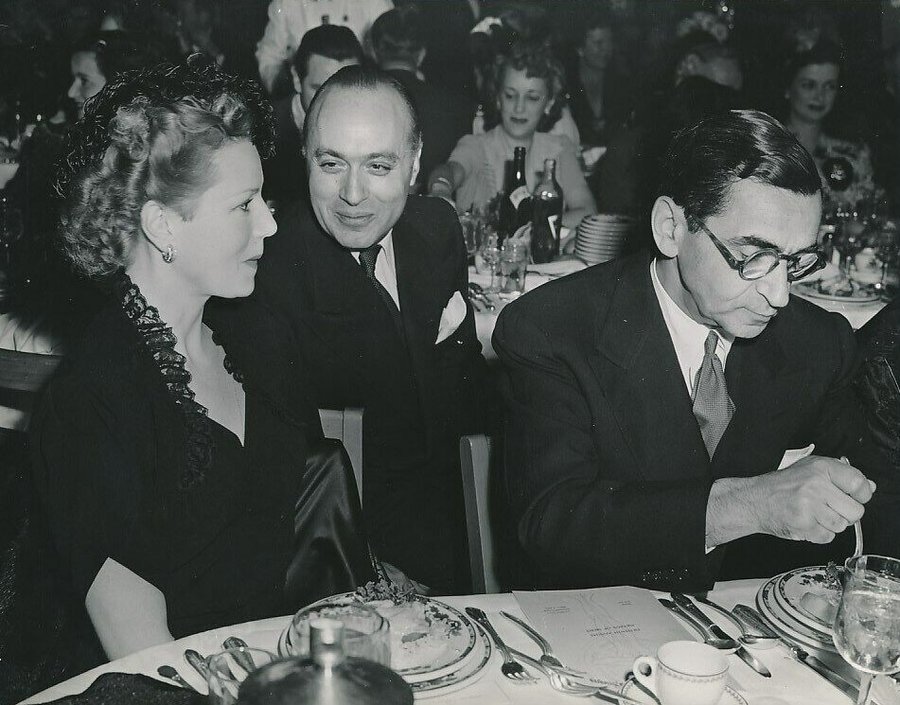
Berlin was initiated in Munn Lodge No. 190 in New York on May 12, 1910, passed on May 26 and raised a Master Mason on June 3. He was twenty-two, a year into his staff job at Waterson & Snyder and a year before “Alexander’s Ragtime Band” made him famous.
He received the 32nd degree of the Scottish Rite on December 23, 1910, and a month later, on January 30, 1911, became a Noble of Mecca Shrine Temple. He was later made a life member of both. Munn Lodge made him a life member on December 12, 1935. In 2021 the Scottish Rite Masonic Museum & Library in Lexington, Massachusetts, inducted him into its Masonic Hall of Fame.
Berlin gave away the royalties from the songs that meant most to the country; what does that choice say about how he understood his debt to the nation that took his family in?
Sources
- Irving Berlin Official Website — Concise Biography
- Encyclopedia.com, Contemporary Musicians — Irving Berlin
- Scottish Rite, Northern Masonic Jurisdiction — Now Open: Masonic Hall of Fame Exhibition
- Scottish Rite, Northern Masonic Jurisdiction — The Masonic Maven of Melody: Irving Berlin
- Grand Lodge of British Columbia and Yukon — Irving Berlin
Life & Masonic Timeline
Al Aumuller, World Telegram staff photographer, via Wikimedia Commons · Public domain · Source