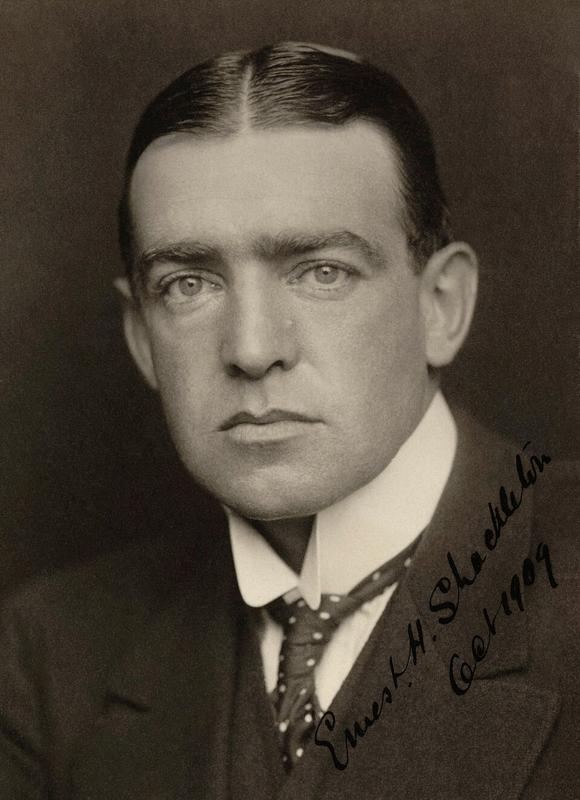
Sir Ernest Shackleton
Born February 15, 1874, Kilkea, County Kildare, Ireland · Died January 5, 1922, Grytviken, South Georgia · Navy Lodge No. 2612, London; later Guild of Freemen Lodge No. 3525
Ernest Shackleton led Antarctic expeditions and brought the Endurance party safely home after ice destroyed their ship and ended its planned crossing.
We had seen God in His splendours, heard the text that Nature renders. We had reached the naked soul of man.
A Doctor’s Son Who Chose the Sea
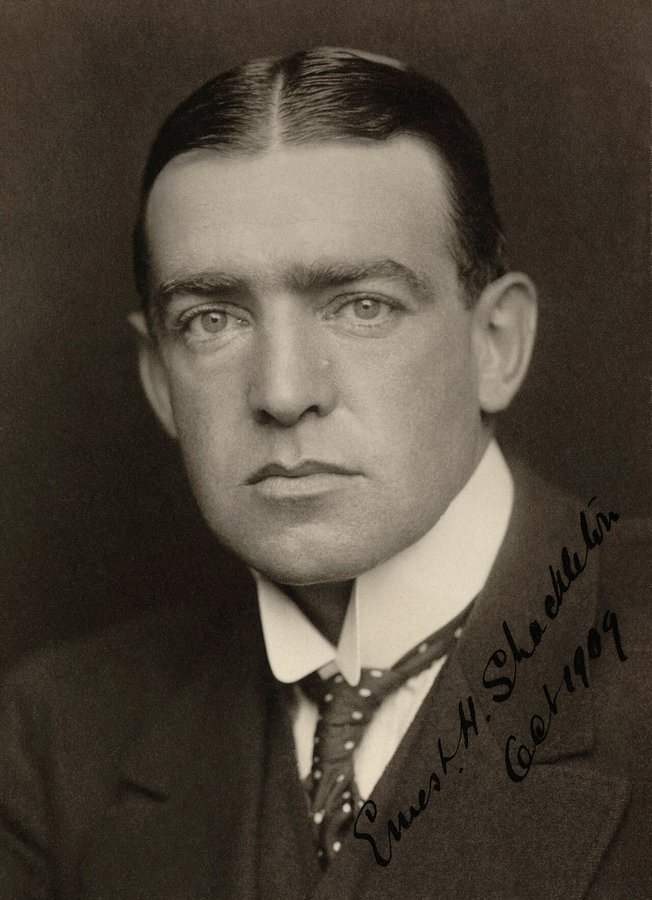
Ernest Henry Shackleton came from a family with Yorkshire roots that had settled in County Kildare, Ireland, and later moved to London, where he was educated. His father was a doctor and hoped his son would follow him into medicine. Shackleton refused and joined the merchant navy at sixteen. He traveled widely, qualified as a master mariner in 1898 and set his sights on the polar regions.
Farthest South with Scott, and Home Against His Will
In 1901 Shackleton was chosen for the British National Antarctic Expedition under Robert Falcon Scott, which sailed from London in the purpose-built ship Discovery on July 31. On the way to winter quarters, Scott and then Shackleton went up in a tethered hydrogen balloon, the first flights ever made in Antarctica. Through the long polar night Shackleton started and edited a newspaper, The South Polar Times, to which the men contributed anonymous scientific and humorous pieces.
On November 2, 1902, Scott, Shackleton and Edward Wilson set out on the expedition’s southern journey. Their dog food had spoiled in the tropics, the dogs failed, and the three men ended up hauling the sledges themselves while scurvy and snow blindness set in. On December 31 they turned back at 82°17′ south, closer to the pole than anyone had been. Shackleton was seriously ill, and on March 2, 1903, he was sent home against his will.
Back in Britain he worked as a journalist, became secretary of the Scottish Royal Geographical Society and stood unsuccessfully for Parliament at Dundee in 1906, all while planning to go south again on his own terms.
Ninety-Seven Miles from the Pole on the Nimrod Expedition
Shackleton’s British Antarctic Expedition sailed in Nimrod in 1907. Ice kept him from landing where he intended, so he built a hut at Cape Royds on Ross Island, where fifteen men wintered. The expedition tried Manchurian ponies and even a motor car alongside dogs and man-hauling. A party under the geologist Edgeworth David made the first ascent of the active volcano Mount Erebus in March 1908, and David, Douglas Mawson and Alistair Mackay became the first to reach the South Magnetic Pole on January 16, 1909. During the winter the men printed Aurora Australis, the first book published in Antarctica.
Shackleton, Jameson Adams, Eric Marshall and Frank Wild pioneered a route up the Beardmore Glacier and became the first men to stand on the polar plateau. Short of food and battling blizzards, Shackleton decided to turn back within ninety-seven miles of the South Pole. The return was a race against time that they would have lost had Nimrod not waited past its appointed sailing date, but every member of the expedition sailed home safely in March 1909. Shackleton returned a national hero and was knighted.
The Endurance, the James Caird and the Men of Elephant Island
After Roald Amundsen reached the South Pole in December 1911, Shackleton announced in 1913 that he would lead the first crossing of the Antarctic continent, from the Weddell Sea to the Ross Sea by way of the pole. A second ship, Aurora, was to lay supply depots from the Ross Sea side. Endurance left England as the First World War broke out, made final preparations at South Georgia and sailed into the Weddell Sea, where the ice closed around her early in 1915.
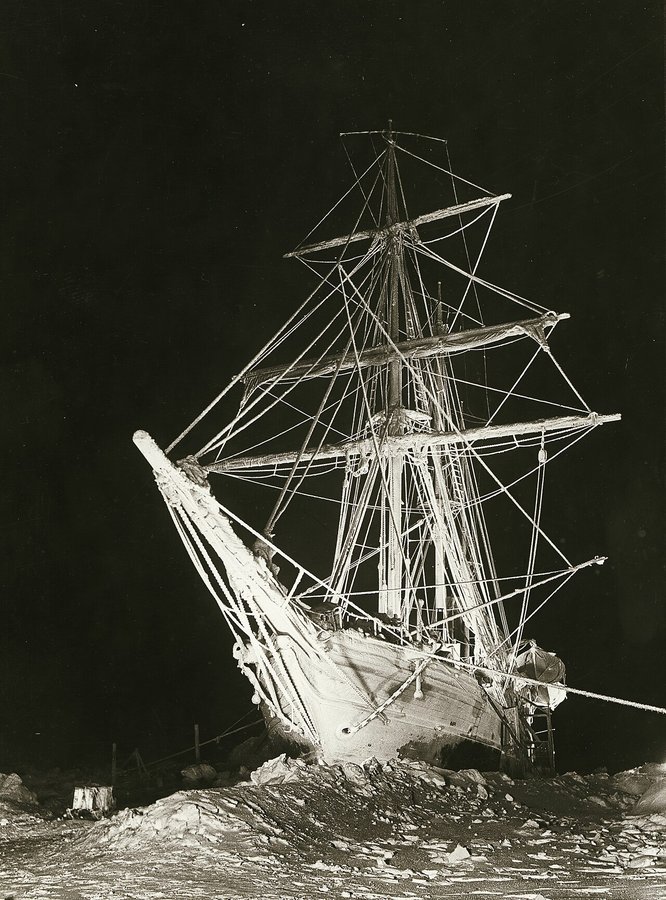
The ship drifted, trapped, for ten months before the pack crushed her, and she sank in November 1915. The crossing was over and the expedition became a fight for survival. The twenty-eight men spent five months camped on the drifting ice, then escaped in three lifeboats to Elephant Island in the South Shetlands in April 1916. Two of the boats were made into a shelter for the men who stayed.
Shackleton sailed for help in the third, the James Caird, with Tom Crean, Frank Worsley, Timothy McCarthy, the carpenter Henry McNish and John Vincent. The six men spent sixteen days crossing the open Southern Ocean to South Georgia. Shackleton, Crean and Worsley then made the first major crossing of the island’s unmapped mountains to the whaling station at Stromness. The steam tug Yelcho rescued the men on Elephant Island in August 1916, and not one of the twenty-eight was lost. The Ross Sea party, landed at Hut Point on Ross Island, laid its supply depots for a crossing that never came, at the cost of three lives. Shackleton told the story in South, published in 1919.
A Last Voyage That Ended at Grytviken
After setting aside plans for an Arctic expedition, Shackleton sailed south once more in Quest in 1921, aiming to explore unvisited stretches of the Antarctic coast. The ship reached South Georgia in January 1922. On January 5, after writing a final diary entry, Shackleton went to his cabin, where he died of a heart attack. He was buried in the whalers’ cemetery at Grytviken, and the expedition continued under Frank Wild.
Endurance Found, a Century On
Endurance herself lay unseen for more than a century. On March 5, 2022, one hundred years to the day after Shackleton was buried on South Georgia, the Endurance22 expedition of the Falklands Maritime Heritage Trust found the wreck in the Weddell Sea, 3,008 meters down and about four nautical miles south of the position Frank Worsley had recorded for her sinking. His detailed navigation records had been invaluable to the search. Underwater vehicles found her upright and largely intact, her paintwork visible and the ship’s wheel still in place. Across the stern, just as in Frank Hurley’s photographs, the name ENDURANCE arched above a five-pointed star. The wreck is protected under the Antarctic Treaty, and the team surveyed and filmed it without touching anything.
Twelve Years from Navy Lodge to the Master Mason Degree
Shackleton was initiated in Navy Lodge No. 2612 in London on July 9, 1901, three weeks before Discovery sailed. His advancement was notably slow. His name appeared on many Navy Lodge summonses over the following years, but the Discovery and Nimrod expeditions kept him away for long stretches.
In 1911 he attended the first regular meeting of the Guild of Freemen Lodge No. 3525 in London. That lodge passed him to the degree of Fellow Craft at an emergency meeting on November 2, 1911, more than ten years after his initiation, and raised him a Master Mason at another emergency meeting on May 30, 1913. On April 28, 1914, a few months before Endurance sailed, the lodge elected him an honorary member.
What does Shackleton’s decision to seek rescue from South Georgia reveal about leadership after a plan has failed?
Sources
- British Broadcasting Corporation — Ernest Shackleton
- Scott Polar Research Institute — British National Antarctic Expedition 1901–04 (Discovery)
- Scott Polar Research Institute — British Antarctic Expedition 1907–09 (Nimrod)
- Scott Polar Research Institute — Imperial Trans-Antarctic Expedition 1914–16 (Endurance)
- Scott Polar Research Institute — Shackleton-Rowett Antarctic Expedition 1921–22 (Quest)
- United Grand Lodge of England — Sir Ernest Shackleton
- Grand Lodge of British Columbia and Yukon — Sir Ernest Shackleton
- Falklands Maritime Heritage Trust, Endurance22 — Endurance is Found
- Endurance22 Expedition Blog — 9 March 2022
Life & Masonic Timeline
George Charles Beresford / Adam Cuerden, via Wikimedia Commons · Public domain · Source